The short answer
Nutrition experts encourage enough fluids and fiber from foods for people on a GLP-1, added gradually: fruit including prunes and other dried fruit, vegetables, whole grains, beans and lentils. Large or fatty meals can slow digestion further. If you're constipated for more than a few days, talk to your doctor.
On this page
This page is about food and drink only. It doesn't treat constipation, and it isn't medical advice.
Fiber from foods, added gradually
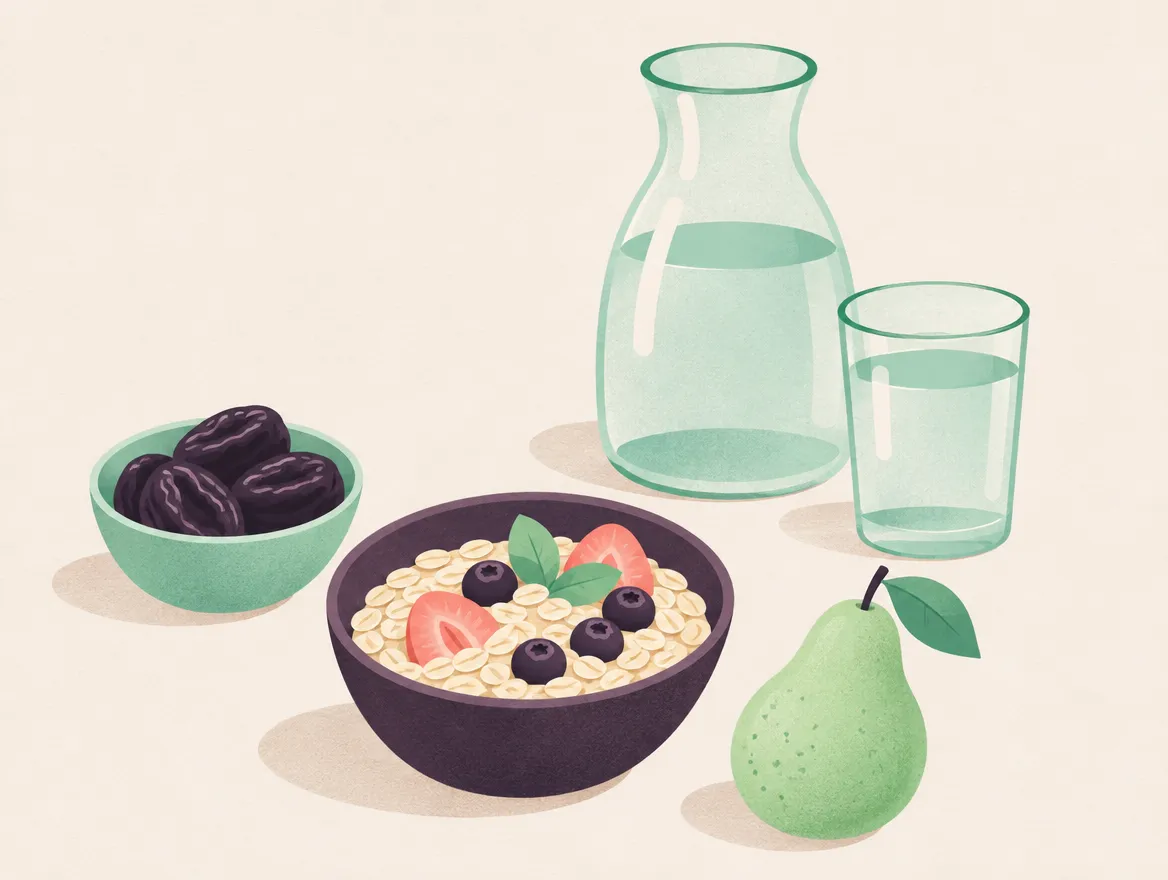
A 2025 joint advisory from four US nutrition and obesity medicine societies says adequate fluids and fiber from foods should be encouraged, and that a gradual increase in foods with soluble and insoluble fiber, such as prunes or other dried fruits, can help. Good sources:
- Prunes, dried figs and other dried fruit
- Fruit with the skin on, such as apples, pears and berries
- Vegetables, such as broccoli, carrots, peas and leafy greens
- Whole grains, such as oats, whole-grain bread and brown rice
- Beans, lentils and chickpeas
- Nuts and seeds, such as almonds, chia and pumpkin seeds
Add one at a time and in small amounts. In the first days of treatment, some people find high-fiber foods harder on a queasy stomach, so the advisory suggests going easy on them until things settle.
Fluids through the day
The FDA Medication Guides for GLP-1 medicines, such as the Mounjaro® guide, say it is important to drink fluids to reduce the chance of dehydration. Fiber works best with enough fluid. The Dietary Guidelines for Americans suggest water, still or sparkling, and unsweetened drinks. Soups, yogurt, kefir and fruit add fluid too.
Foods that can slow things down
The advisory notes that foods high in protein or fat can further slow how quickly the stomach empties, which can make constipation worse, and that some people may need to limit them for a while. Protein still matters, so on slow days choose lighter protein foods and smaller portions, and avoid large or fatty meals. See foods to limit.
Pairing protein with fiber
| Pair | Protein |
|---|---|
| Greek yogurt, 6 oz pot (170 g), with berries and 1 tbsp chia | about 17 g plus the seeds |
| 1/2 cup lentils with vegetables in soup | 9 g |
| Porridge with 1 cup of milk, topped with chopped prunes | 13 g |
| Black beans, 1/2 cup, with rice and salsa | 8 g |
| Edamame, 1/2 cup | 9 g |
Protein per portion from our food list; typical values.
When to talk to your doctor
If you haven't had a bowel movement for several days, if you have severe stomach pain or bloating, or if slow days keep coming back, talk to your doctor or pharmacist. Medicines and supplements for constipation are their call, not a food guide's.
Questions
How much fiber should I eat?
The sources we use don't give a separate fiber target for people on a GLP-1. The usual advice is to add fiber from foods a little at a time, with enough fluids, and to ask your doctor or dietitian if slow days continue.
How much should I drink?
There is no special number for GLP-1 medicines. The FDA Medication Guides say it is important to drink fluids to reduce the chance of dehydration. Water and unsweetened drinks through the day are the simplest way.
Can I take a fiber supplement or a laxative?
That is a question for your doctor or pharmacist. This page covers food and drink only.
Why you can trust this guide
- Every fact links to a source we opened and read, listed below.
- Updated 18 November 2026. When guidance changes, we check the guides that rely on it.
- Food and training only. Your dose and medication are for your prescriber.
Sources
- Nutritional priorities to support GLP-1 therapy for obesity: a joint advisory (Mozaffarian et al.), American Journal of Clinical Nutrition, 2025. Checked 18 November 2026.
- Mounjaro® prescribing information and Medication Guide, U.S. Food and Drug Administration, 2026. Checked 18 November 2026.
- Dietary Guidelines for Americans, 2025 to 2030, USDA and HHS, 2026. Checked 18 November 2026.