The short answer
Dulaglutide is a GLP-1 medicine from Eli Lilly, sold as Trulicity and given as an injection once a week. It is approved for type 2 diabetes, not for weight management. Around it, the everyday plan is regular small meals with protein first, fluids through the day and strength training.
On this page
1 guide
This page explains what dulaglutide is and how food, protein and training fit around it. Your dose and your blood sugar targets are for your prescriber.
What is dulaglutide?
Dulaglutide is a GLP-1 receptor agonist: a medicine that copies GLP-1, a gut hormone that works on blood sugar and appetite. It is made by Eli Lilly and sold in the US as Trulicity®, an injection given once a week.
It is a different kind of medicine from insulin, and some people take the two together. The GLP-1 medications list shows how it sits next to the other GLP-1 medicines, such as semaglutide, tirzepatide and liraglutide.
What Trulicity is approved for
The Trulicity prescribing information lists two uses, both for type 2 diabetes:
| Use | Who |
|---|---|
| Improving blood sugar control, along with diet and exercise | Adults and children aged 10 and older with type 2 diabetes |
| Lowering the risk of heart attack, stroke and heart-related death | Adults with type 2 diabetes who have heart disease or several heart risk factors |
Weight management is not one of its approved uses. The medications list shows which medicines are approved for that, and your prescriber decides what fits you.
The Medication Guide asks you to tell your healthcare provider before starting if you have or have had problems with your pancreas, or a history of diabetic retinopathy (an eye condition linked to diabetes). The label also says Trulicity is not recommended for people with severe gastroparesis, a stomach that empties very slowly.
The weekly routine
The Medication Guide says to use Trulicity once a week, on the same day each week, at any time of day. The prescribing information adds that it can be taken with or without food. So the routine is simple: one day of the week, one injection, no meal to plan around it.
Each pen is single-dose: one pen, one injection. The label names the stomach area (abdomen), the thigh and the upper arm as places to inject, and says to rotate the site with each dose. Your healthcare provider shows you how before your first dose, and the pen's Instructions for Use go through it step by step.
The label starts at a low dose, which can be stepped up after some weeks if more blood sugar control is needed. You'll find the label's steps, and its own words on a missed dose or changing your day, in the dulaglutide dose schedule. Follow your prescriber and your pharmacy label for your own dose.
How it can change your eating
Decreased appetite is one of the most common side effects listed in the Medication Guide. With type 2 diabetes, eating less needs a little structure, especially if you also take insulin or a sulfonylurea. The Medication Guide says the risk of low blood sugar may be higher with those medicines. Ask your doctor before you skip meals or eat much less than usual.
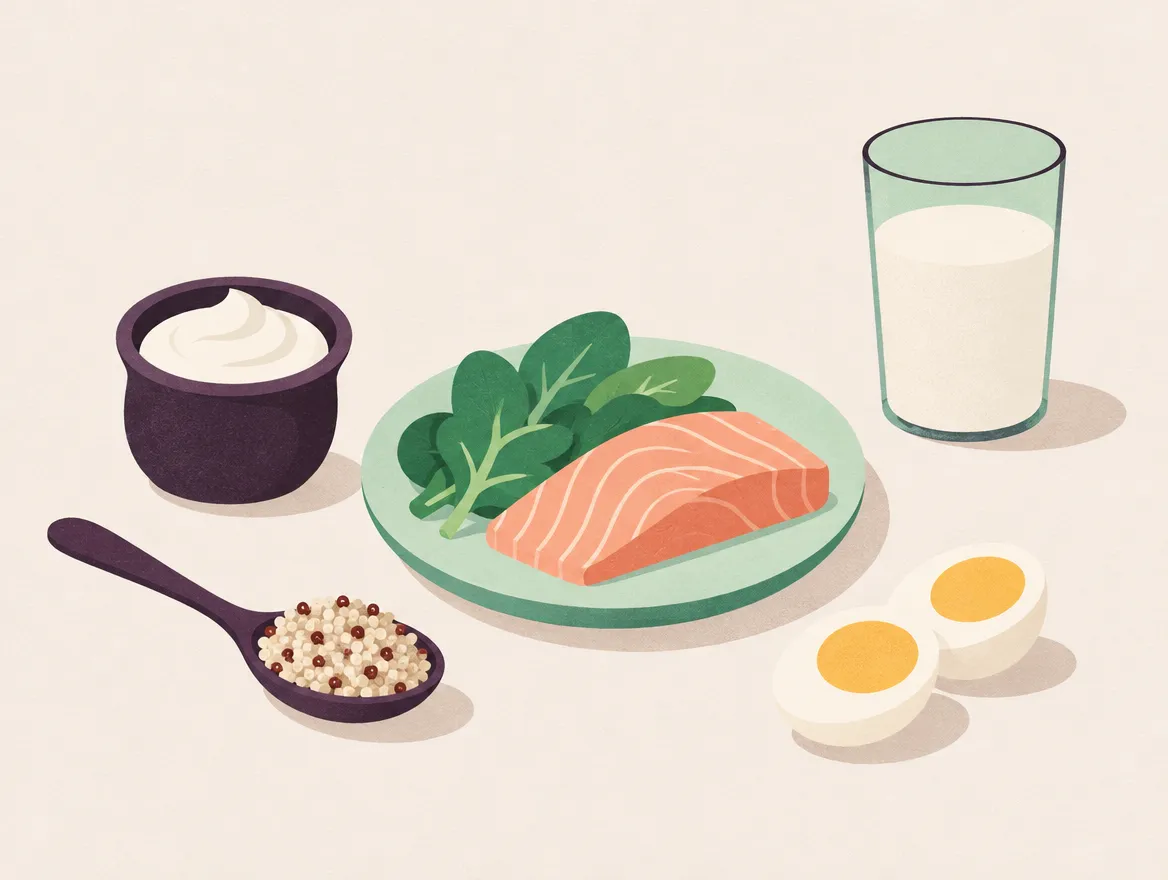
A 2025 joint advisory from four US nutrition and obesity medicine societies, written for GLP-1 medicines as a group, suggests regular small meals at consistent times, eating the protein part first, and avoiding both long gaps without food and large meals.
For meal ideas, a sample day and what the label says about food, see what to eat on Trulicity.
Common side effects and food habits that help
The Medication Guide lists nausea, diarrhea, vomiting, stomach pain and decreased appetite as the most common side effects. Habits that can make them easier:
- Small portions at regular times rather than one large meal
- Lighter protein foods on queasy days, such as yogurt, eggs or a shake, instead of large or fatty meals
- Fluids sipped through the day; the Medication Guide says diarrhea, nausea and vomiting can cause a loss of fluids (dehydration)
- Little or no alcohol, which the advisory says can make nausea and reflux worse
There is more in foods for a nausea day and fiber and fluids, and the water intake calculator gives a daily amount to aim for.
When to call your doctor
The Trulicity Medication Guide lists situations to act on. Summarized in its own terms:
- Nausea, vomiting or diarrhea that does not go away: tell your healthcare provider right away
- Stomach problems that are severe or will not go away: tell your healthcare provider
- Severe pain in your stomach area that will not go away: call your healthcare provider right away
- Symptoms of gallbladder problems: tell your healthcare provider right away
- Changes in vision: tell your healthcare provider
- A lump or swelling in your neck, hoarseness, trouble swallowing or shortness of breath: tell your healthcare provider
- Symptoms of a serious allergic reaction: get medical help right away
Before any surgery or procedure with anesthesia or deep sedation, tell every healthcare provider that you take Trulicity.
Protein with type 2 diabetes
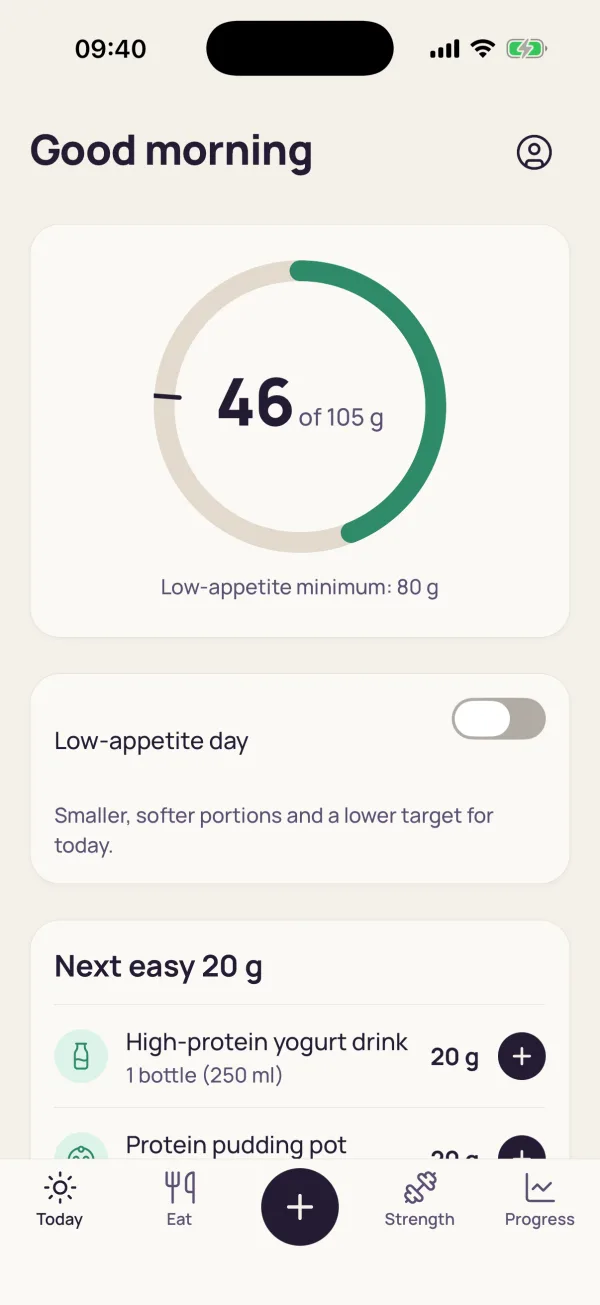
Protein is worth keeping steady when your appetite is smaller. The advisory, written for people losing weight on GLP-1 medicines, notes that 1.2 to 1.6 g of protein per kilogram of body weight a day has been proposed, or a simpler 80 to 120 g a day. The protein calculator gives you a number, and protein per meal shows how to spread it.
If you have kidney disease, or your doctor has limited your protein, check a target with them first and follow their advice. On days when food is hard, the low-appetite day plan and protein shakes can help.
Strength training
The World Health Organization recommends muscle-strengthening activity for all major muscle groups on at least 2 days a week for all adults. The advisory adds that more protein alone is likely not enough to keep muscle without strength training, and recommends both.
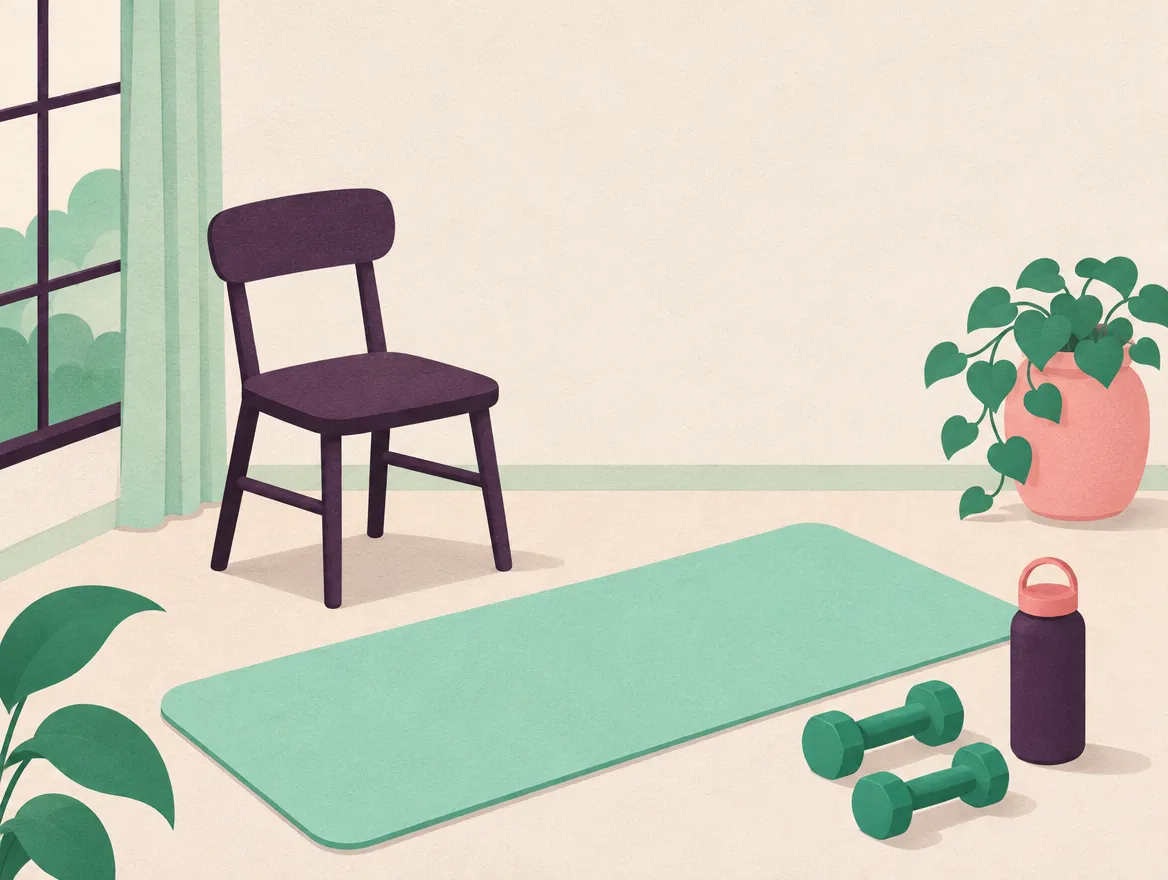
You can start at home. The 4-week home plan begins with short sessions, and the exercise library shows each move. If you take insulin or a sulfonylurea, ask your doctor before you start a new exercise routine. More in strength training on a GLP-1.
Where to go next
| If you want | Read or use |
|---|---|
| Meals, a sample day and fluids | What to eat on Trulicity |
| Whole days of small meals | GLP-1 meal plan or the meal plan generator |
| A plan on paper | 7-day printable plan |
| Your daily protein number | Protein calculator |
| Ideas for meals | Recipes and the food list |
| The label's dose steps | Dulaglutide dose schedule |
If you can't keep food or fluids down, or a symptom is severe or doesn't go away, contact your doctor.
Questions
What kind of medicine is dulaglutide?
Dulaglutide is a GLP-1 receptor agonist: it copies a gut hormone, GLP-1, that works on blood sugar and appetite. It is made by Eli Lilly and sold as Trulicity.
How is Trulicity given?
From a single-dose pen, as one injection under the skin once a week. The label names the stomach area (abdomen), the thigh and the upper arm, and says to rotate injection sites with each dose. Your healthcare provider shows you how before the first dose.
Can I change the day I take Trulicity?
The Medication Guide says you can change your weekly day as long as your last dose was at least 3 days earlier. Check with your prescriber or pharmacist before you change it.
What are the most common side effects of Trulicity?
The Medication Guide lists nausea, diarrhea, vomiting, stomach (abdominal) pain and decreased appetite as the most common. Talk to your healthcare provider about any side effect that bothers you or doesn't go away.
Who should not use Trulicity?
The Medication Guide says not to use it if you or anyone in your family has had medullary thyroid carcinoma (MTC), if you have Multiple Endocrine Neoplasia syndrome type 2 (MEN 2), or if you have had a serious allergic reaction to dulaglutide or anything in the pen.
Can children use Trulicity?
The label includes children aged 10 and older with type 2 diabetes. The Medication Guide says it is not known if Trulicity is safe and effective to lower blood sugar in children under 10.
Why you can trust this guide
- Every fact links to a source we opened and read, listed below.
- Updated 23 November 2026. When guidance changes, we check the guides that rely on it.
- Food and training only. Your dose and medication are for your prescriber.
Sources
- Trulicity® (dulaglutide) prescribing information and Medication Guide (DailyMed), Eli Lilly and Company, U.S. National Library of Medicine, 2026. Checked 23 November 2026.
- Nutritional priorities to support GLP-1 therapy for obesity: a joint advisory (Mozaffarian et al.), American Journal of Clinical Nutrition, 2025. Checked 23 November 2026.
- World Health Organization 2020 guidelines on physical activity and sedentary behaviour (Bull et al.), British Journal of Sports Medicine, 2020. Checked 23 November 2026.