The short answer
Ozempic is semaglutide as a weekly injection, FDA-approved for adults with type 2 diabetes to improve blood sugar, with diet and exercise, and to lower some heart and kidney risks. It is taken on the same day each week, with or without meals. Small meals with protein first and fluids through the day make eating on it easier.
On this page
What Ozempic is
Ozempic® (semaglutide) is a weekly injection made by Novo Nordisk. It contains semaglutide, a GLP-1 medicine, the same medicine that is in Wegovy® and Rybelsus®. It comes in a prefilled pen and is injected under the skin of the stomach area, thigh or upper arm.
The FDA label lists three uses, all in adults with type 2 diabetes:
- To improve blood sugar, together with diet and exercise.
- To lower the risk of heart attack, stroke and heart-related death in people who also have heart disease.
- To lower the risk of kidney disease getting worse, kidney failure and heart-related death in people who also have chronic kidney disease.
Ozempic is not approved for weight management. For the semaglutide product that is, see Wegovy. For an overview of every semaglutide product, see the semaglutide guide.
Ozempic also comes as a daily tablet, Ozempic tablets, which shares a label with Rybelsus. It is a different product with different doses; see the Rybelsus guide.
Eating with type 2 diabetes on Ozempic
With type 2 diabetes, your care team may already have given you advice about carbohydrates, meal timing or blood sugar checks. That advice comes first. This page adds the habits that help with a smaller appetite, and they fit alongside a diabetes eating plan.
Many people on semaglutide eat much less than before. That makes it easy to fall short on protein, vitamins and minerals. A 2025 joint advisory from four US nutrition and obesity medicine societies suggests:
- A small breakfast, then small meals every 3 to 4 hours, avoiding both long gaps and large meals.
- Eating the protein part of the meal first, before you feel full.
- Building the rest of the plate from vegetables, fruit, whole grains, beans, nuts and seeds.
- Going easy on fried and fatty food, sweets, sugary drinks and alcohol.
More detail in what to eat on semaglutide and foods to limit.
A note on low blood sugar
The Ozempic Medication Guide says your risk of low blood sugar may be higher if you use Ozempic with another medicine that can cause low blood sugar, such as a sulfonylurea or insulin. It lists signs such as dizziness, sweating, shakiness, hunger, confusion and a fast heartbeat. Before you start, the label says to talk to your healthcare provider about low blood sugar and how to manage it. If you eat much less than before, tell them about that too.
Your weekly shot day
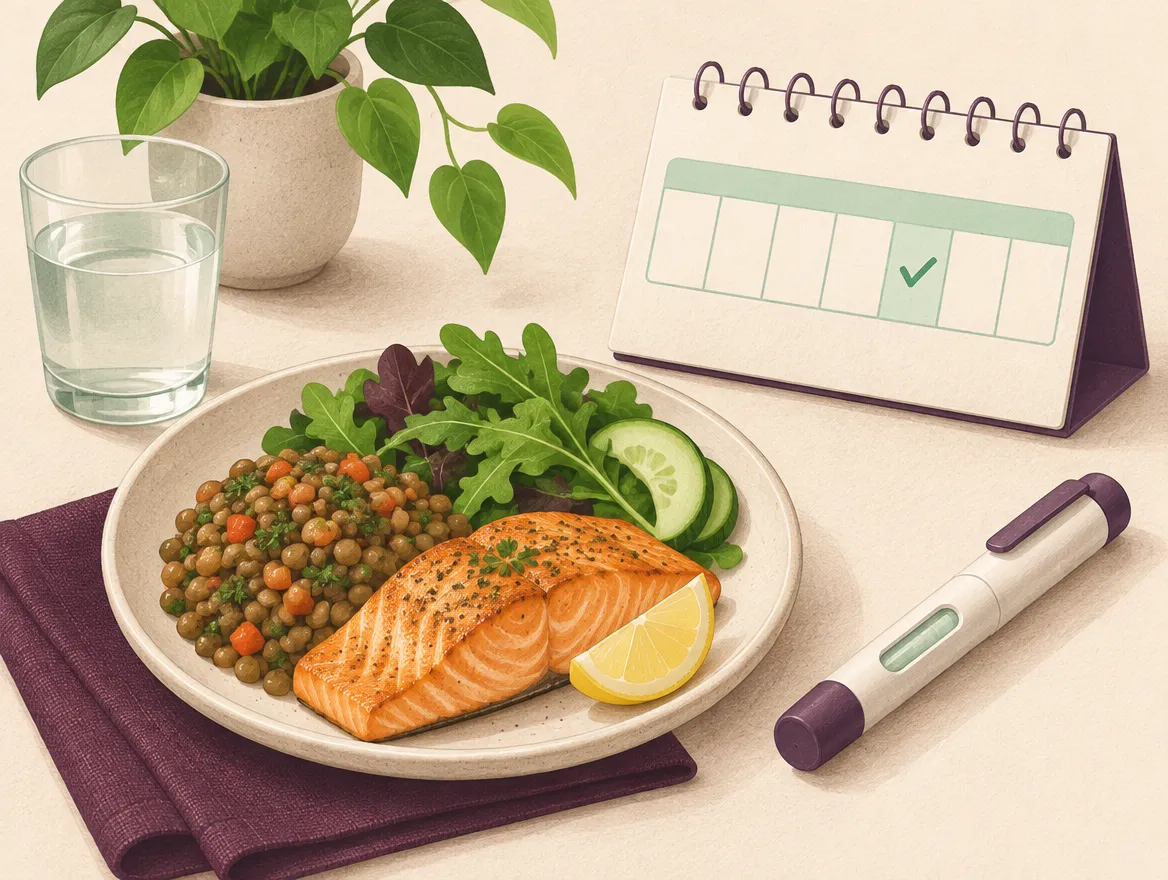
The label says Ozempic is given once a week, on the same day each week, at any time of day, with or without meals. So there is no meal you need to eat before or after it.
What helps is treating shot day as an anchor for the week:
- Pick a day that suits you. A calm day at home is easier than a busy travel day. The Medication Guide says you can change the day as long as your last dose was 2 or more days before; check with your prescriber or pharmacist first.
- Stock up before it. Shot day is a good day to shop, so easy protein foods are in the fridge for the days after: yogurt pots, eggs, cottage cheese, canned tuna, a protein shake.
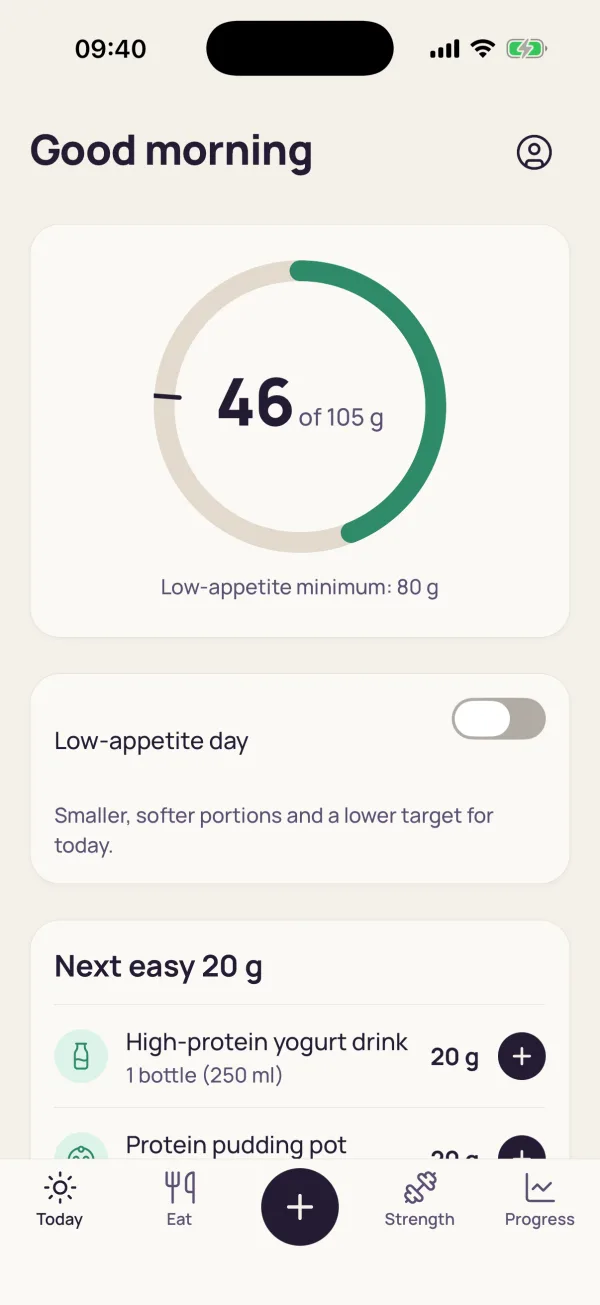
- Watch your own pattern. If you notice your appetite is smallest in the day or two after your shot, plan softer, smaller meals for those days and save bigger cooking for later in the week. The StrongKept app sets a lighter protein target on shot day for this reason.
- Keep fluids going. The Medication Guide says it is important to drink fluids to help reduce your chance of dehydration, especially if you have nausea, vomiting or diarrhea.
Your dose and when it goes up are set by your prescriber. Our semaglutide dose schedule shows the steps on the Ozempic label for reference only: follow your prescriber and your pharmacy label.
Protein on a smaller appetite
The advisory notes that 1.2 to 1.6 g of protein per kilogram of body weight a day has been proposed during weight loss, or a simpler 80 to 120 g a day. If you have kidney disease, which is one of the conditions Ozempic is approved for, ask your doctor before you raise your protein: your target may be different.
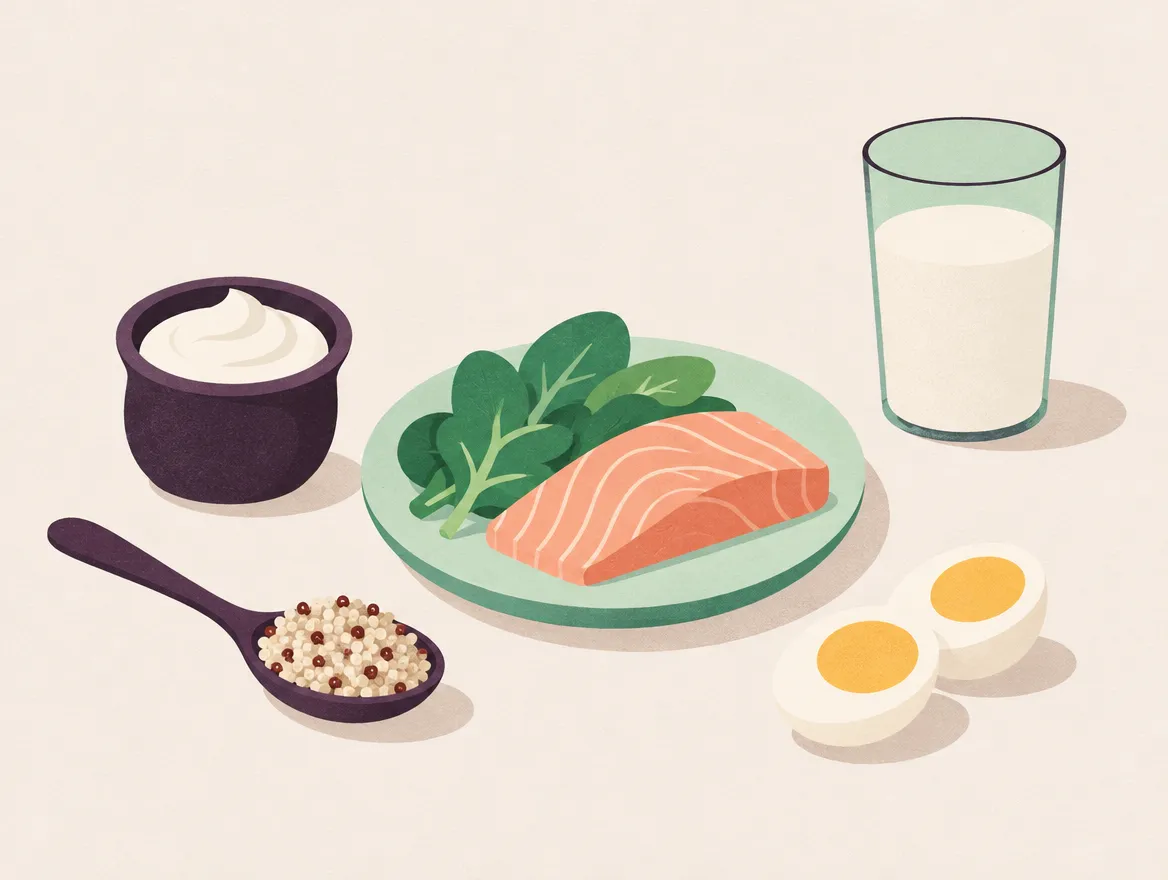
Small protein foods from our food list that work on a weekly shot schedule:
| Food | Portion | Protein |
|---|---|---|
| Greek yogurt, plain, fat-free | 170 g (6 oz pot) | 17 g |
| Cottage cheese, low-fat | 113 g (1/2 cup) | 13 g |
| Eggs, boiled | 2 eggs | 13 g |
| Tuna, canned in water, drained | 85 g (1 small can) | 20 g |
| Chicken breast, cooked | 85 g (3 oz) | 26 g |
| Tofu, firm | 100 g | 14 g |
| Lentil soup | 240 ml (1 cup) | 9 g |
| Protein shake, ready to drink | 1 bottle (330 ml) | 25 g |
Typical values; packaged foods vary by brand. Our protein calculator gives you a daily number, and protein per meal shows how to split it.
Side effects and food
The Medication Guide lists the most common side effects of Ozempic as nausea, vomiting, diarrhea, stomach pain and constipation. Food habits that can make these days easier:
- Nausea: small portions, bland or cold foods, and no long gaps without eating. See foods for nausea days.
- Constipation: fluids through the day and fiber added gradually. See fiber and fluids on a GLP-1.
- Diarrhea or vomiting: fluids first, then small, simple meals when you can.
- No appetite at all: soft, high-protein foods like yogurt, a smoothie or soup. See when you are not hungry.
The Medication Guide says to tell your healthcare provider right away if you have nausea, vomiting or diarrhea that does not go away, and to call right away about severe pain in your stomach area that will not go away. Tell your healthcare provider if you have stomach problems that are severe or don't go away. It also says to tell all your healthcare providers that you use Ozempic before surgery or a procedure. If you can't keep food or fluids down, contact your doctor.
Keep your strength
The advisory says structured strength training helps preserve lean mass, including muscle, during weight loss, and recommends it at least 3 times a week plus at least 150 minutes of moderate activity such as walking, adjusted to your fitness level. The Ozempic label itself pairs the medicine with diet and exercise, so ask your care team what kind of activity suits you. Start with strength training on a GLP-1 or the 4-week home plan.
Questions
What is Ozempic used for?
The FDA label lists three uses in adults with type 2 diabetes: improving blood sugar together with diet and exercise, lowering the risk of heart attack, stroke and heart-related death in people with heart disease, and lowering the risk of kidney disease getting worse in people with chronic kidney disease.
Is Ozempic approved for weight loss?
No. Ozempic is approved for adults with type 2 diabetes. Wegovy, which also contains semaglutide, is the product approved for weight management. Which medicine fits you is a question for your prescriber.
Do I need to eat before my Ozempic shot?
No. The label says Ozempic is given once a week, on the same day each week, at any time of day, with or without meals. Follow your prescriber's instructions for your own routine.
Can I change my Ozempic day?
The Medication Guide says you may change the day of the week as long as your last dose was 2 or more days before. Check with your prescriber or pharmacist before you change it.
What are the most common side effects of Ozempic?
The Medication Guide lists nausea, vomiting, diarrhea, stomach pain and constipation. Small meals, protein first, bland foods on bad days and fluids through the day can help. Tell your healthcare provider about side effects that bother you or don't go away.
Can Ozempic cause low blood sugar?
The Medication Guide says the risk may be higher if you use Ozempic with another medicine that can cause low blood sugar, such as a sulfonylurea or insulin. Talk to your healthcare provider about low blood sugar and how to manage it.
Is Ozempic the same as Rybelsus or Ozempic tablets?
They contain the same medicine, semaglutide, but the injection is weekly and the tablets are daily, with different doses. Your prescriber decides which form you take.
Why you can trust this guide
- Every fact links to a source we opened and read, listed below.
- Updated 23 November 2026. When guidance changes, we check the guides that rely on it.
- Food and training only. Your dose and medication are for your prescriber.
Sources
- Ozempic® (semaglutide) injection prescribing information and Medication Guide (DailyMed), Novo Nordisk, U.S. National Library of Medicine, 2026. Checked 23 November 2026.
- Rybelsus® and Ozempic® tablets (semaglutide) prescribing information and Medication Guide (DailyMed), Novo Nordisk, U.S. National Library of Medicine, 2026. Checked 23 November 2026.
- Nutritional priorities to support GLP-1 therapy for obesity: a joint advisory (Mozaffarian et al.), American Journal of Clinical Nutrition, 2025. Checked 23 November 2026.