The short answer
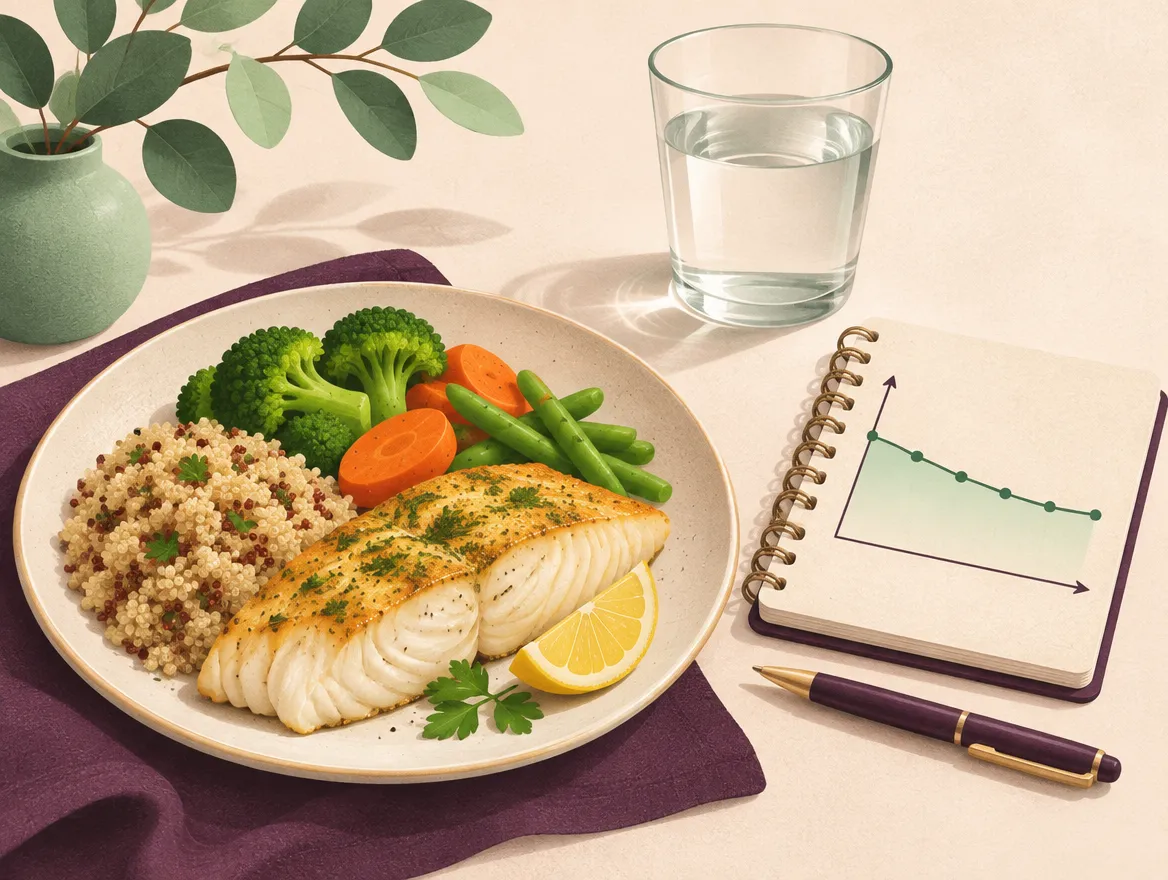
Mounjaro® is tirzepatide, a once-weekly injection approved for type 2 diabetes and for lowering heart risks in adults with type 2 diabetes. Its label says it can be injected at any time of day, with or without meals. Eat small, regular meals that start with protein, drink fluids, and ask your doctor before eating much less if you also take insulin or a sulfonylurea.
On this page
This page is about food and your weekly routine. Your dose, your diabetes treatment and your blood sugar targets are for your prescriber and diabetes care team.
What Mounjaro is approved for
Mounjaro is tirzepatide, made by Eli Lilly. Its FDA label lists two uses:
- Improving blood sugar in adults and children aged 10 and older with type 2 diabetes, together with diet and exercise
- Lowering the risk of heart attack, stroke and death from heart disease in adults with type 2 diabetes who are at high risk
The label does not list weight management. Tirzepatide for weight management is sold as a separate product, Zepbound®, with its own label. Which one fits you is your prescriber's decision. The tirzepatide overview compares the two.
Mounjaro acts on two hormone receptors, GIP and GLP-1. It helps the body release insulin when blood sugar is high, and it slows how fast the stomach empties. The label says that slowing is largest after the first dose and gets smaller over time.
Pens, vials and KwikPen
The label lists four forms, all injected under the skin once a week:
- Single-dose pen, one dose each
- Single-dose vial, one dose each
- Multi-dose vial, four weekly doses
- Single-patient-use KwikPen®, four weekly doses
If you use a vial, the label says to use a new syringe and needle for each injection. To read your dose in units on a syringe, the GLP-1 units calculator turns mg and mg/mL into units, but your pharmacy label and prescriber have the final word. Never share a KwikPen or needles with anyone, even if the needle has been changed. If you also use insulin, the label says to give the two as separate injections and never mix them.
The dose steps, as the label states them, are on the tirzepatide dose schedule. Always follow your prescriber and your pharmacy label for your own dose.
Your weekly shot day
The label says to inject Mounjaro once a week, any time of day, with or without meals. That gives you room to choose:
- Pick a day and a time you can keep. A fixed slot, like Sunday evening, is easier to remember.
- No meal to plan around. You don't need to eat before or after the shot.
- Changing the day is possible. The label says the day can be changed if needed, as long as there are at least 3 days (72 hours) between two doses. Check with your prescriber or pharmacist first.
- Missed a dose? The label has its own rule; see the dose schedule and ask your pharmacist.
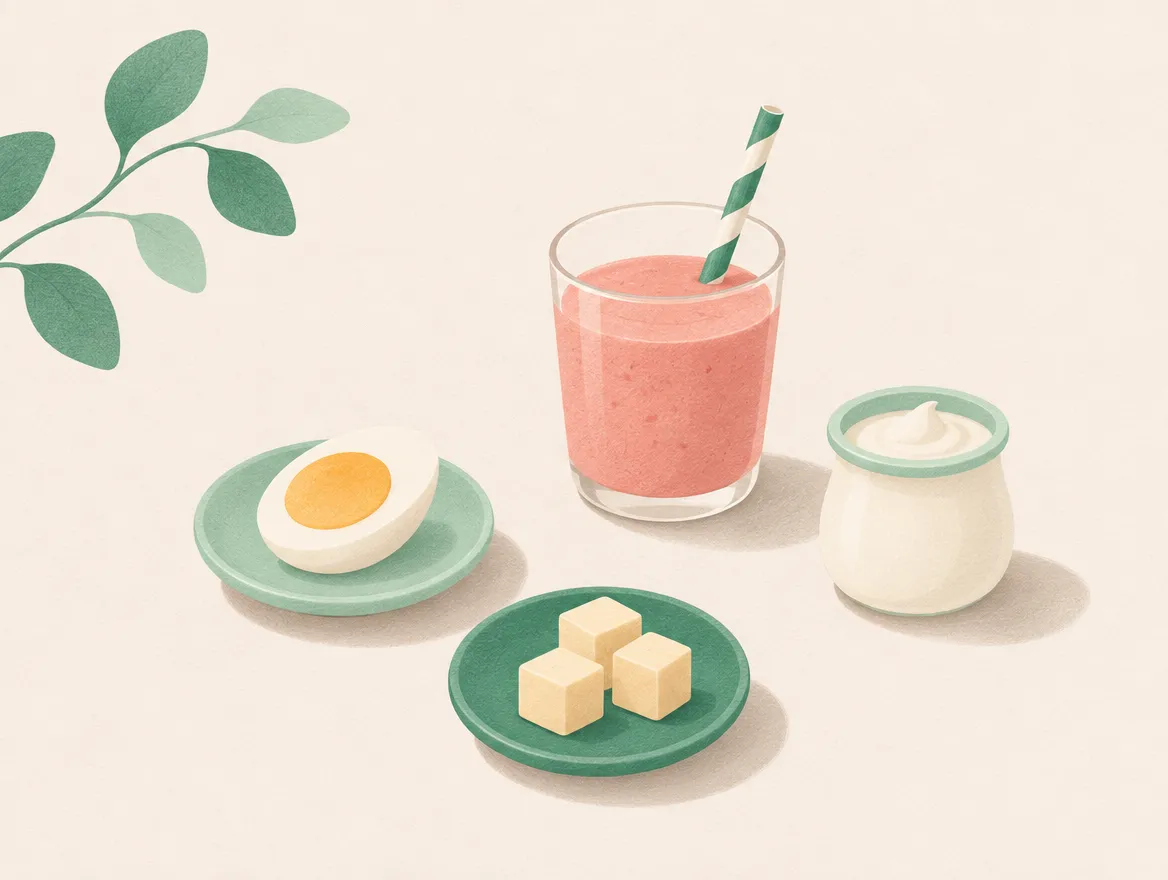
The label doesn't describe how appetite changes through the week. Notice your own pattern for a few weeks. If one day is usually harder, keep easy food ready for it: yogurt, cottage cheese, eggs, soup and a protein shake.
Eating with type 2 diabetes on Mounjaro
Your diabetes care team may already have given you a meal plan, carbohydrate guidance or blood sugar targets. Keep following it. What changes on Mounjaro is often the amount you can eat. Decreased appetite is one of the most common side effects on the label, along with nausea, diarrhea, vomiting, constipation, indigestion and stomach pain.
A 2025 joint advisory from four US nutrition and obesity medicine societies, written for GLP-1 medicines as a group, suggests habits that suit a small appetite:
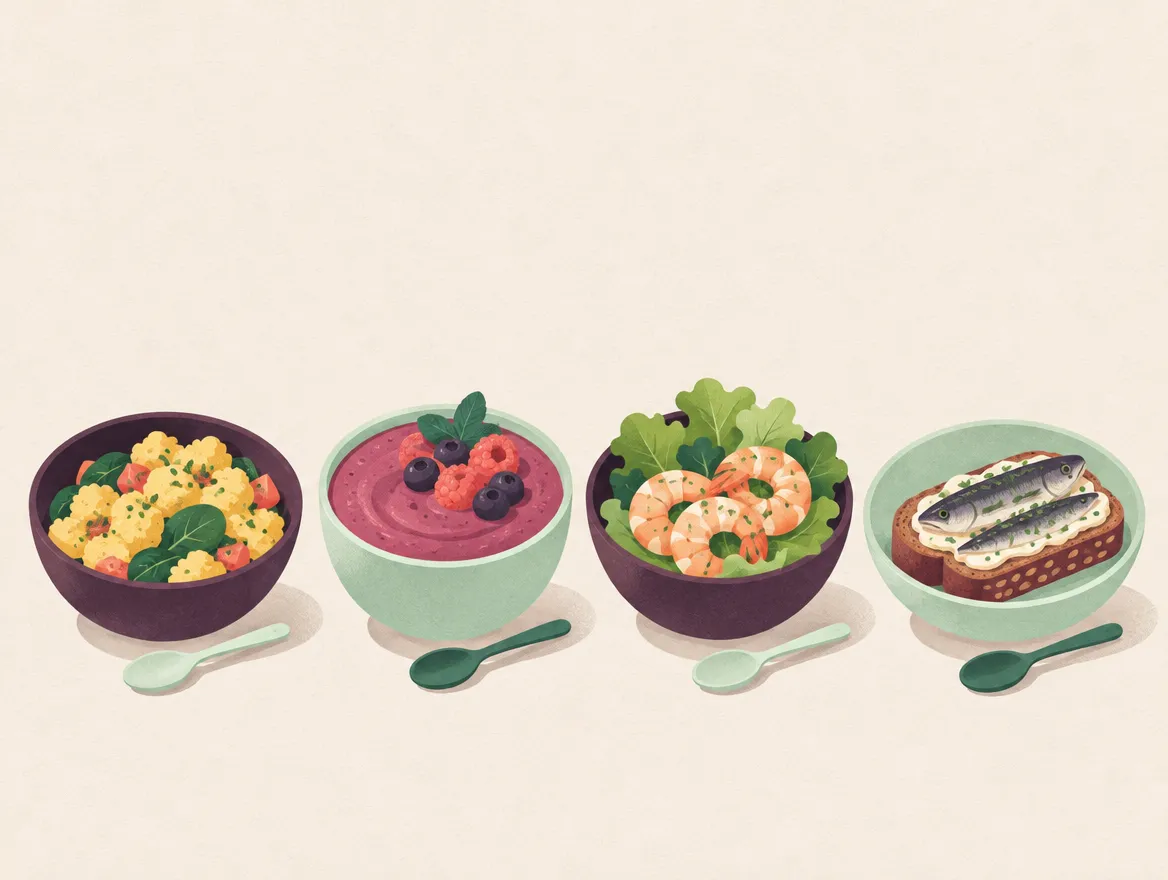
- A small breakfast, then small meals every 3 to 4 hours
- The protein part of each meal first, before you feel full
- Vegetables, fruit, whole grains, beans and lentils when you have room
- Fluids through the day, sipped between meals
- Fewer large or fatty meals, which the advisory links to nausea, vomiting and diarrhea
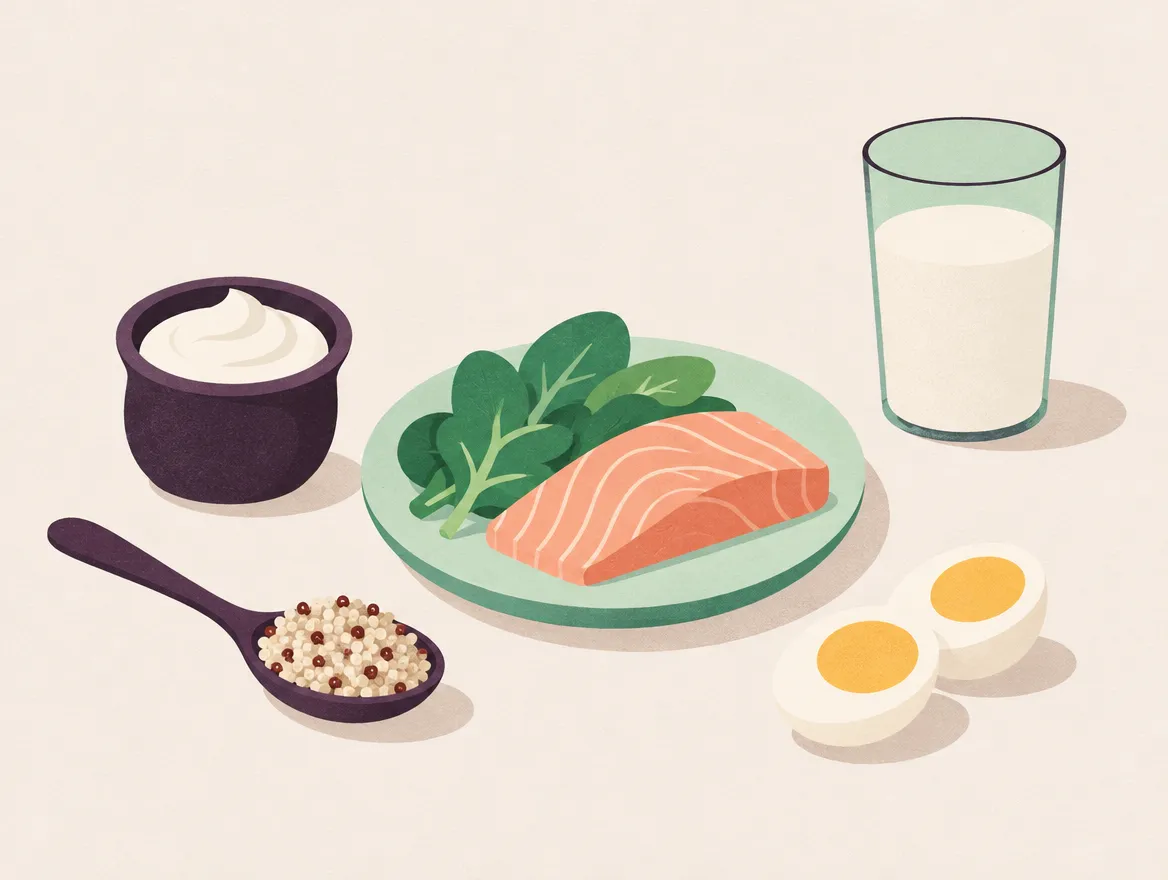
These portions from our food list fit easily into a small meal:
| Food | Portion | Protein |
|---|---|---|
| Scrambled eggs | 2 eggs | 13 g |
| Greek yogurt, plain, 2% | 170 g (6 oz pot) | 16 g |
| Turkey breast slices | 4 slices (60 g) | 11 g |
| Tuna, canned in water, drained | 85 g (1 small can) | 20 g |
| Tofu, firm | 100 g | 14 g |
| Edamame, shelled | 78 g (1/2 cup) | 9 g |
| High-protein milk (ultra-filtered) | 240 ml (1 cup) | 13 g |
Typical values; packaged foods vary by brand. For whole days, see the GLP-1 meal plan, and for very small days, not hungry on a GLP-1.
Low blood sugar: when eating less matters most
The Medication Guide says your risk of low blood sugar may be higher if you use Mounjaro with another medicine that can cause it, such as a sulfonylurea or insulin. If you take one of these, eating much less than usual is something to plan with your doctor, not on your own.
The signs the Medication Guide lists include dizziness or light-headedness, sweating, confusion or drowsiness, headache, blurred vision, shakiness, a fast heartbeat, mood changes, hunger, weakness and feeling jittery. Talk to your healthcare provider about how to spot and manage low blood sugar before you start.
The guide also asks you to tell your healthcare provider if your vision changes during treatment.
Protein and strength
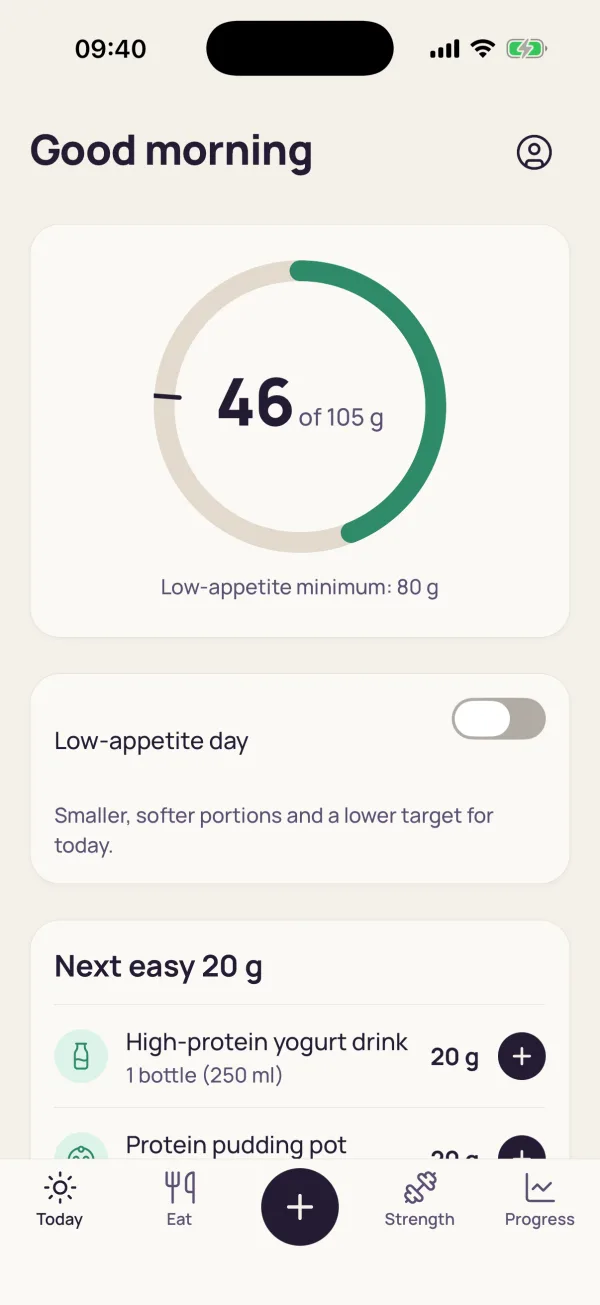
When you lose weight for any reason, some of it is lean mass, which includes muscle. The advisory recommends enough protein together with strength training at least 3 times a week, and says more protein alone is likely not enough. It notes that 1.2 to 1.6 g of protein per kilogram of body weight a day has been proposed during weight loss, or a simpler 80 to 120 g a day.
The protein calculator gives you a daily number, and strength training on a GLP-1 has a 20-minute routine you can do at home. If you have kidney disease, ask your doctor before raising your protein.
Other medicines and appointments
The label says Mounjaro slows stomach emptying, which may change how some medicines taken by mouth are absorbed. Keep a list of everything you take, including vitamins and supplements, and show it to your prescriber and pharmacist.
The Medication Guide says birth control pills taken by mouth may not work as well for 4 weeks after you start and for 4 weeks after each dose increase. Ask your prescriber which birth control is right for you. Before any surgery or procedure with anesthesia or deep sedation, tell your healthcare providers that you take Mounjaro.
When to call your doctor
The Medication Guide says that diarrhea, nausea and vomiting can cause a loss of fluids (dehydration), which may cause kidney problems, and that it is important to drink fluids. It asks you to tell your healthcare provider:
- Right away, about nausea, vomiting or diarrhea that does not go away
- About stomach problems that are severe or will not go away
- Right away, about severe stomach pain that will not go away, with or without vomiting, sometimes felt in your back
- Right away, about signs of gallbladder problems: pain in your upper stomach, fever, yellow skin or eyes, or clay-colored stools
More food guides for tirzepatide: what to eat and foods to limit.
If you can't keep food or fluids down, or a symptom is severe or doesn't go away, contact your doctor.
Questions
Is Mounjaro approved for weight loss?
No. The Mounjaro label lists type 2 diabetes, and lowering the risk of heart attack, stroke and death from heart disease in adults with type 2 diabetes at high risk. It does not list weight management. The Medication Guide says not to use it for a condition for which it was not prescribed.
Do I have to eat before or after my Mounjaro shot?
No. The label says to inject it once a week, any time of day, with or without meals. Follow your prescriber's instructions for your own routine.
Can I change my shot day?
The label says the day of the week can be changed if needed, as long as there are at least 3 days (72 hours) between two doses. Check the change with your prescriber or pharmacist first.
Why do I have no appetite on Mounjaro?
Decreased appetite is one of the most common side effects listed on the Mounjaro label. Small meals every few hours, with protein first, help you still get enough to eat. If you can't keep food or fluids down, contact your doctor.
Can Mounjaro cause low blood sugar?
The Medication Guide says the risk of low blood sugar may be higher if you use Mounjaro with another medicine that can cause it, such as a sulfonylurea or insulin. Ask your doctor before you skip meals or eat much less than usual.
Does Mounjaro affect my other tablets?
The label says Mounjaro slows how fast the stomach empties, which may affect medicines you take by mouth, and that birth control pills may not work as well for a time after starting and after each dose increase. Give your prescriber and pharmacist a list of everything you take.
How much protein should I eat on Mounjaro?
A 2025 nutrition advisory notes that 1.2 to 1.6 g per kilogram of body weight a day has been proposed during weight loss, or 80 to 120 g a day. If you have kidney disease or a diabetes meal plan, ask your care team what fits you.
Why you can trust this guide
- Every fact links to a source we opened and read, listed below.
- Updated 23 November 2026. When guidance changes, we check the guides that rely on it.
- Food and training only. Your dose and medication are for your prescriber.
Sources
- Mounjaro® (tirzepatide) prescribing information and Medication Guide (DailyMed), Eli Lilly and Company, U.S. National Library of Medicine, 2026. Checked 23 November 2026.
- Zepbound® (tirzepatide) prescribing information and Medication Guide (DailyMed), Eli Lilly and Company, U.S. National Library of Medicine, 2026. Checked 23 November 2026.
- Nutritional priorities to support GLP-1 therapy for obesity: a joint advisory (Mozaffarian et al.), American Journal of Clinical Nutrition, 2025. Checked 23 November 2026.