The short answer
Experts recommend strength training at least 2 to 3 times a week alongside a GLP-1 medication, because it is well established to help keep lean mass during weight loss and protein alone is likely not enough. Start with six simple exercises at home, about 20 minutes, and make them a little harder as they get easy.
On this page
Why strength training matters on a GLP-1
When you lose weight, some of it is lean mass, which includes muscle. A 2025 joint advisory from four US nutrition and obesity medicine societies says structured strength training is well established to help preserve lean mass during weight loss, and that more protein alone is likely not enough without it. It recommends strength training at least 3 times a week plus at least 150 minutes of moderate activity, such as brisk walking, adjusted to your fitness level. More on the trial numbers in muscle on a GLP-1.
The World Health Organization recommends muscle-strengthening activity for all major muscle groups on at least 2 days a week for all adults, and balance and strength activity on 3 or more days a week for people over 65.
The routine: no equipment
About 20 minutes. Start with 2 minutes of marching on the spot with arm circles, then do each exercise for the sets below, resting about 45 seconds between sets.
| Exercise | Sets | Reps | How |
|---|---|---|---|
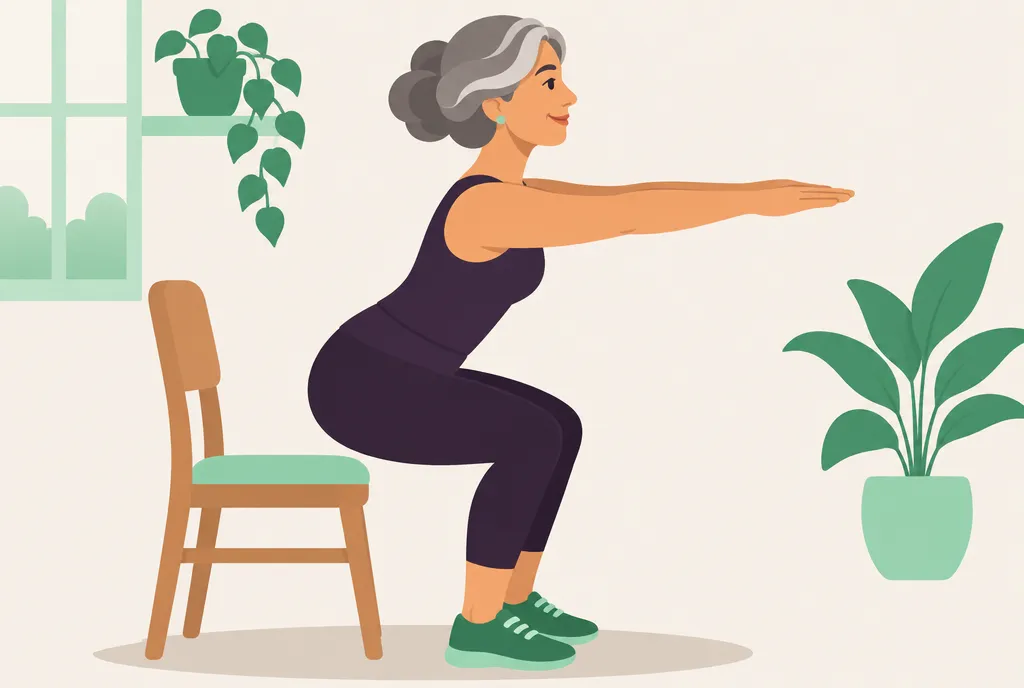
| Chair squat | 3 | 10 | Sit back until you touch the chair, then stand up through your heels. |
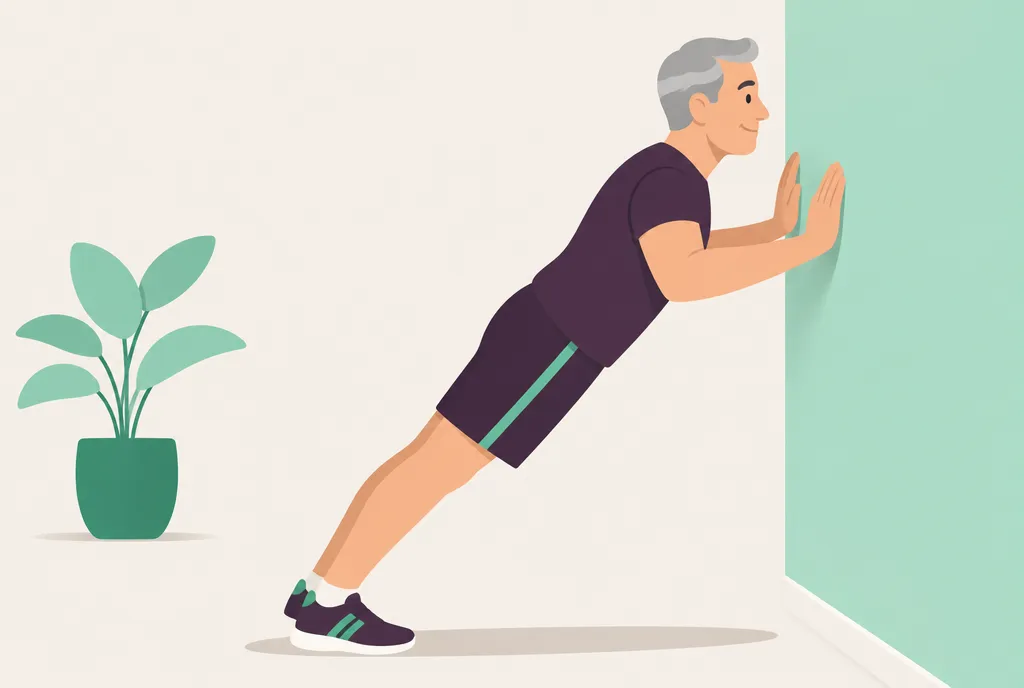
| Wall push-up | 3 | 8 | Hands on the wall at chest height. Body in one line. |
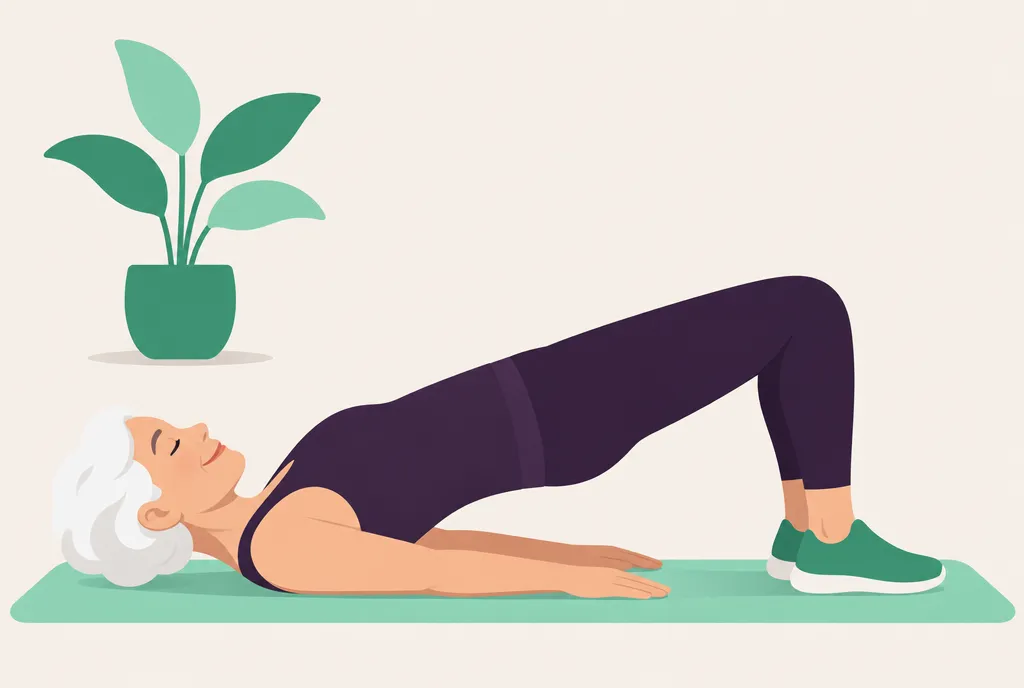
| Glute bridge | 3 | 12 | Feet flat, squeeze at the top for one second. |
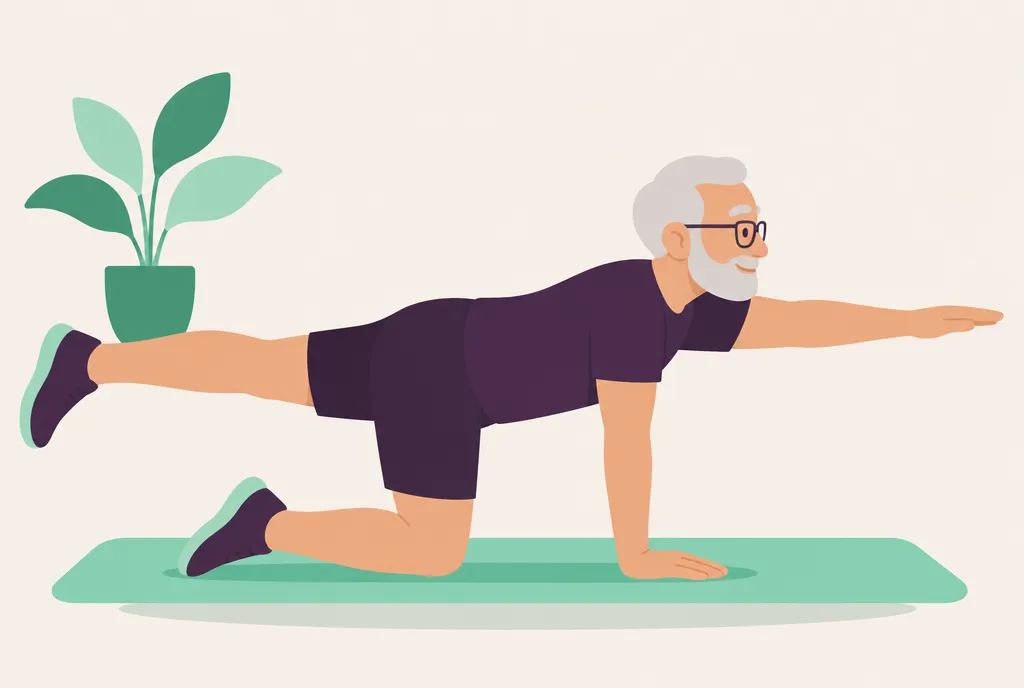
| Bird dog | 3 | 8 each side | Opposite arm and leg, slow, hips level. |
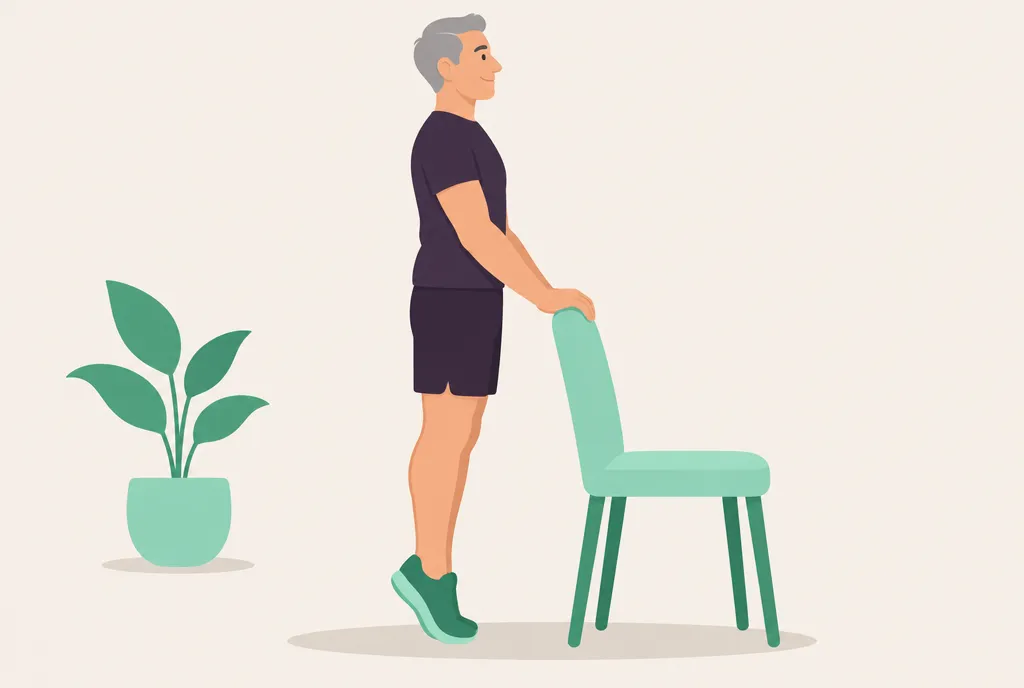
| Standing calf raise | 2 | 12 | Hold a chair for balance. Up for one count, down for two. |
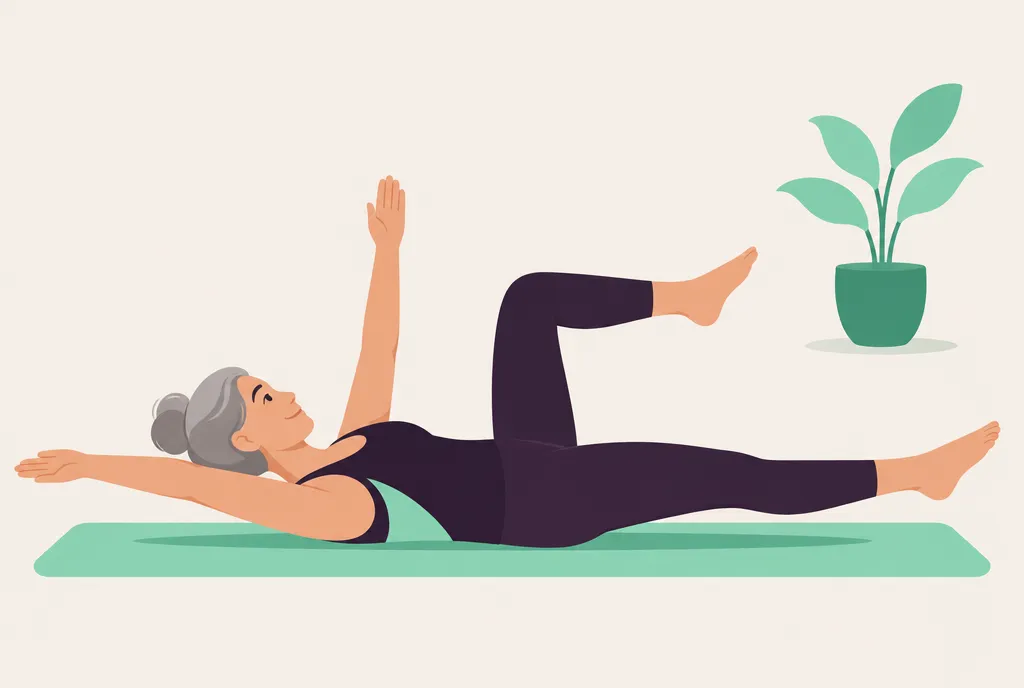
| Dead bug | 2 | 8 each side | Lower back pressed down. Opposite arm and leg, slow. |
Short on time or energy? Do only the first three: chair squat, wall push-up and glute bridge. That is about 10 minutes.
The routine: with dumbbells
Same length, same rest. Choose a weight that lets you finish every set with good form.
| Exercise | Sets | Reps | How |
|---|---|---|---|
| Goblet squat | 3 | 10 | Hold one dumbbell at your chest. Sit between your hips. |
| Bent-over dumbbell row | 3 | 10 | Flat back, pull elbows to your hips. |
| Incline push-up | 3 | 8 | Hands on a sturdy table or sofa edge. Lower your chest slowly. |
| Dumbbell Romanian deadlift | 3 | 10 | Soft knees, push hips back, dumbbells close to your legs. |
| Dumbbell overhead press | 2 | 10 | Ribs down, press straight up, lower slowly. |
| Dead bug | 2 | 8 each side | Lower back pressed down. Opposite arm and leg, slow. |
How to make it harder over time
When a session feels easy two times in a row, add 1 or 2 reps to each set. When that gets easy too, move to the next level: from wall push-ups to incline push-ups, or from chair squats to goblet squats with a dumbbell, or pick a heavier dumbbell. Small steps, every week or two.
Two tests to track your progress
Do these before you start and again every few weeks:
- Chair stands in 30 seconds. Sit on a chair with your arms crossed. Stand up fully and sit down as many times as you can in 30 seconds.
- Push-ups without stopping. Choose wall, incline or floor, and keep the same choice each time. Count until your form breaks.
The scale can't tell you whether you're getting stronger. These two numbers can.
Protein and training work together
The advisory treats the two as a pair: strength training, plus enough protein. On a reduced appetite, the protein part takes some planning. See how much protein on a GLP-1 for a daily number, and eating when you're not hungry for small portions that still add up.
Stay safe
Stop if you feel pain. If you have a heart, joint or other health condition, or haven't exercised in a long time, check with your doctor before starting. This is general fitness guidance, not medical advice.
The six moves, shown
 Video
Chair squat
Sit back until you touch the chair, then stand up through your heels.
 Video
Wall push-up
Hands on the wall at chest height. Body in one line.
 Video
Glute bridge
Feet flat, squeeze at the top for one second.
 Video
Bird dog
Opposite arm and leg, slow, hips level.
 Video
Dead bug
Lower back pressed down. Opposite arm and leg, slow.
 Video
Standing calf raise
Hold a chair for balance. Up for one count, down for two.
Questions
How often should I train?
The 2025 nutrition advisory recommends strength training at least 3 times a week for people on a GLP-1. The World Health Organization recommends at least 2 days a week for all adults. Two sessions is a good start; three when you're ready.
Do I need a gym or weights?
No. The no-equipment version uses a chair, a wall and the floor. A pair of dumbbells lets you keep making it harder later.
What if I have no energy?
Do the short version: the first three exercises, about 10 minutes. A short session still counts, and it keeps the habit going.
Should I eat before training?
Train when it suits you. If you feel light-headed when you exercise on an empty stomach, have a small protein snack or a drink an hour or so before.
Is walking enough?
Walking is good for your health, and the advisory recommends 150 minutes of moderate activity a week as well. But it says aerobic activity alone has a smaller effect on keeping lean mass than strength training.
Why you can trust this guide
- Every fact links to a source we opened and read, listed below.
- Updated 18 November 2026. When guidance changes, we check the guides that rely on it.
- Food and training only. Your dose and medication are for your prescriber.
Sources
- Nutritional priorities to support GLP-1 therapy for obesity: a joint advisory (Mozaffarian et al.), American Journal of Clinical Nutrition, 2025. Checked 18 November 2026.
- World Health Organization 2020 guidelines on physical activity and sedentary behaviour (Bull et al.), British Journal of Sports Medicine, 2020. Checked 18 November 2026.