The short answer
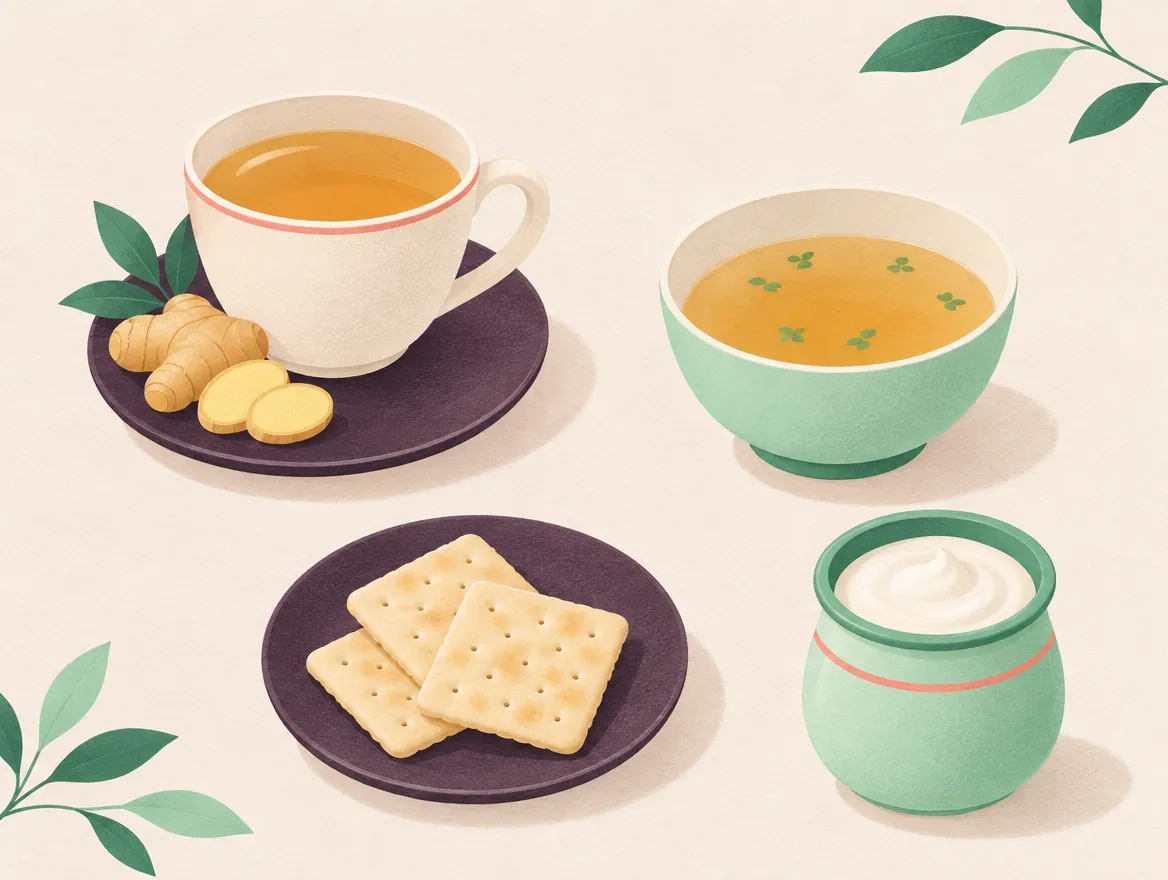
On queasy days on Ozempic®, Wegovy®, Mounjaro® or Zepbound®, small amounts of bland, cold or soft food are often easier: crackers, toast, rice, soups, yogurt, cottage cheese and smoothies. Experts suggest small meals every 3 to 4 hours with fluids, and avoiding fatty food and large meals.
On this page
This page is about food choices only. It doesn't treat nausea, and it isn't medical advice.
Eating habits that can help
A 2025 joint advisory from four US nutrition and obesity medicine societies notes that nausea often comes in the morning or after long gaps without food, and that some people get caught in a cycle where not eating makes it worse. It suggests:
- A small breakfast, then small meals every 3 to 4 hours
- Fluids through the day
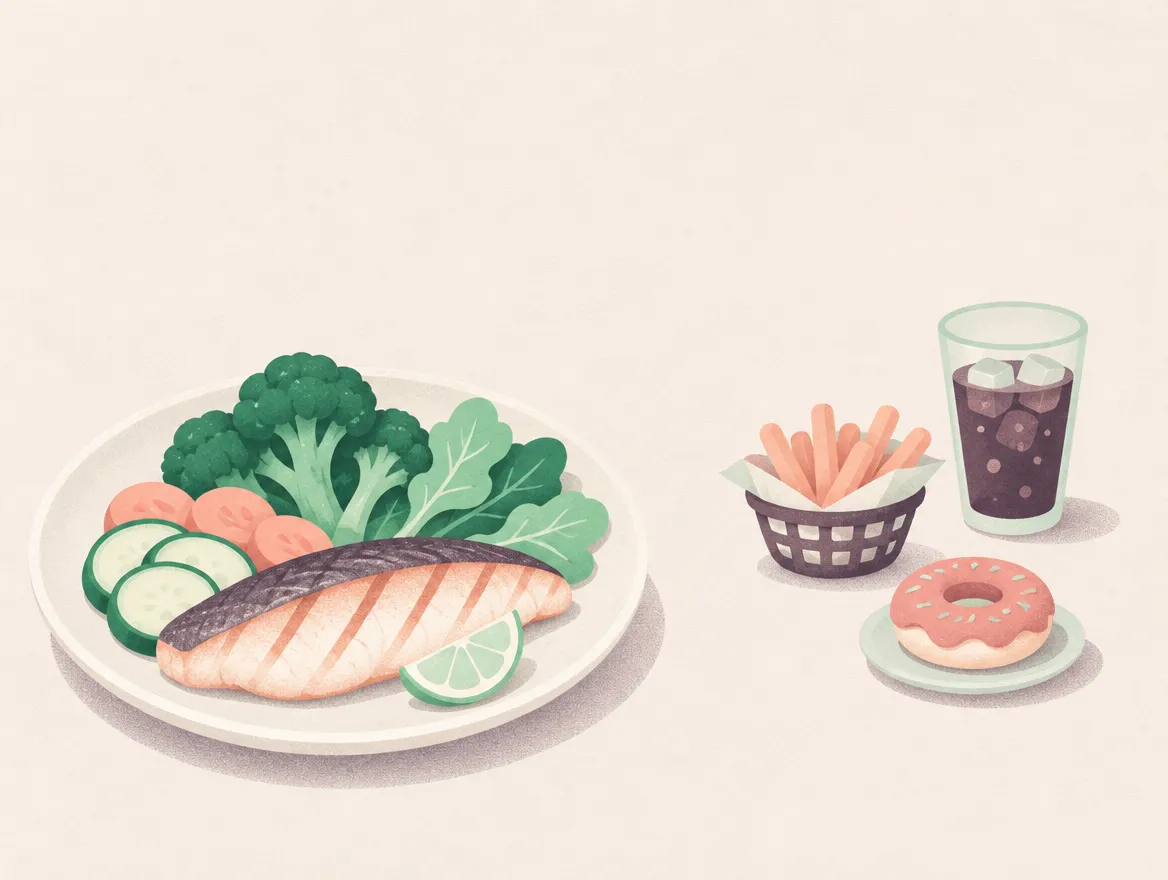
- Avoiding fatty foods and large meals, especially in the first days of treatment
- Ginger or peppermint tea, which some people find helpful
The Wegovy® patient page adds bland, low-fat foods like crackers, toast and rice, foods that contain water like soups and gelatin, eating slowly, and not lying down after eating.
Foods that are often easier
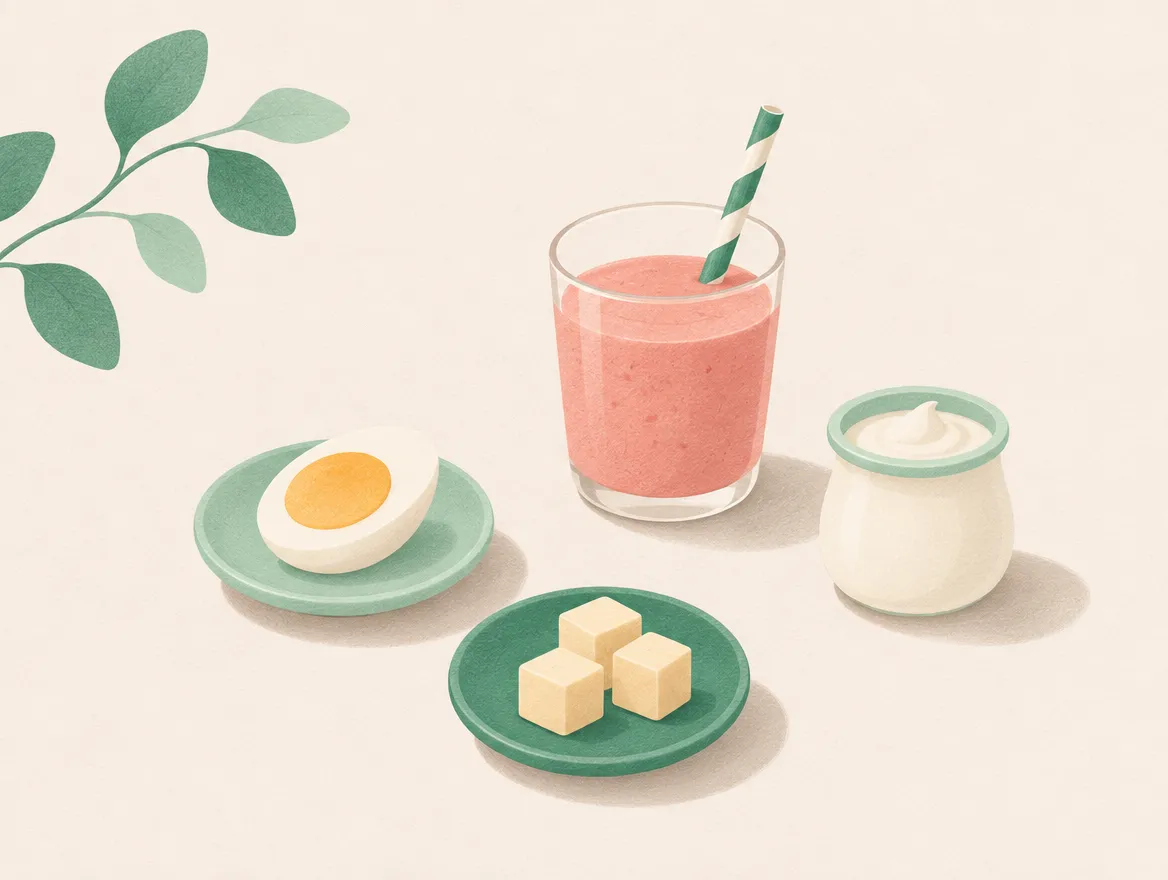
Cold and soft foods with little smell are often easier than hot, heavy meals. These are mild options from our food list:
| Food | Portion | Protein |
|---|---|---|
| Greek yogurt, plain | 6 oz pot (170 g) | 17 g |
| Skyr, plain | 150 g pot | 16 g |
| Cottage cheese, low-fat | 1/2 cup (113 g) | 13 g |
| High-protein yogurt drink | 1 bottle (250 ml) | 20 g |
| Protein pudding | 1 pot (200 g) | 20 g |
| Ready-to-drink protein shake | 1 bottle (330 ml) | 25 g |
| Protein water | 1 bottle (500 ml) | 15 g |
| Tofu, silken | 150 g | 8 g |
| Bone broth | 1 cup (240 ml) | 9 g |
| Lentil soup | 1 cup (240 ml) | 9 g |
Typical values; packaged foods vary by brand. A sip-sized portion still counts: half a pot or half a bottle now, the rest later.
Small meals for a hard day
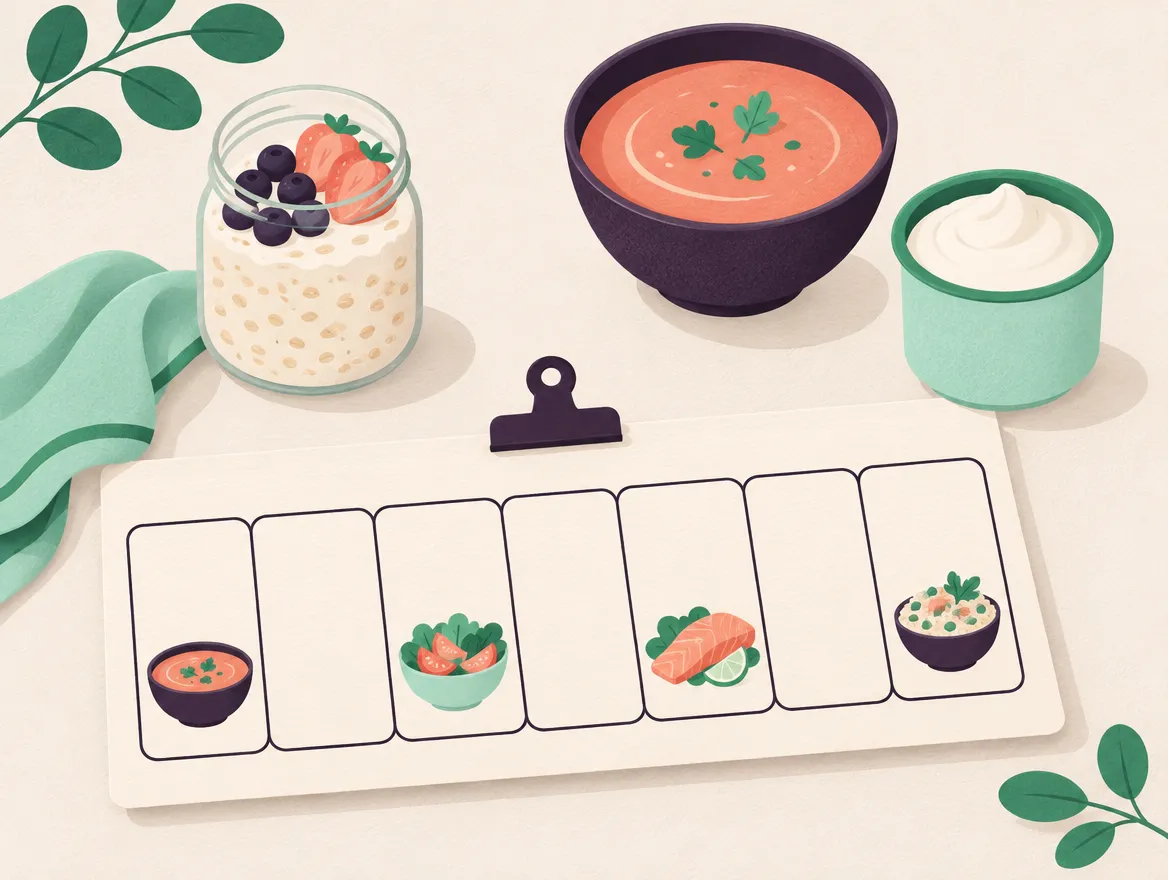
Our low-appetite sample day uses five soft, mild meals: a yogurt bowl, miso soup with silken tofu, egg drop soup, quark with berries and a protein hot chocolate. For days when the problem is no appetite rather than nausea, see not hungry on a GLP-1.
When to call your doctor
The FDA Medication Guides, such as the Zepbound® guide, say that diarrhea, nausea and vomiting can cause dehydration, that it is important to drink fluids, and to tell your healthcare provider right away about nausea, vomiting or diarrhea that does not go away.
If you can't keep food or fluids down, or a symptom is severe or doesn't go away, contact your doctor.
Questions
Should I skip meals when I feel sick?
The 2025 nutrition advisory notes that nausea often comes in the morning or after long gaps without food, and that not eating can make it worse. Small amounts every few hours tend to work better, if you can manage them.
Does ginger help?
The advisory says ginger or peppermint tea can be helpful for some people.
When should I call my doctor?
If you can't keep food or fluids down, if nausea, vomiting or diarrhea doesn't go away, or if stomach problems are severe. The FDA Medication Guides for these medicines say to tell your healthcare provider about them.
Why you can trust this guide
- Every fact links to a source we opened and read, listed below.
- Updated 18 November 2026. When guidance changes, we check the guides that rely on it.
- Food and training only. Your dose and medication are for your prescriber.
Sources
- Nutritional priorities to support GLP-1 therapy for obesity: a joint advisory (Mozaffarian et al.), American Journal of Clinical Nutrition, 2025. Checked 18 November 2026.
- Wegovy® side effects: tips for managing nausea, Novo Nordisk. Checked 18 November 2026.
- Zepbound® prescribing information and Medication Guide, U.S. Food and Drug Administration, 2026. Checked 18 November 2026.