The short answer
On a GLP-1 medication, eat small meals every 3 to 4 hours, start each with protein, and aim for a daily target that a 2025 advisory puts at 1.2 to 1.6 g per kilogram during weight loss. Build meals from minimally processed foods, drink fluids through the day, and add strength training.
On this page
This guide brings our food and training guides together. Each section gives the short version and links the full guide. It covers food and training only; your medication and dose are for your prescriber.
Why eating changes on a GLP-1
GLP-1 medications reduce hunger and make you feel full sooner. Many people eat much less than before, which makes it easy to fall short on protein, vitamins and minerals. A 2025 joint advisory from four US nutrition and obesity medicine societies says the focus should be on getting enough nutrients from a smaller amount of food.
That shifts the question from "how little can I eat" to "what should the little I eat be". The answer, in short: protein first, small regular meals, and mostly minimally processed foods.
How much protein
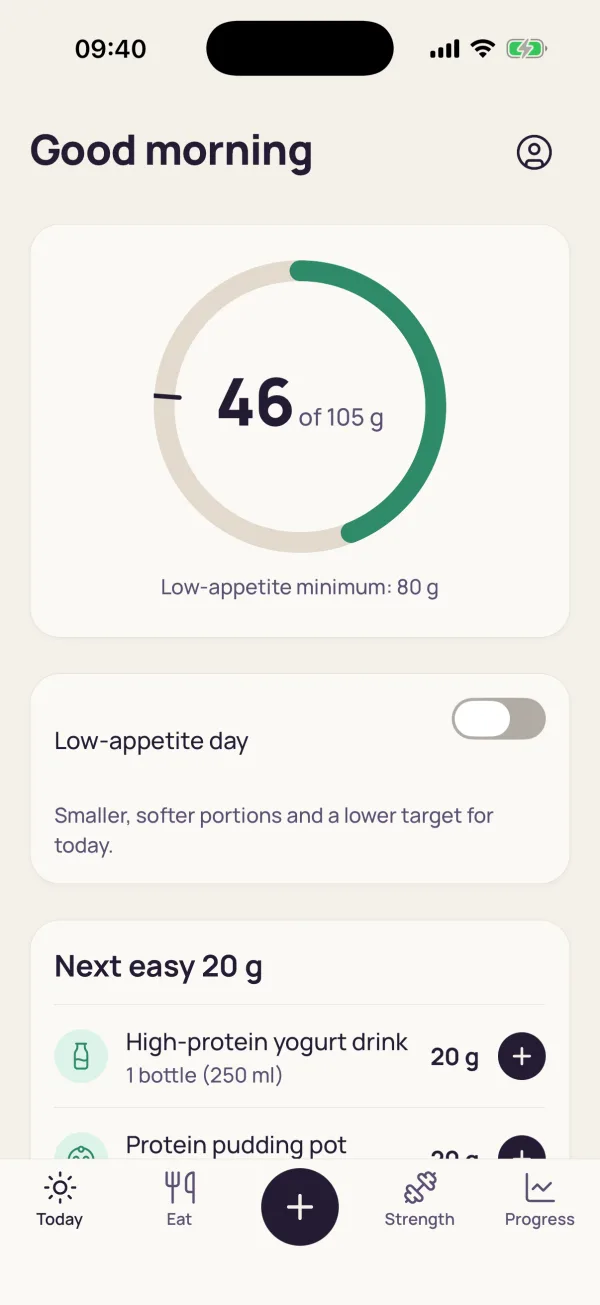
The advisory notes that 1.2 to 1.6 g of protein per kilogram of body weight a day has been proposed during active weight loss, and suggests a simpler target of 80 to 120 g a day as an alternative. Long-term intake at or above 2 g per kilogram a day should be avoided.
- Full guide: how much protein on a GLP-1
- Your own number: the protein calculator, with a lower minimum for hard days
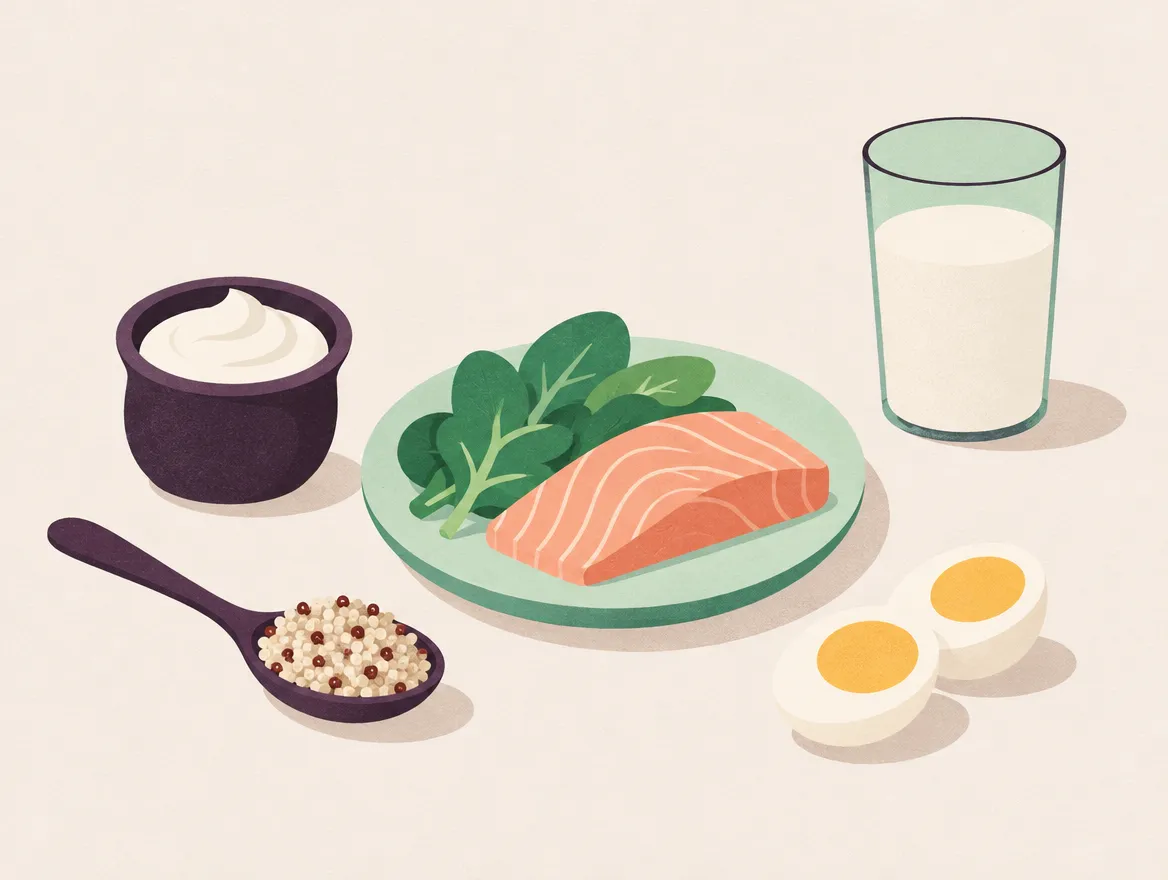
- Portions on a plate: what 20 to 30 g of protein looks like
If you have kidney disease or your doctor has limited your protein, follow their advice instead.
Small meals for a small appetite
The advisory suggests a small breakfast, then small meals every 3 to 4 hours, with the protein part eaten first. It notes that smoothies, protein drinks, cottage cheese and soups are often more appealing than heavier foods when appetite is low, and that a reminder to eat can help.
- Not hungry on a GLP-1: how to still eat enough protein
- A low-appetite day, planned, at 60, 75 or 90 g of protein
- High-protein breakfasts, 15 ideas in five minutes or less
What to eat, and what to limit
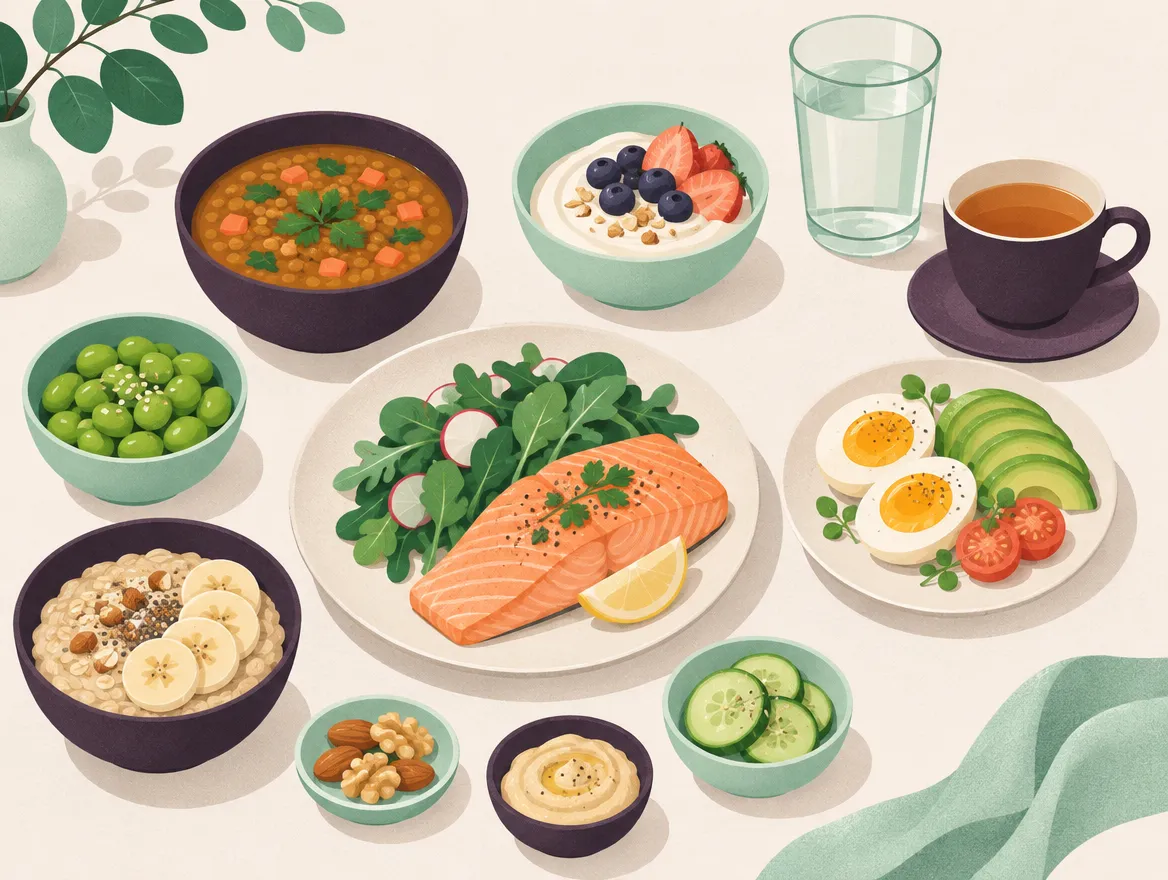
Around the protein, the advisory recommends vegetables, fruit, whole grains, beans and lentils, nuts and seeds, and plant oils. It suggests limiting refined grains and added sugars, sugar-sweetened drinks, red and processed meats, fast food and ultra-processed snacks, and keeping alcohol to a minimum. Large and fatty meals can be harder to manage, especially in the first days of treatment.
- What to eat on semaglutide
- What to eat on tirzepatide
- Foods to limit, with easy swaps
The advice is the same for every GLP-1 medication; the medication pages add what the maker's patient information says.
A day of eating, at a glance
This is what a regular day of about 100 g of protein can look like, from our GLP-1 meal plan. Each meal is small, built around one protein food, and takes five minutes or less.
| When | Meal | Protein |
|---|---|---|
| Breakfast | Overnight oats | 24 g |
| Lunch | Lentil soup with chicken | 25 g |
| Afternoon | Skyr with peanut butter | 20 g |
| Dinner | Salmon, 3 oz (85 g), with 1 cup cooked quinoa | 30 g |
| Total | 99 g |
On days with less appetite, the same protein can be spread over five or six smaller portions instead of four.
Drinks through the day
The advisory lists enough fluids among the habits to encourage, and suggests keeping alcohol to a minimum because it can make nausea and reflux worse. The US dietary guidelines suggest water, still or sparkling, and unsweetened drinks as the everyday choice. Soups, yogurt, kefir and fruit add fluid too, and fiber works best with enough fluid.
Vitamins and minerals
Eating much less than before can leave some nutrients short. The advisory names iron, calcium, magnesium, zinc and vitamins A, D, E, K, B1, B12 and C as nutrients of concern, and suggests clinicians consider supplements such as vitamin D, calcium, B12 or a multivitamin for some people, tailored to each person. For everyone, the advisory's starting point is a variety of nutrient-dense, minimally processed foods. Ask your doctor or dietitian whether a supplement makes sense for you.
If you're over 65
Experts in older adults' nutrition (PROT-AGE) recommend at least 1.0 to 1.2 g of protein per kilogram of body weight a day for people over 65, and at least 1.2 g for those who exercise or are otherwise active. The World Health Organization adds balance and strength activities on 3 or more days a week for older adults, to help prevent falls.
Meal plans
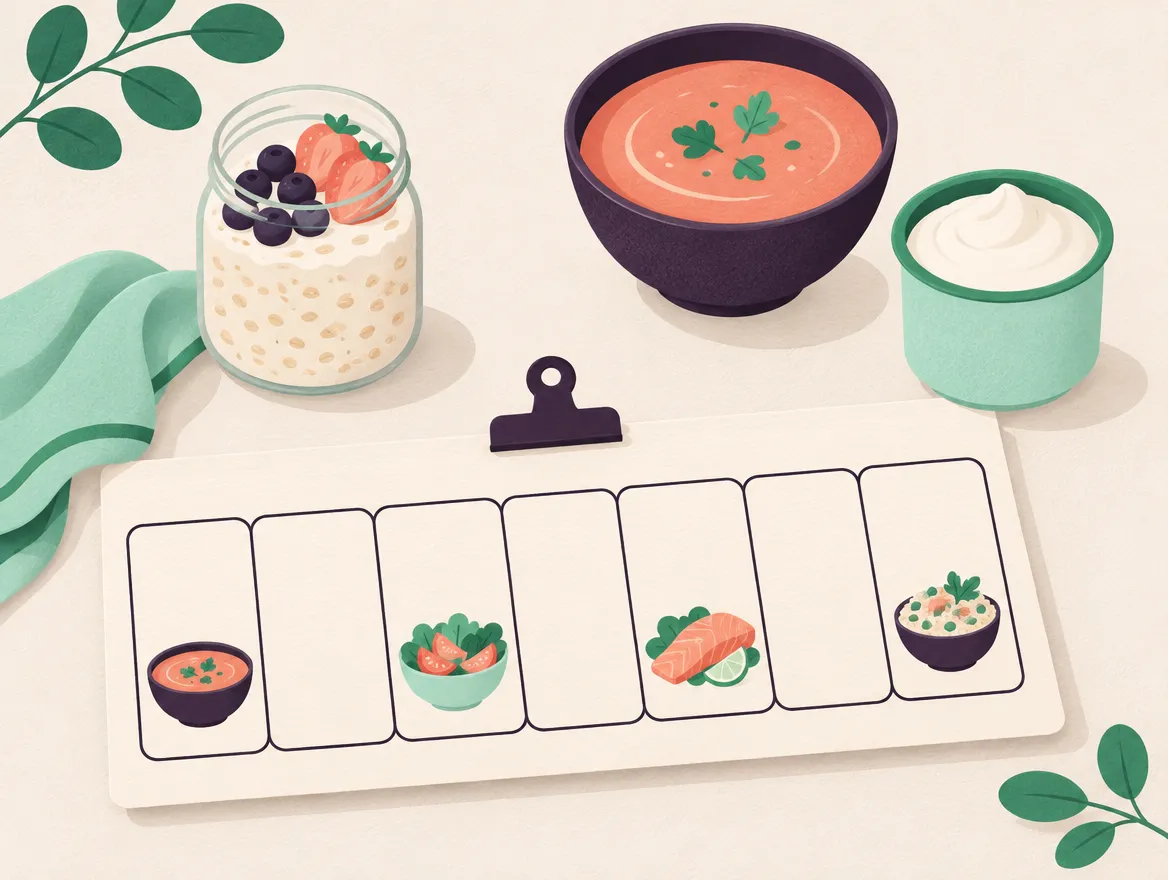
A plan takes the daily decision away. Our sample days are built from quick recipes and protein portions from our food list.
- GLP-1 meal plan: a regular day, smaller meals, little and often, and a low-appetite day
- A low-appetite day, planned, hour by hour
Shakes and drinks
The advisory says some people meet their protein target with the help of shakes, bars and other fortified products. A shake is a useful backup, but food gives you fiber, vitamins and minerals a shake may not. The US dietary guidelines advise avoiding sugar-sweetened drinks.
Nausea days and slow days
Food can make hard days a little easier, but it doesn't treat symptoms. On queasy days, bland, cold or soft foods are often easier. For slower digestion, the advisory encourages fluids and fiber from foods, added gradually.
If you can't keep food or fluids down, or a symptom is severe or doesn't go away, contact your doctor.
Strength training
Food is half of the picture. The advisory says structured strength training is well established to help preserve lean mass during weight loss, and that more protein alone is likely not enough without it. It recommends strength training at least 3 times a week plus at least 150 minutes of moderate activity. The World Health Organization recommends muscle-strengthening activity on at least 2 days a week for all adults.
- Muscle on a GLP-1: what the trials measured
- Strength training for beginners: a 20-minute routine at home
After weight loss
The same habits carry on once your weight is where you want it: protein at every meal, regular meals, mostly minimally processed foods and strength training.
Start here
- Work out your daily target with the protein calculator.
- Pick one of the sample days and swap in foods you like.
- Keep a few easy protein foods at home for low-appetite days.
- Add two short strength sessions a week.
Questions
Is there a special GLP-1 diet?
No single diet is required. A 2025 joint advisory from four US nutrition and obesity medicine societies recommends nutrient-dense, minimally processed foods, enough protein, small regular meals and fluids, plus strength training.
Is the advice different for each medication?
The food and training advice is the same across GLP-1 medications. Your dose and schedule are decided with your prescriber.
Where do I start?
Work out your daily protein target with the calculator, then try one of the sample days in the meal plan. Add strength training twice a week when you're ready.
Do I need supplements?
Some nutrients can run low when you eat much less. The 2025 advisory suggests clinicians consider vitamin D, calcium, B12 or a multivitamin for some people, so ask your doctor or dietitian.
Is this medical advice?
No. These guides cover food and training only. Talk to your doctor about your medication, side effects or any health condition.
Why you can trust this guide
- Every fact links to a source we opened and read, listed below.
- Updated 20 November 2026. When guidance changes, we check the guides that rely on it.
- Food and training only. Your dose and medication are for your prescriber.
Sources
- Nutritional priorities to support GLP-1 therapy for obesity: a joint advisory (Mozaffarian et al.), American Journal of Clinical Nutrition, 2025. Checked 18 November 2026.
- Dietary Guidelines for Americans, 2025 to 2030, U.S. Department of Agriculture and Department of Health and Human Services, 2026. Checked 18 November 2026.
- World Health Organization 2020 guidelines on physical activity and sedentary behaviour (Bull et al.), British Journal of Sports Medicine, 2020. Checked 18 November 2026.
- Evidence-based recommendations for optimal dietary protein intake in older people (PROT-AGE), Journal of the American Medical Directors Association, 2013. Checked 18 November 2026.