The short answer
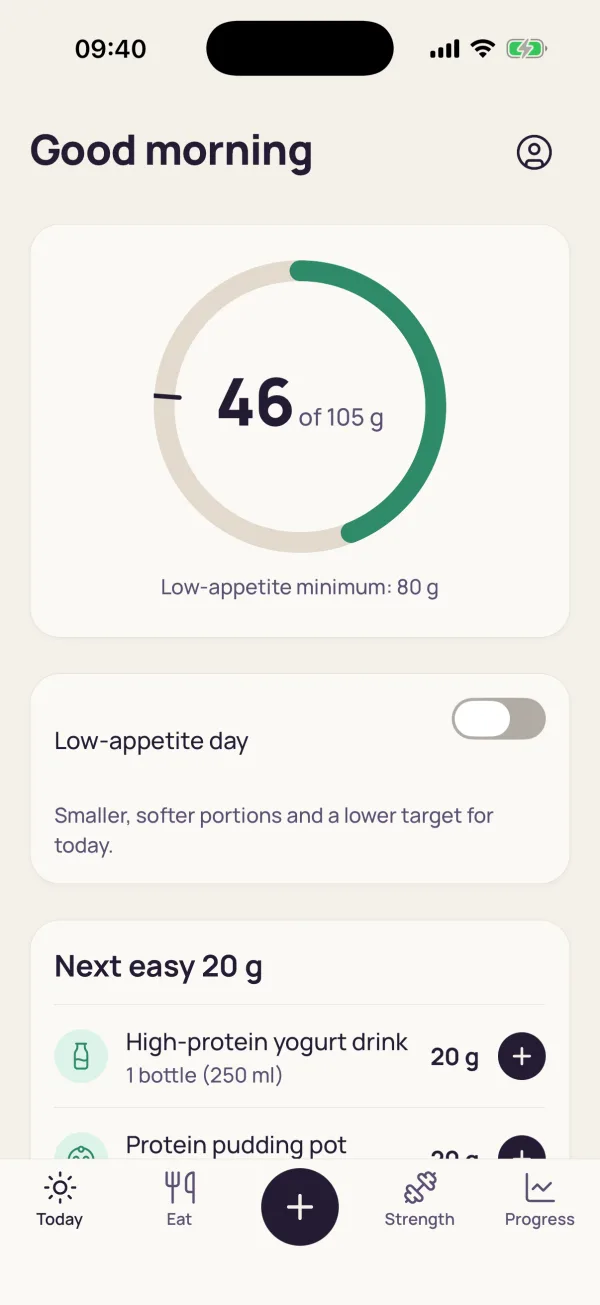
A range of 1.2 to 1.6 g of protein per kilogram of body weight a day has been proposed during weight loss, and a 2025 advisory also suggests a simple target of 80 to 120 g a day. Spreading it over small meals, with protein first, makes it easier on a low appetite.
On this page
The daily range
A 2025 joint advisory from four US nutrition and obesity medicine societies notes that 1.2 to 1.6 g of protein per kilogram of body weight a day has been proposed during active weight loss. The Dietary Guidelines for Americans 2025 to 2030 use the same range for adults in general. As a simpler alternative, the advisory suggests an absolute target of 80 to 120 g a day.
Which weight to use
The advisory says it is unclear which weight to use for people with obesity, and that using your current weight can overestimate how much protein you need. Our calculator uses your goal weight, or your current weight if that is lower, and keeps the target at 160 g a day or less.
Work out your daily target with the protein calculator.
If you're over 65
Experts in older adults' nutrition (PROT-AGE) recommend at least 1.0 to 1.2 g per kilogram a day for people over 65, and at least 1.2 g for those who exercise or are otherwise active.
How much per meal
For adults who exercise, the International Society of Sports Nutrition suggests at least 20 to 25 g of protein with each main meal, and 20 to 40 g per meal for people eating less to lose weight. On a small appetite, four or five smaller meals and snacks can get you there; the GLP-1 meal plan has four sample days. The advisory suggests eating the protein part of a meal first.
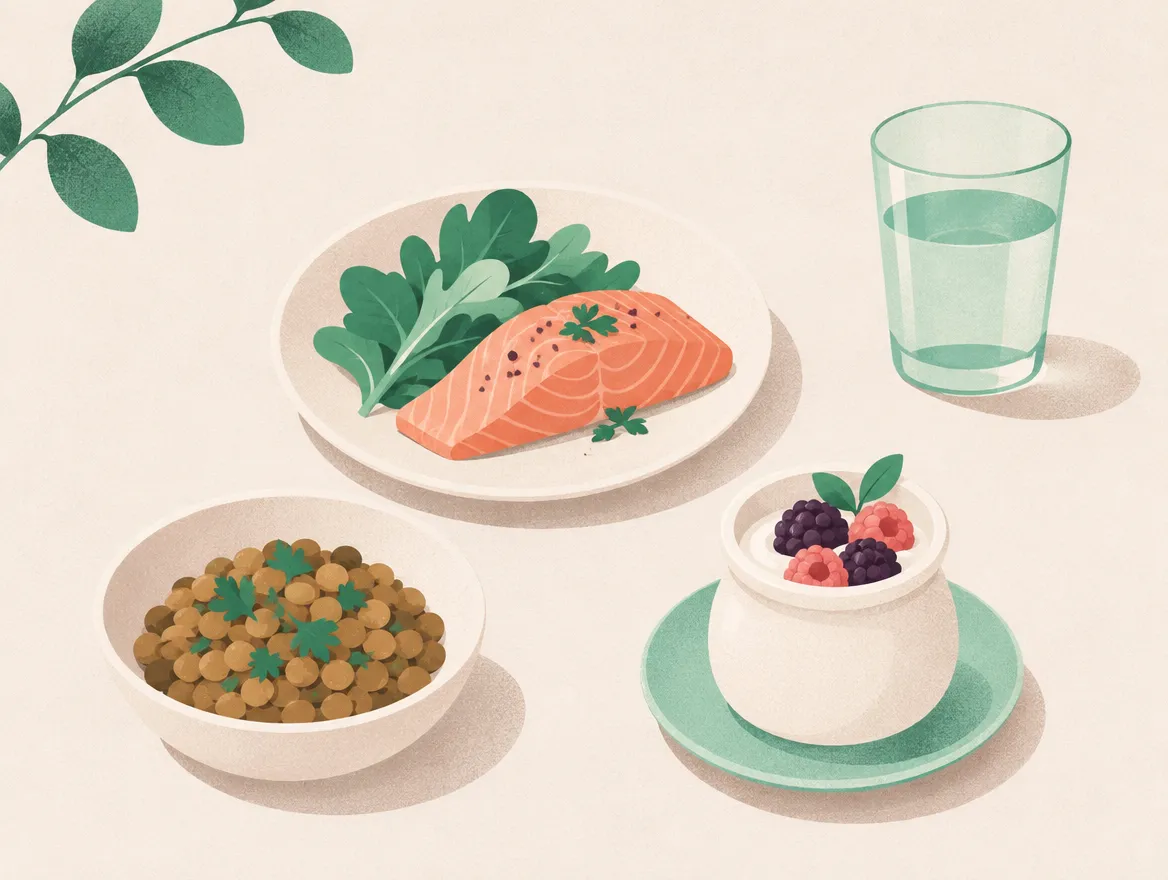
A day of about 100 g, from our food list:
| Meal | What | Protein |
|---|---|---|
| Breakfast | Greek yogurt, 6 oz pot (170 g), with 3 tbsp hemp seeds | 27 g |
| Snack | String cheese, 2 sticks | 14 g |
| Lunch | Tuna, 1 small can (85 g), with 1/2 cup chickpeas | 27 g |
| Dinner | Salmon, 3 oz (85 g), with 1 cup cooked quinoa | 30 g |
| Total | 98 g |
Typical values; packaged foods vary by brand.
Easy protein when you're not hungry
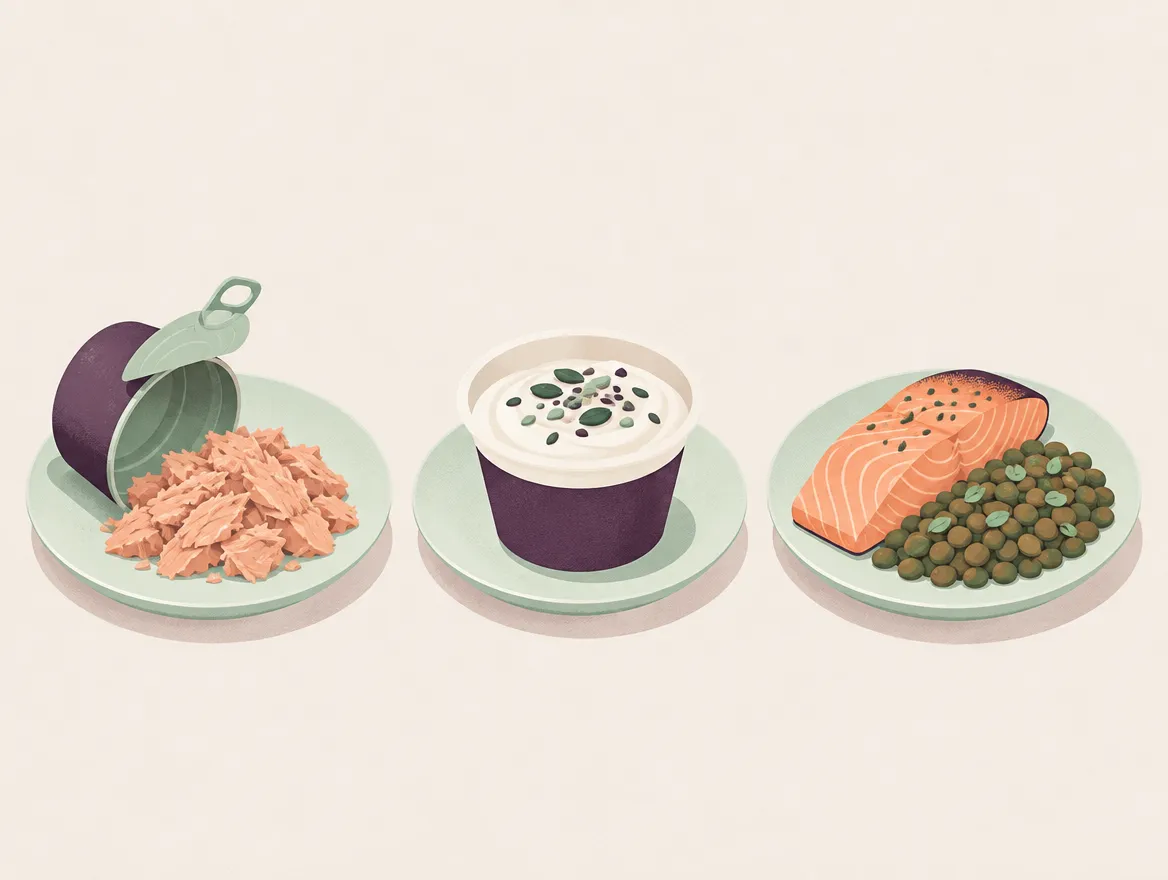
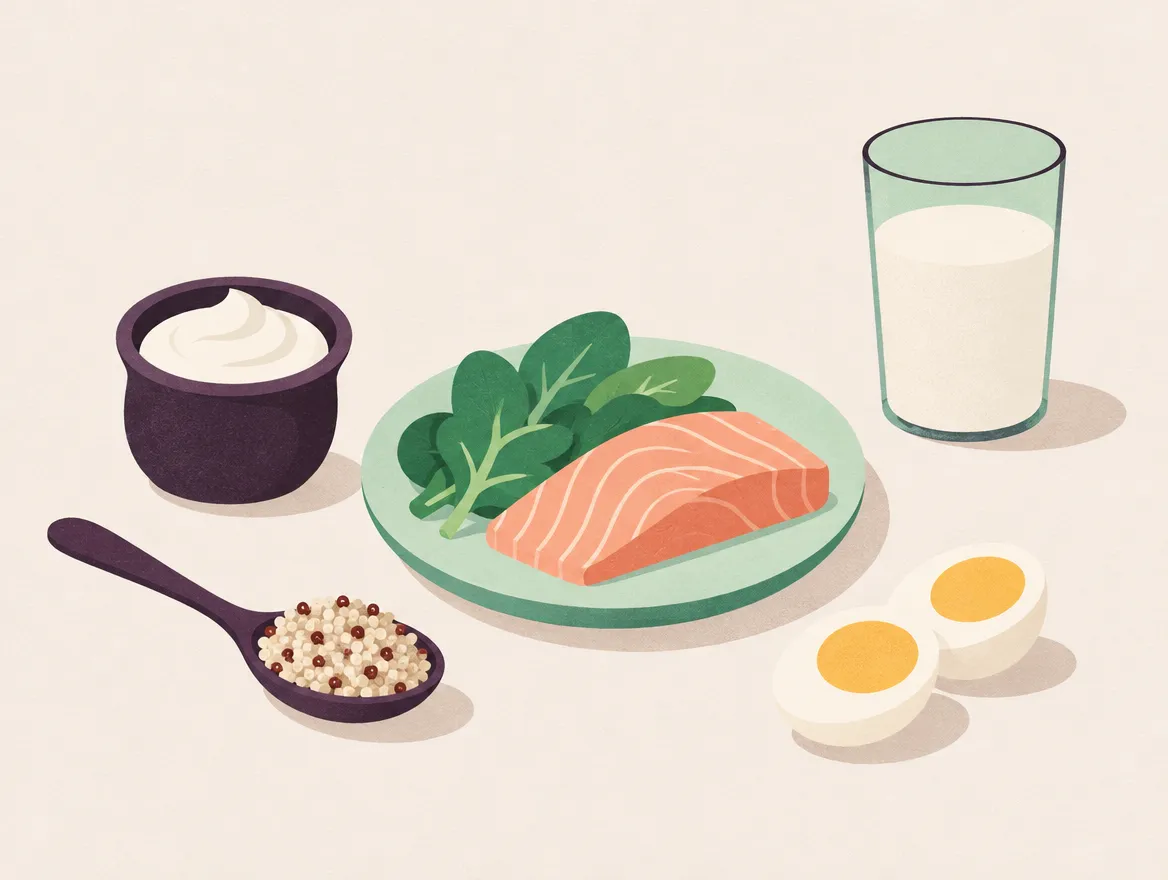
The advisory suggests low-volume, protein-rich foods: fish, eggs, Greek yogurt, cottage cheese, and nuts and seeds, including peanut or almond butter. Beans, lentils and tofu are good plant sources. Some people reach their target with the help of protein shakes, bars or fortified foods. More ideas in what to eat on Ozempic® and Wegovy®.
Protein and muscle
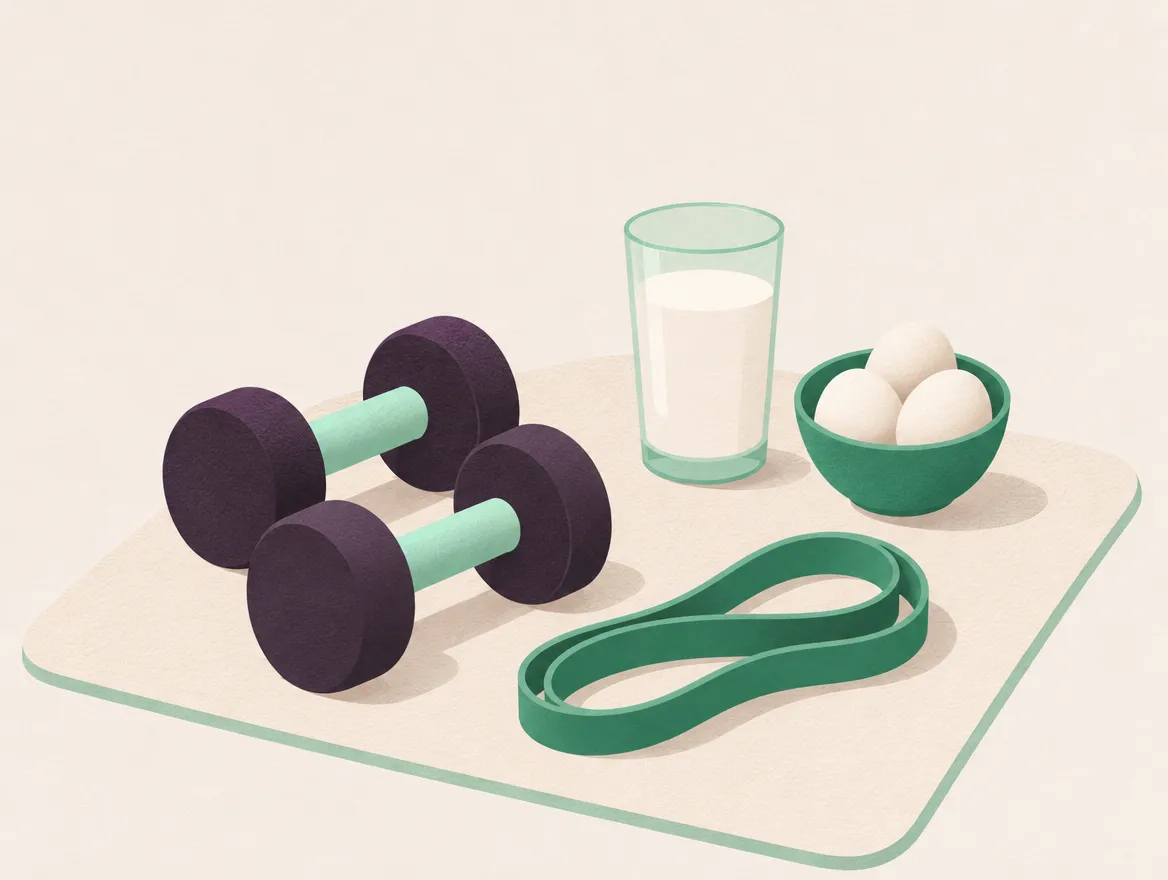
Protein works together with strength training. The advisory says more protein alone is likely not enough to keep muscle. See muscle on a GLP-1.
When to check with your doctor first
The advisory says long-term intake at or above 2 g per kilogram a day should be avoided. If you have kidney disease, or your doctor has limited your protein, follow their advice instead.
Questions
Do I need protein shakes?
No, food works. Shakes, bars and other high-protein products can help on days when appetite is very low, and the 2025 advisory mentions them as one way to reach a target.
Does more protein keep my muscle on its own?
The advisory says protein alone is likely not enough without strength training. The two work together.
Can too much protein be a problem?
The advisory says long-term intake at or above 2 g per kilogram a day should be avoided. If you have kidney disease, ask your doctor before raising your protein.
Why you can trust this guide
- Every fact links to a source we opened and read, listed below.
- Updated 18 November 2026. When guidance changes, we check the guides that rely on it.
- Food and training only. Your dose and medication are for your prescriber.
Sources
- Nutritional priorities to support GLP-1 therapy for obesity: a joint advisory (Mozaffarian et al.), American Journal of Clinical Nutrition, 2025. Checked 18 November 2026.
- Dietary Guidelines for Americans, 2025 to 2030, USDA and HHS, 2026. Checked 18 November 2026.
- International Society of Sports Nutrition position stand: protein and exercise (Jäger et al.), Journal of the International Society of Sports Nutrition, 2017. Checked 18 November 2026.
- Evidence-based recommendations for optimal dietary protein intake in older people (PROT-AGE), Journal of the American Medical Directors Association, 2013. Checked 18 November 2026.