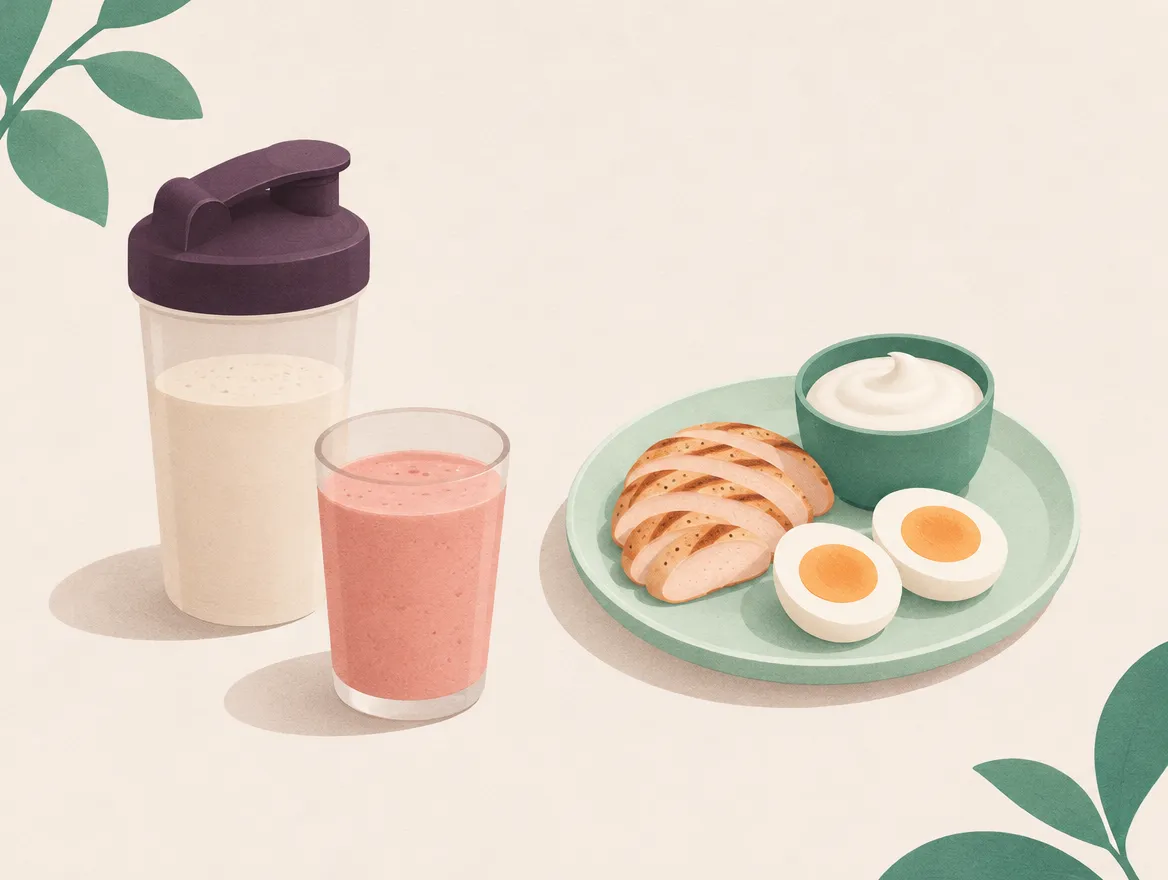
The short answer
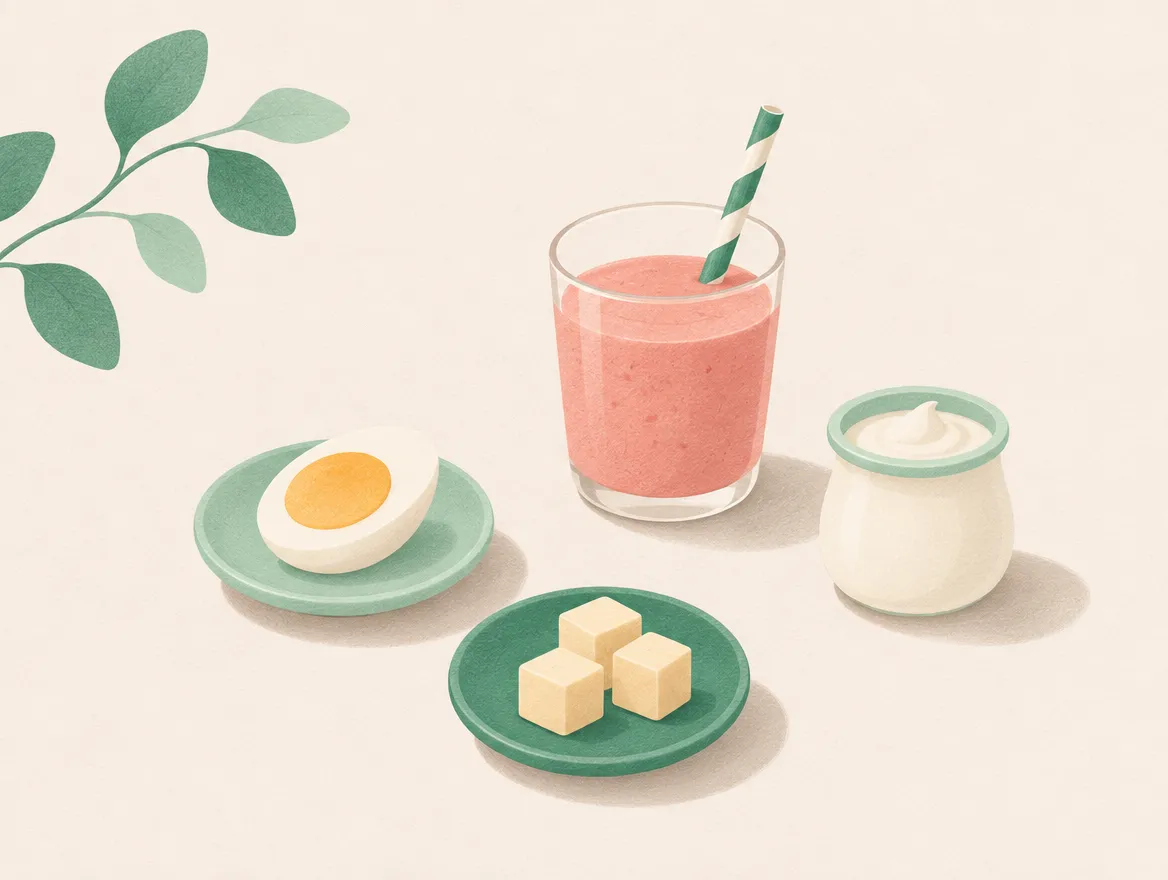
A protein shake is a useful backup on a GLP-1, not a replacement for food. Nutrition experts say some people meet their protein target with the help of shakes, and that drinks are often easier than heavy food when appetite is low. Look for 20 g of protein or more per serving and little added sugar.
On this page
When a shake helps
A 2025 joint advisory from four US nutrition and obesity medicine societies says some people meet their protein targets with the help of high-protein shakes, bars and other fortified products. It also notes that smoothies and protein drinks are often more appealing than heavier foods when hunger and interest in food are low.
A shake makes most sense when:
- You can't face food in the morning
- You're short of your protein target late in the day
- It's a low-appetite or queasy day and drinking is easier than chewing
- You need something you can carry and have between meals
When food is the better choice
The same advisory recommends a variety of minimally processed foods: fruit, vegetables, whole grains, beans, lean protein, dairy, nuts and seeds. A shake gives you protein, but a meal of yogurt with berries or eggs on whole-grain toast also gives you fiber, vitamins and minerals. On days you can eat, a simple pattern is food first, then a shake to fill the gap.
Shake or food: protein compared
Typical values from our food list; packaged products vary by brand, so check the label.
| Shake | Protein | Food with about the same protein |
|---|---|---|
| Ready-to-drink protein shake, 1 bottle (330 ml) | 25 g | Chicken breast, 3 oz (85 g), 26 g |
| Whey protein powder in water, 1 scoop | 24 g | Salmon fillet, 3 oz (85 g), 22 g |
| Plant protein powder in water, 1 scoop | 20 g | Canned tuna, 1 small can, 20 g |
| High-protein yogurt drink, 1 bottle (250 ml) | 20 g | Quark, 150 g, 18 g |
| Clear protein water, 1 bottle (500 ml) | 15 g | Two boiled eggs, 13 g |
What to look for on the label
- Protein per serving. 20 g or more makes a shake worth its space when you can only manage a little.
- Added sugar. The Dietary Guidelines for Americans advise avoiding sugar-sweetened drinks. Choose a shake with little or no added sugar.
- Serving size. A smaller bottle is easier to finish. Half a bottle now and half later works too.
- What sits well with you. Thick, sweet or creamy shakes suit some people and not others. Clear protein water or a thinner shake may be easier on a queasy day.
Four shakes you can make at home
From our recipe list, each ready in three minutes or less:
| Shake | Protein |
|---|---|
| Banana protein smoothie | 32 g |
| Peanut butter shake (dairy-free) | 31 g |
| Iced protein coffee | 25 g |
| Berry kefir smoothie | 21 g |
Homemade shakes let you add fruit and choose the milk, which adds fiber and nutrients a powder alone doesn't have. More morning ideas in high-protein breakfasts.
How much protein you need
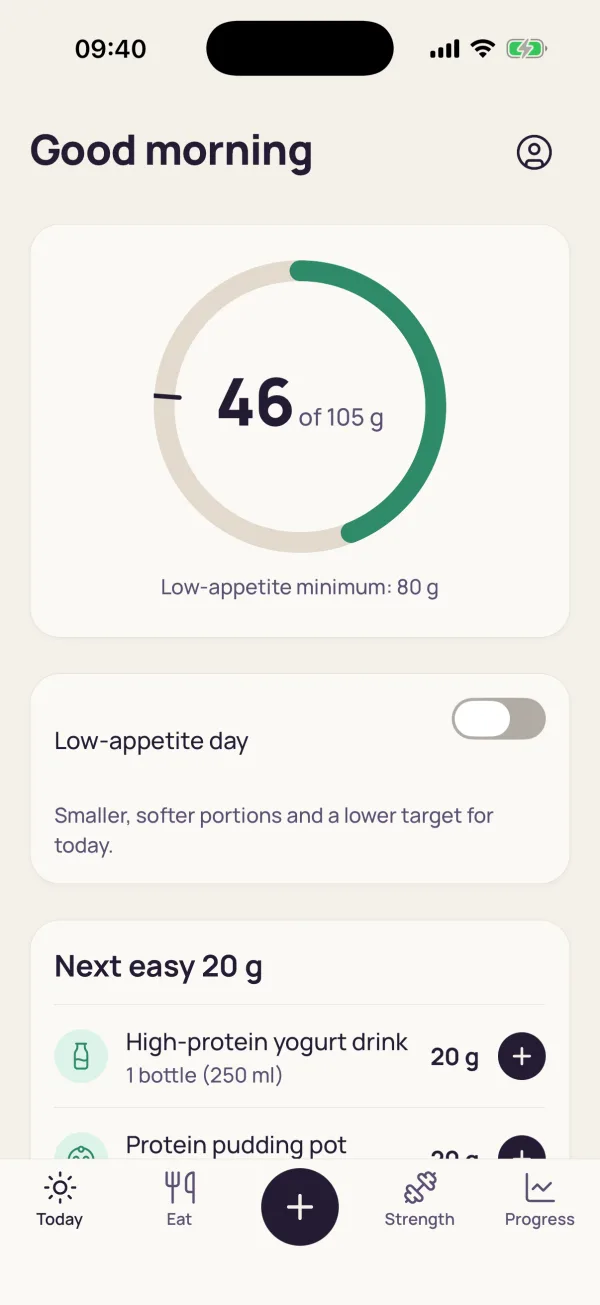
Shakes are one way to reach a daily target. To find yours, use the protein calculator or read how much protein on a GLP-1. If you have kidney disease or your doctor has limited your protein, follow their advice instead.
Questions
What is the best protein shake for a GLP-1?
There is no single best one. Pick a shake with 20 g of protein or more per serving, little or no added sugar, and a taste and texture you can actually finish. A shake you drink is better than a better one you leave in the fridge.
Can I replace meals with shakes?
A shake can stand in for a meal on a day you can't face food. Day after day, food gives you fiber, vitamins and minerals a shake may not. The 2025 nutrition advisory recommends mostly minimally processed foods.
Whey or plant protein?
Both work. In our food list a scoop of whey in water has about 24 g of protein and a scoop of plant protein about 20 g. Plant protein suits people who avoid dairy.
Is too much protein a problem?
The advisory says intake at or above 2 g per kilogram of body weight a day over a long time should be avoided. If you have kidney disease or your doctor has limited your protein, follow their advice.
Do shakes make nausea worse?
It varies. Many people find cold drinks sipped slowly easier than food. If a shake doesn't sit well, try half a serving, a different type, or a yogurt drink instead.
Why you can trust this guide
- Every fact links to a source we opened and read, listed below.
- Updated 18 November 2026. When guidance changes, we check the guides that rely on it.
- Food and training only. Your dose and medication are for your prescriber.
Sources
- Nutritional priorities to support GLP-1 therapy for obesity: a joint advisory (Mozaffarian et al.), American Journal of Clinical Nutrition, 2025. Checked 18 November 2026.
- Dietary Guidelines for Americans, 2025 to 2030, U.S. Department of Agriculture and Department of Health and Human Services, 2026. Checked 18 November 2026.