How to do it
- Stand tall with your feet hip-width apart and a dumbbell in each hand, arms hanging at your sides.
- If your balance is not steady, stand near a wall or chair and hold one dumbbell only, resting the free hand on the support.
- Rise up onto the balls of your feet for one count, as high as you comfortably can.
- Pause at the top for a moment, keeping your weight over your big and second toes.
- Lower your heels slowly for two counts until they are back on the floor.
Breathing: Breathe out as you rise onto your toes. Breathe in as you lower your heels.
Common mistakes
Bouncing quickly up and down
Go up for one count and down for two. The slow way down is where much of the work happens.
Rolling onto the outside edges of the feet
Keep your weight over your big and second toes, and your ankles straight, as you rise.
Leaning forward or bending the knees
Stand tall with your knees straight but not locked, and lift straight up.
Rising only halfway
Go as high as is comfortable each rep. Use lighter dumbbells if that helps you reach the full height.
Make it easier or harder
Do the same move with no dumbbells, holding the back of a chair or a wall with both hands.
Standing calf raiseUse heavier dumbbells, hold the top for two counts, or stand with the balls of your feet on a stair step so your heels can lower below the step, holding the rail with one hand.
Where it fits in a session
When a session feels easy two times in a row, add 1 or 2 reps to each set. See the 4-week home plan.
Why it helps on a GLP-1
When you lose weight, some of what you lose is lean mass, which includes muscle. Strength training two or three times a week is the main way to keep it. Your calves push you off the ground with every step and help with balance, so stronger calves make walking, stairs and standing on your toes to reach a shelf feel easier.
It closes our Legs & posture routine with dumbbells. Browse the other moves, and read more in strength training on a GLP-1 and keeping muscle on a GLP-1.
Questions
What does a calf raise with dumbbells work?
Mainly your calves, the muscles at the back of your lower legs, with help from the small muscles around your ankles and feet.
How many reps should I do?
In our Legs & posture routine with dumbbells it is 2 sets of 15, with about 45 seconds of rest between sets. Add 1 or 2 reps when a session feels easy two times in a row.
How heavy should the dumbbells be?
Calves are used to carrying you all day, so you can often hold the same dumbbells you use for a squat. Pick a weight that lets you finish every rep at full height.
What if I get cramp or pain in my calf or ankle?
Stop and let it settle. If the pain comes back or you have a sore Achilles tendon, ask your doctor or a physiotherapist before you carry on.
Stop if you feel pain. This is general fitness guidance, not medical advice. If you have a heart, joint or other health condition, check with your doctor before starting.
Sources
- Strength exercises, NHS.
- Physical Activity Guidelines for Americans, 2nd edition, U.S. Department of Health and Human Services, 2018.
In the same routine
 Video
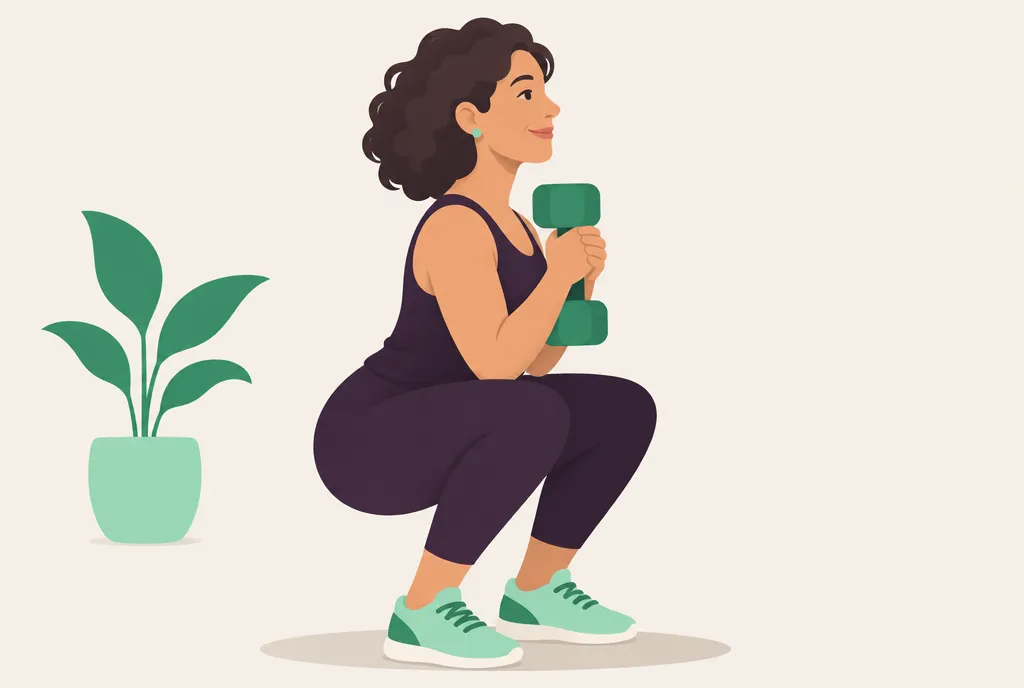
Goblet squat
Hold one dumbbell at your chest. Sit between your hips.
 Video
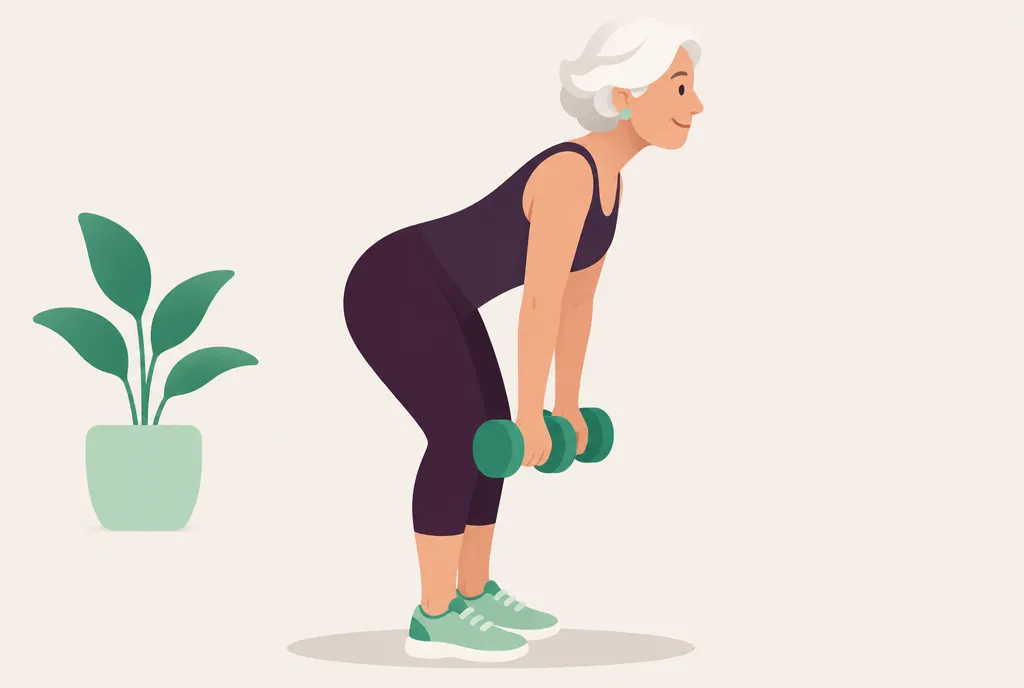
Dumbbell Romanian deadlift
Soft knees, push hips back, dumbbells close to your legs.
 Video
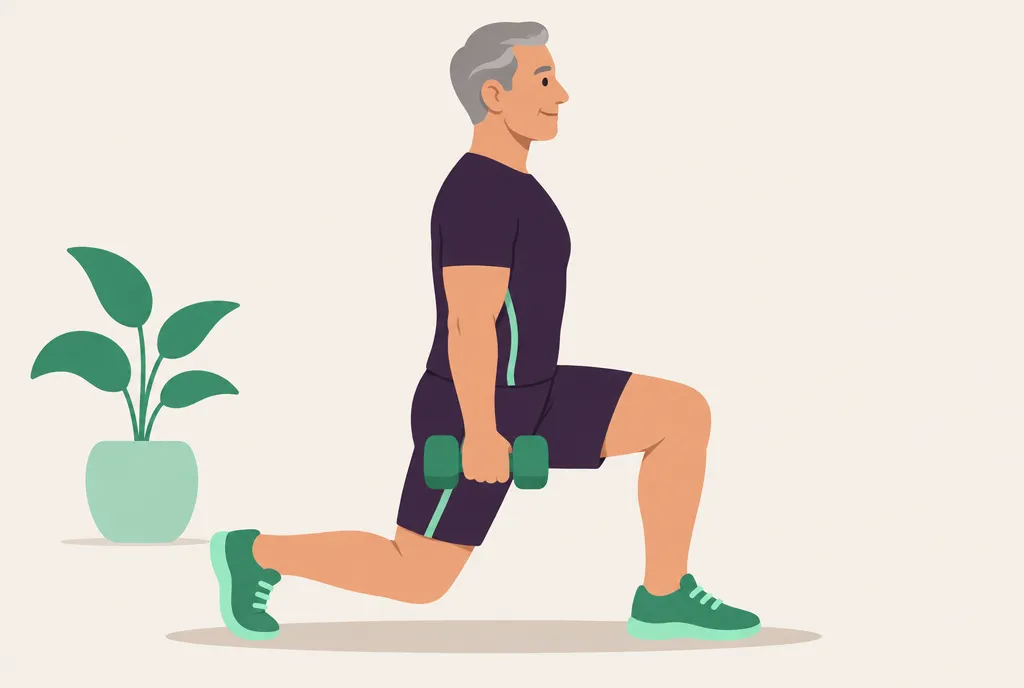
Dumbbell reverse lunge
Dumbbells at your sides. Step back and lower gently.
 Video
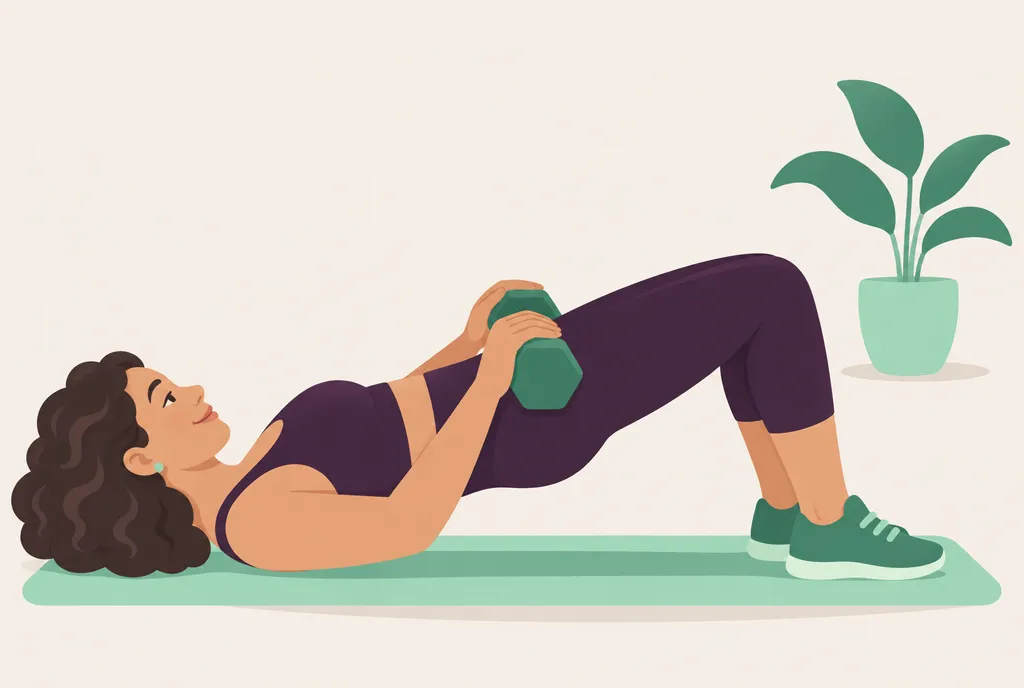
Weighted glute bridge
One dumbbell on your hips. Squeeze at the top.