How to do it
- Stand tall with your feet hip-width apart. If your balance is shaky, rest one hand on the back of a sturdy chair beside you.
- Take a long step back with one foot and land softly on the ball of that foot.
- Bend both knees and lower slowly until your back knee is a few centimetres above the floor, or as low as feels comfortable. Keep your chest up.
- Push through the heel of your front foot to stand back up, and bring the back foot in next to the front one.
- Do all the reps on one side, then switch to the other leg.
Breathing: Breathe in as you step back and lower. Breathe out as you push through the front heel to stand.
Common mistakes
Stepping back too short, so the front knee drifts far past the toes
Take a longer step so both knees can bend to about a right angle at the bottom.
Dropping onto the back knee
Lower slowly and stop just above the floor. Put a folded towel under the knee while you learn.
Pushing off the back foot to stand up
Let the front leg do the work. Think of pressing the floor away with the front heel.
Front knee caving inward
Keep the front knee pointing over your middle toes the whole way down and up.
Make it easier or harder
Hold the chair with both hands and make each lunge shallower. If lunging still feels unsteady, do chair squats to build leg strength on both legs first.
Chair squatTake three slow counts to lower, then hold a dumbbell in each hand once 8 good reps on each side feel easy.
Dumbbell reverse lungeWhere it fits in a session
When a session feels easy two times in a row, add 1 or 2 reps to each set. See the 4-week home plan.
Why it helps on a GLP-1
When you lose weight, some of what you lose can be muscle, and regular strength training is the main way to hold on to it. Your thighs and glutes are among the biggest muscles you have, and they do the work every time you climb stairs or get up from the floor. The reverse lunge trains one leg at a time, so it also practises balance, and it needs nothing but a bit of floor space.
It is part of our Legs & posture routine. See all the moves on the exercises page, and read more in strength training on a GLP-1 and keeping muscle on a GLP-1.
Questions
What does a reverse lunge work?
Mostly the front of your thighs and your glutes, with help from your hamstrings, calves and the core muscles that keep you steady on one leg.
How many reps should I do?
In our Legs & posture routine (no equipment) it is 3 sets of 8 on each side, with about 45 seconds of rest between sets. When a session feels easy two times in a row, add 1 or 2 reps to each set.
Why step back instead of forward?
Stepping back keeps your weight over the front heel, so many beginners find it easier to balance and control than a forward lunge.
My knee hurts when I lunge. What should I do?
Stop the exercise and ask your doctor or a physiotherapist before trying it again. Chair squats are a gentler way to train the same muscles in the meantime.
Stop if you feel pain. This is general fitness guidance, not medical advice. If you have a heart, joint or other health condition, check with your doctor before starting.
Sources
- Physical Activity Guidelines for Americans, 2nd edition, U.S. Department of Health and Human Services, 2018.
- Reverse Lunge, American Council on Exercise, Exercise Library.
In the same routine
 Video
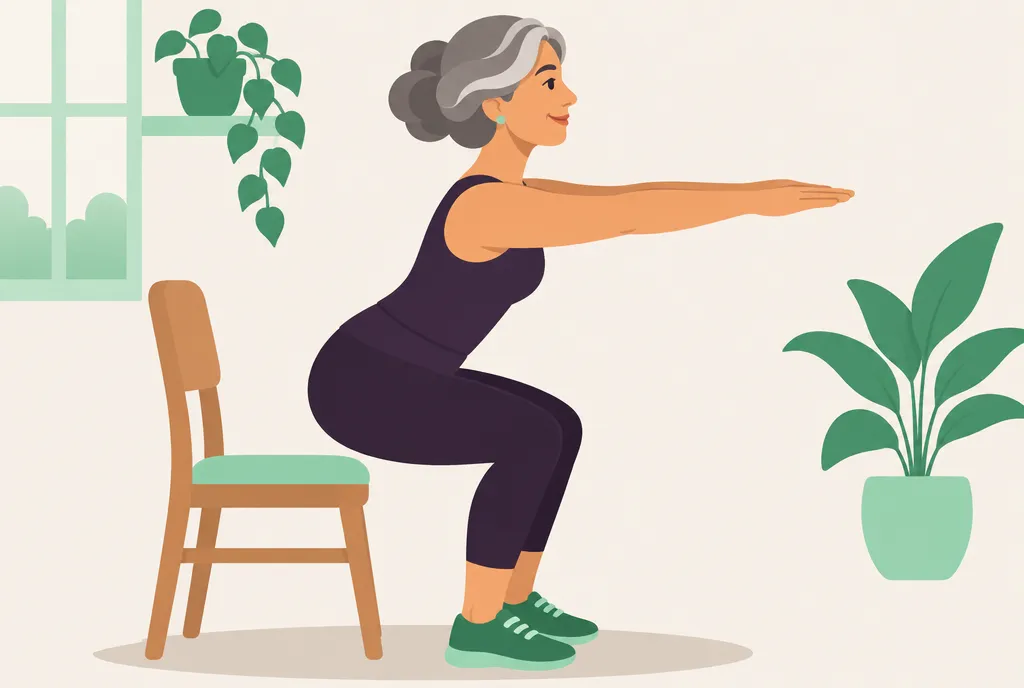
Chair squat
Sit back until you touch the chair, then stand up through your heels.
 Video
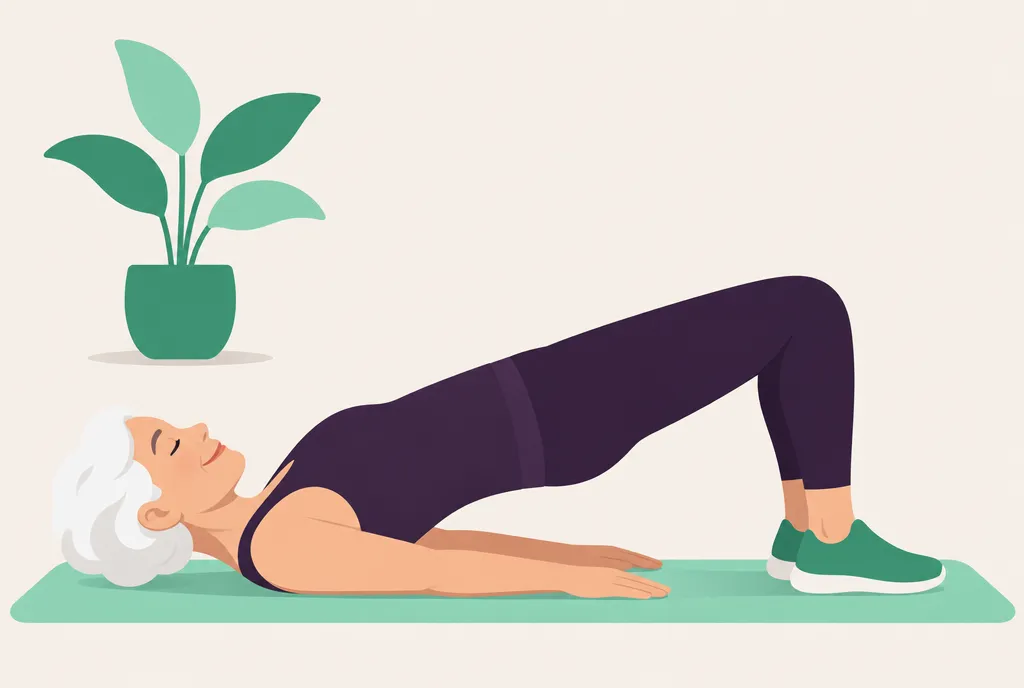
Glute bridge
Feet flat, squeeze at the top for one second.
 Video
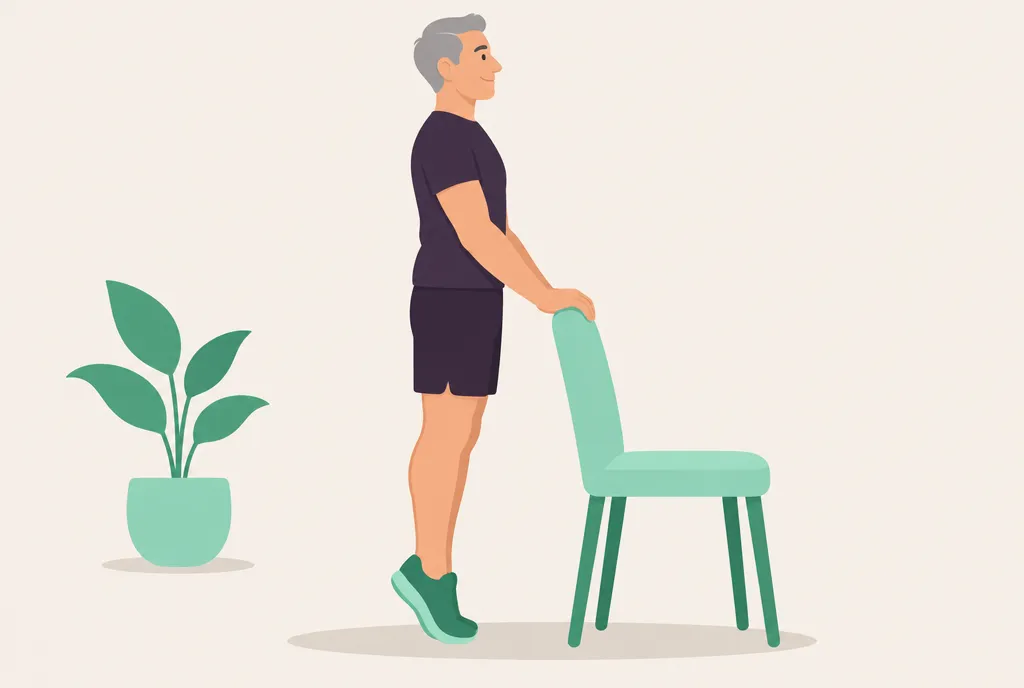
Standing calf raise
Hold a chair for balance. Up for one count, down for two.
 Video
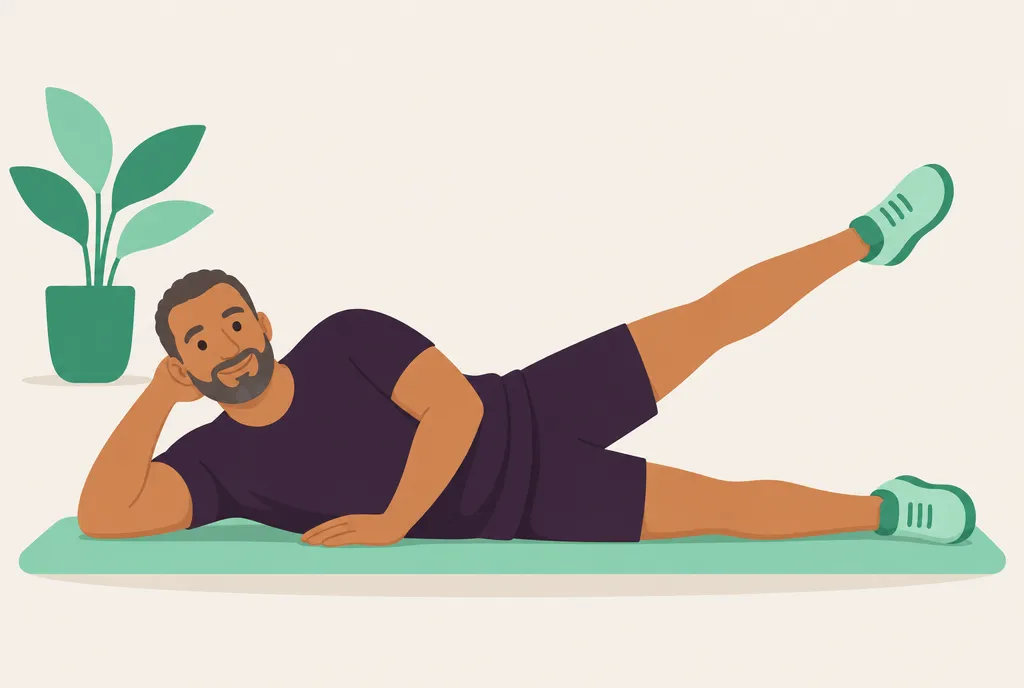
Side-lying leg raise
Top leg straight, lift without rolling your hips back.