How to do it
- Lie on your side on a mat with your legs straight and stacked, one hip directly on top of the other.
- Rest your head on your lower arm or a cushion, and place your top hand on the floor in front of your chest for support.
- Bend your bottom knee slightly for a steadier base. Keep your top leg straight, toes pointing forward, not up to the ceiling.
- Lift the top leg slowly to about hip height or a little higher, without letting your top hip roll backwards.
- Pause for a moment, then lower slowly. Do all the reps, then turn over and work the other side.
Breathing: Breathe out as you lift the leg. Breathe in as you lower it.
Common mistakes
Rolling the top hip back so the leg swings forward
Keep your hips stacked and your leg slightly behind your body line. A wall behind your back helps you feel it.
Turning the toes up to the ceiling
Point your toes forward or slightly down so the outer hip does the lifting.
Swinging the leg up fast and letting it drop
Lift for one count and lower for two, keeping control the whole time.
Lifting as high as possible
Stop at the height where your hips stay still. A smaller lift done well works the right muscles.
Make it easier or harder
Bend both knees and lift only the top knee while keeping your feet together, like opening a book. Or make the lift smaller.
Pause for two seconds at the top of each lift, or slow the lowering to three counts.
Where it fits in a session
When a session feels easy two times in a row, add 1 or 2 reps to each set. See the 4-week home plan.
Why it helps on a GLP-1
When you lose weight, some of what you lose can be muscle, so it pays to train every part of your legs, not only the front. The small muscles on the side of your hip keep you steady on one leg, which matters for walking, stairs and balance. This move works them while you lie down, so it is gentle on your knees.
It is part of our Legs & posture routine. See all the moves on the exercises page, and read more in strength training on a GLP-1 and keeping muscle on a GLP-1.
Questions
What does a side-lying leg raise work?
The muscles on the outside of your hip. They keep your pelvis level when you walk, climb stairs or stand on one leg.
How many reps should I do?
In our Legs & posture routine (no equipment) it is 2 sets of 12 on each side, with about 45 seconds of rest between sets. When a session feels easy two times in a row, add 1 or 2 reps to each set.
I feel it in my lower back, not my hip. Why?
Usually the leg is drifting forward or the hips are rolling. Bring the leg slightly back, keep your hips stacked and lift less high.
My hip hurts during the move. Should I keep going?
No. Stop and ask your doctor or a physiotherapist before you try it again.
Stop if you feel pain. This is general fitness guidance, not medical advice. If you have a heart, joint or other health condition, check with your doctor before starting.
Sources
- Physical Activity Guidelines for Americans, 2nd edition, U.S. Department of Health and Human Services, 2018.
- Side Lying Hip Abduction, American Council on Exercise, Exercise Library.
- Strength exercises, NHS.
In the same routine
 Video
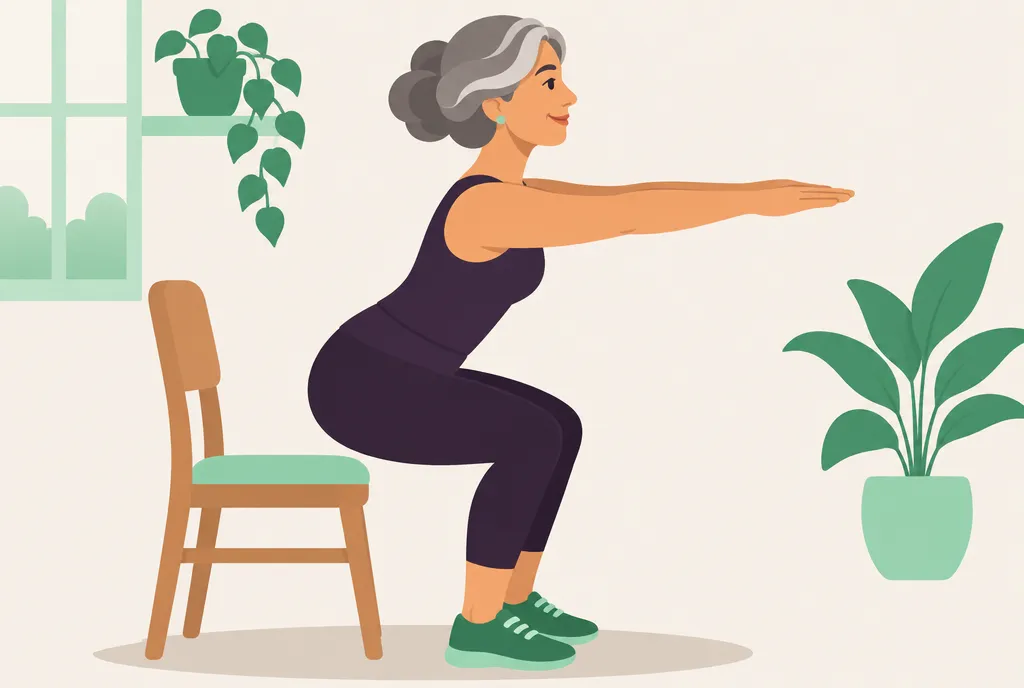
Chair squat
Sit back until you touch the chair, then stand up through your heels.
 Video
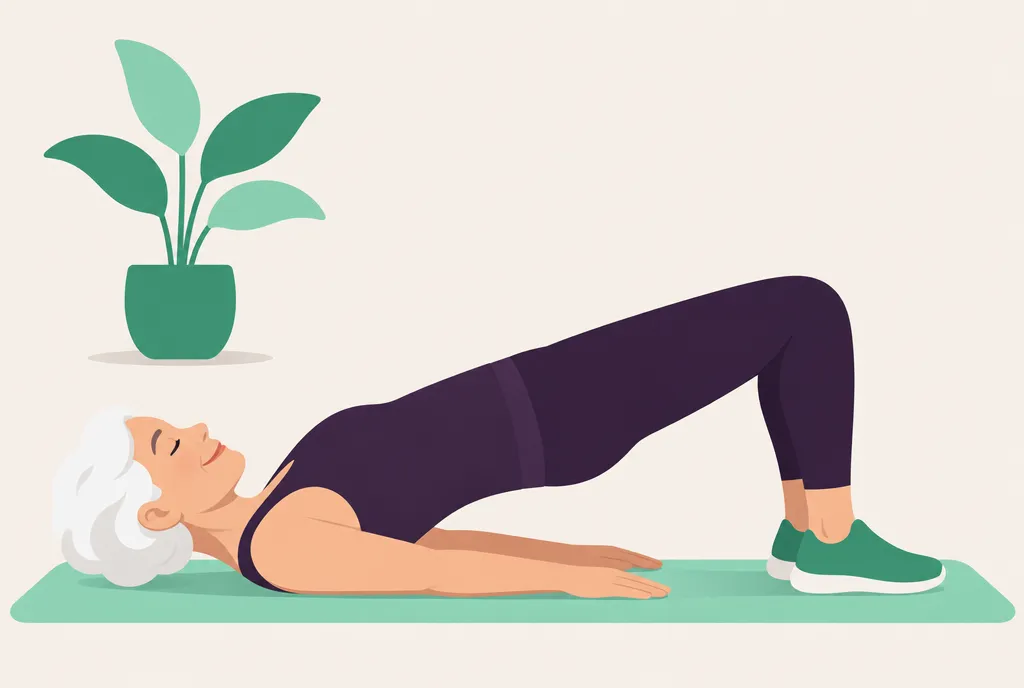
Glute bridge
Feet flat, squeeze at the top for one second.
 Video
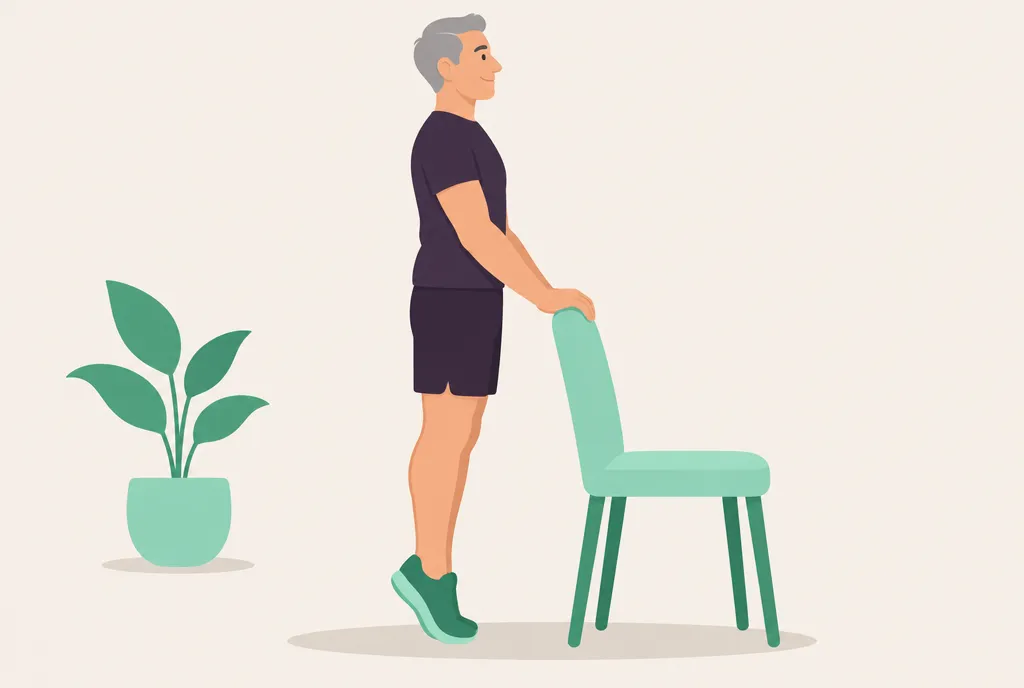
Standing calf raise
Hold a chair for balance. Up for one count, down for two.
 Video
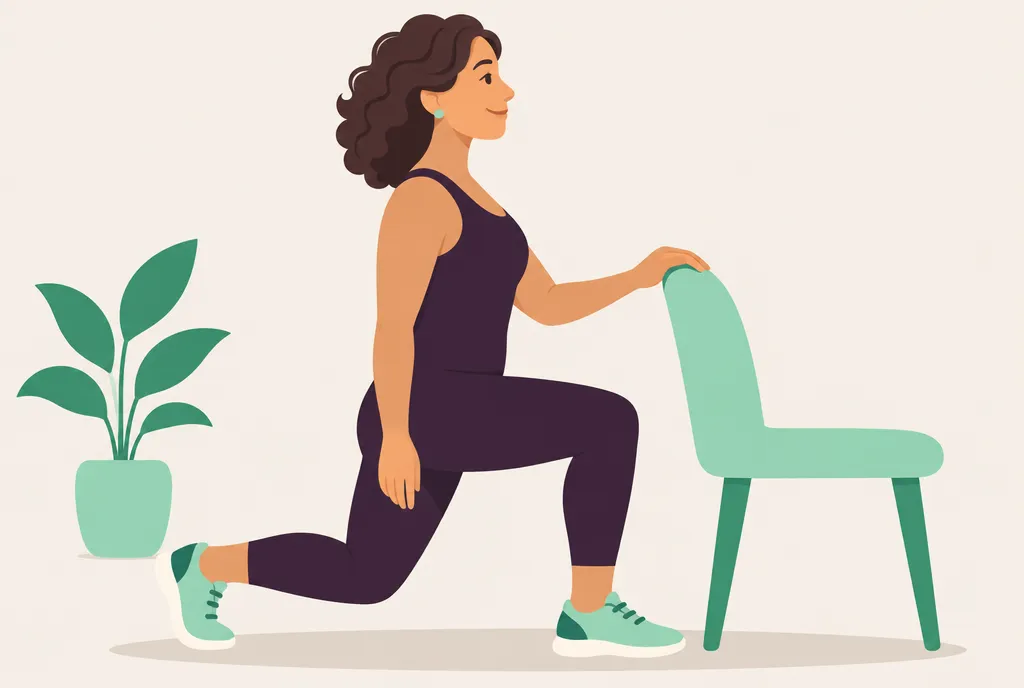
Reverse lunge
Hold a chair if needed. Step back, lower gently, push through the front heel.