The short answer
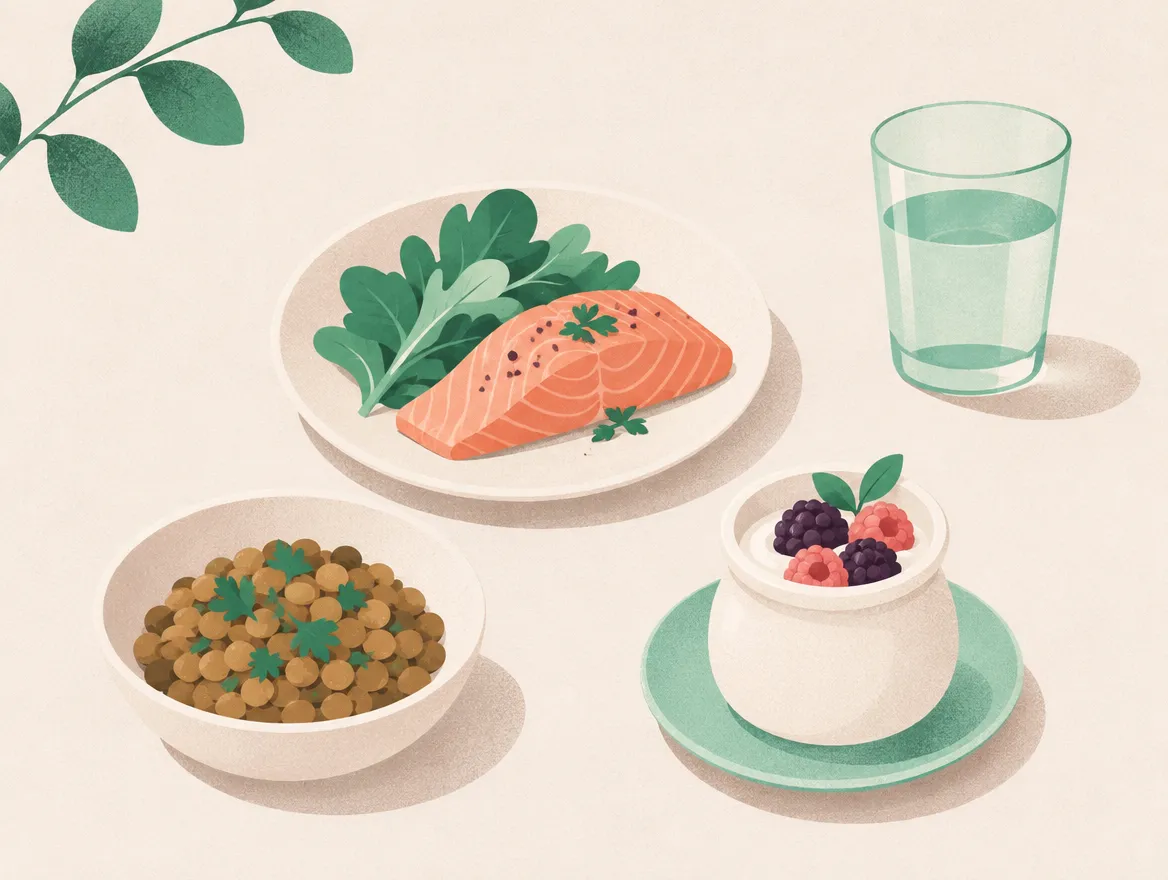
Eat small meals every few hours, start each one with a protein food, and drink fluids through the day. Nutrition experts suggest building meals from minimally processed foods: fish, eggs, yogurt, beans, vegetables, fruit and whole grains, with less fried food, sweets and alcohol. The same applies to Rybelsus®, the semaglutide pill.
On this page
Why eating changes on semaglutide
Many people on semaglutide eat much less than before, because their appetite is lower. That makes it easy to fall short on protein, vitamins and minerals. A 2025 joint advisory from four US nutrition and obesity medicine societies says the focus should be on getting enough nutrients from a smaller amount of food.
Start each meal with protein
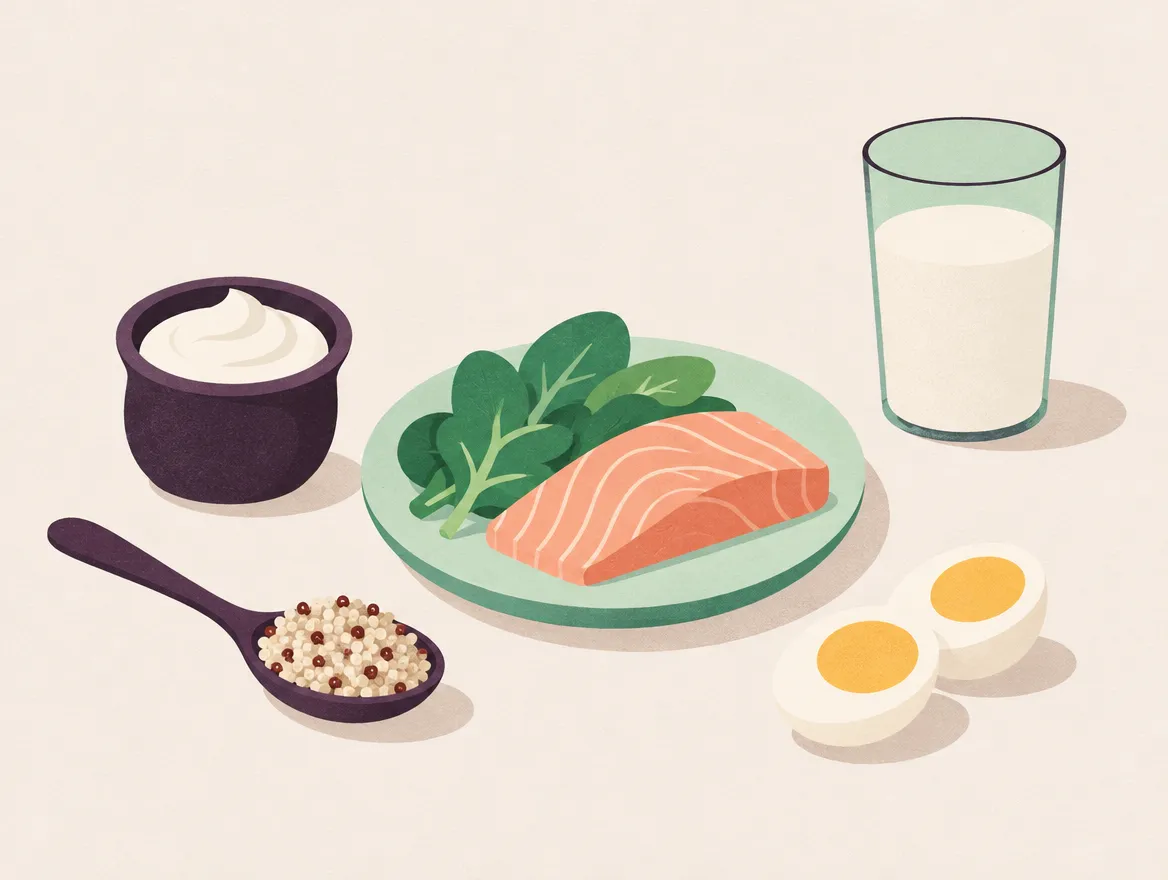
The advisory suggests eating the protein part of a meal first, so it gets eaten before you feel full. Small, protein-rich foods work best when your appetite is low. These portions come from our food list:
| Food | Portion | Protein |
|---|---|---|
| Greek yogurt, plain, fat-free | 6 oz pot (170 g) | 17 g |
| Cottage cheese, low-fat | 1/2 cup (113 g) | 13 g |
| Eggs, boiled | 2 eggs | 13 g |
| Tuna, canned in water | 1 small can (85 g) | 20 g |
| Salmon, cooked | 3 oz (85 g) | 22 g |
| Chicken breast, cooked | 3 oz (85 g) | 26 g |
| Tofu, firm | 3.5 oz (100 g) | 14 g |
| Lentils, cooked | 1/2 cup (100 g) | 9 g |
| String cheese | 2 sticks | 14 g |
| Ready-to-drink protein shake | 1 bottle (330 ml) | 25 g |
Typical values; packaged foods vary by brand. For a daily number, see how much protein on a GLP-1.
Small meals, every few hours
The advisory suggests a small breakfast, then small meals every 3 to 4 hours, with fluids in between. Long gaps without food and large meals are both worth avoiding: vomiting is more likely after a large meal, and going too long without eating can make nausea worse.
Fill the rest of the plate
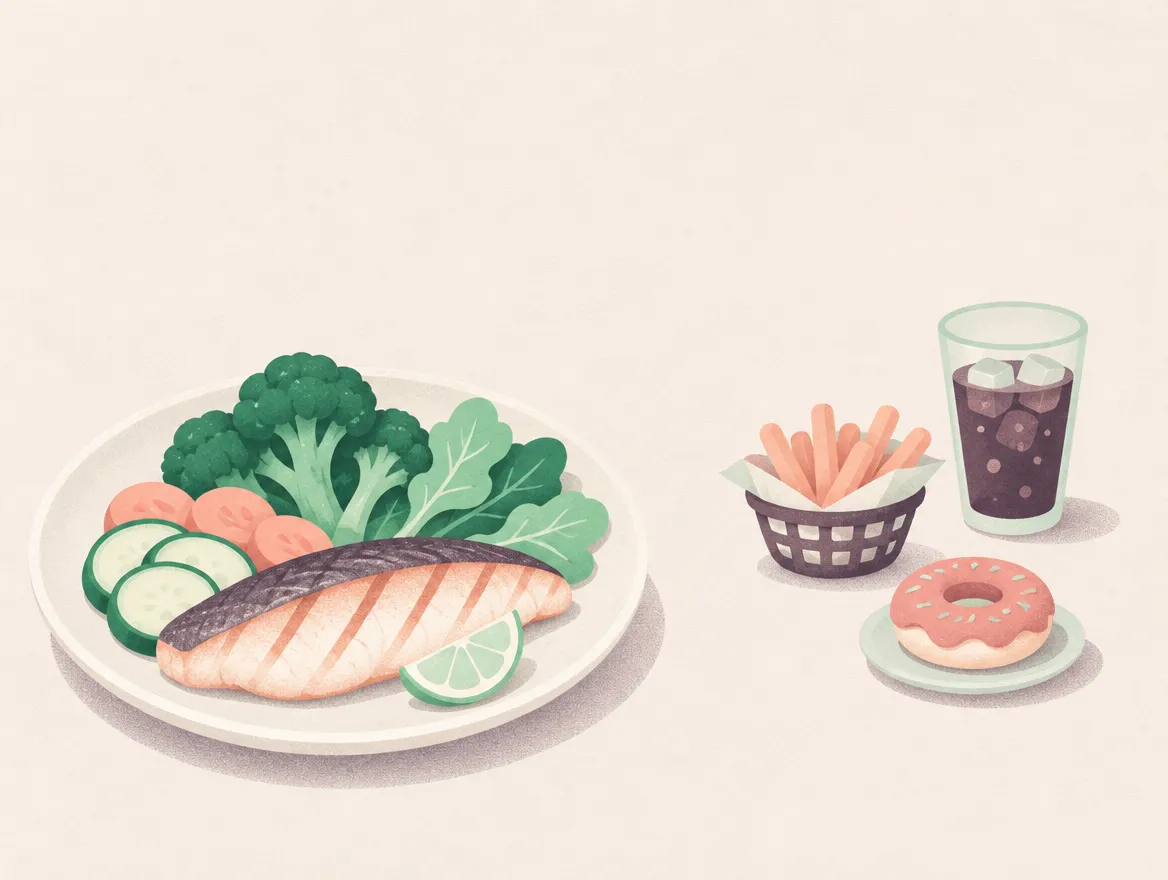
Around the protein, the advisory recommends minimally processed foods:
- Vegetables, such as broccoli, leafy greens, tomatoes, carrots and peas
- Fruit, such as berries, apples, citrus and bananas
- Whole grains, such as oats, quinoa, brown rice and whole-grain bread
- Beans, lentils, nuts and seeds
- Olive, canola or avocado oil
Add high-fiber foods gradually (more in fiber and fluids on a GLP-1). In the first days of treatment, some people find fatty and high-fiber foods harder to manage, and the advisory suggests going easy on both until things settle. See foods to limit on Ozempic® and Wegovy®.
Drink through the day
The Medication Guides for Wegovy and Ozempic say it is important to drink fluids to reduce the chance of dehydration. Water, still or sparkling, and unsweetened drinks are the simplest choices. Keep alcohol to a minimum: it can make nausea and reflux worse.
When you can hardly eat
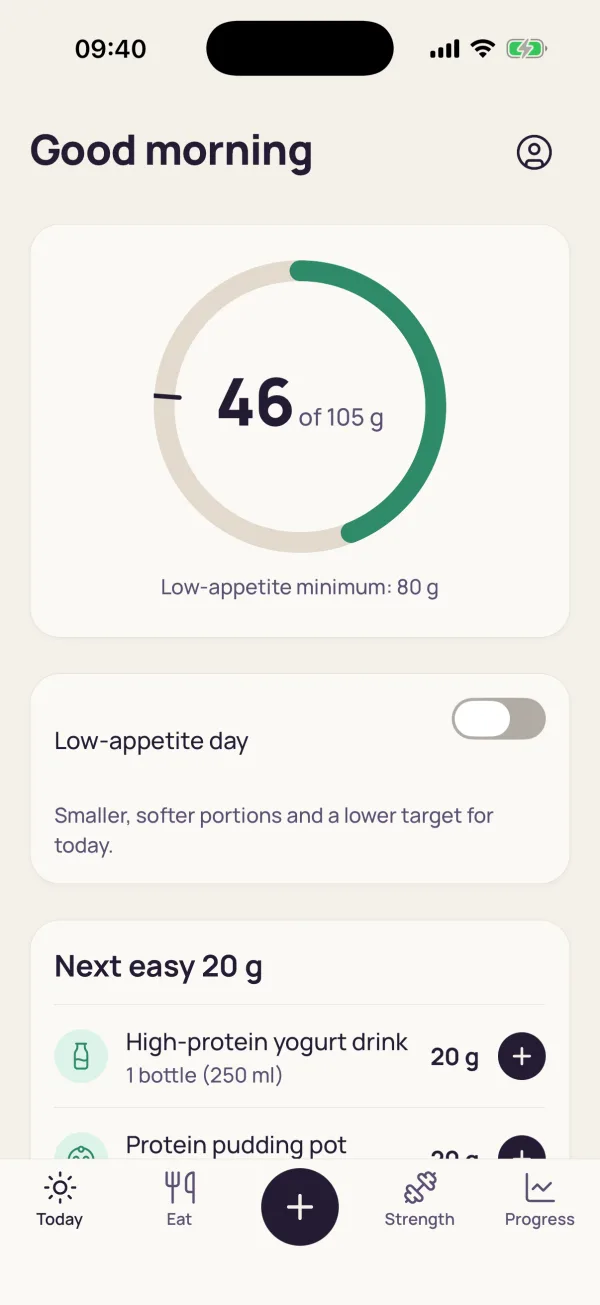
On days with very little appetite, soft and cold foods often go down more easily than heavier ones. The advisory mentions smoothies and protein drinks made with fruit, vegetables, milk or yogurt, plus cottage cheese and soups, as often more appealing than red meat, cold cuts or hard cheese. Setting a reminder to eat can help too. See foods for nausea days and the GLP-1 meal plan for a low-appetite day.
If you can't keep food or fluids down, or a symptom is severe or doesn't go away, contact your doctor.
Questions
Is the food advice different for Ozempic and Wegovy?
No. Both contain the same medicine, semaglutide, so the same eating habits apply. Which one you take and your dose are decided with your prescriber.
Do I need vitamins or supplements?
Some nutrients can run low when you eat much less than before. A 2025 nutrition advisory suggests clinicians consider vitamin D, calcium, B12 or a multivitamin for some people, so ask your doctor or dietitian whether one makes sense for you.
Can I drink alcohol?
Nutrition experts advise keeping alcohol to a minimum on GLP-1 medicines, because it can make nausea and reflux worse. Ask your prescriber what is right for you.
How much protein should I aim for?
A range of 1.2 to 1.6 g per kilogram of body weight a day has been proposed during weight loss. Our free protein calculator works out a daily number for you in a minute.
Why you can trust this guide
- Every fact links to a source we opened and read, listed below.
- Updated 18 November 2026. When guidance changes, we check the guides that rely on it.
- Food and training only. Your dose and medication are for your prescriber.
Sources
- Nutritional priorities to support GLP-1 therapy for obesity: a joint advisory (Mozaffarian et al.), American Journal of Clinical Nutrition, 2025. Checked 18 November 2026.
- Wegovy® prescribing information and Medication Guide, U.S. Food and Drug Administration, 2026. Checked 18 November 2026.
- Ozempic® prescribing information and Medication Guide, U.S. Food and Drug Administration, 2026. Checked 18 November 2026.
- Dietary Guidelines for Americans, 2025 to 2030, USDA and HHS, 2026. Checked 18 November 2026.
- Semaglutide, NHS, 2026. Checked 18 November 2026.