How to do it
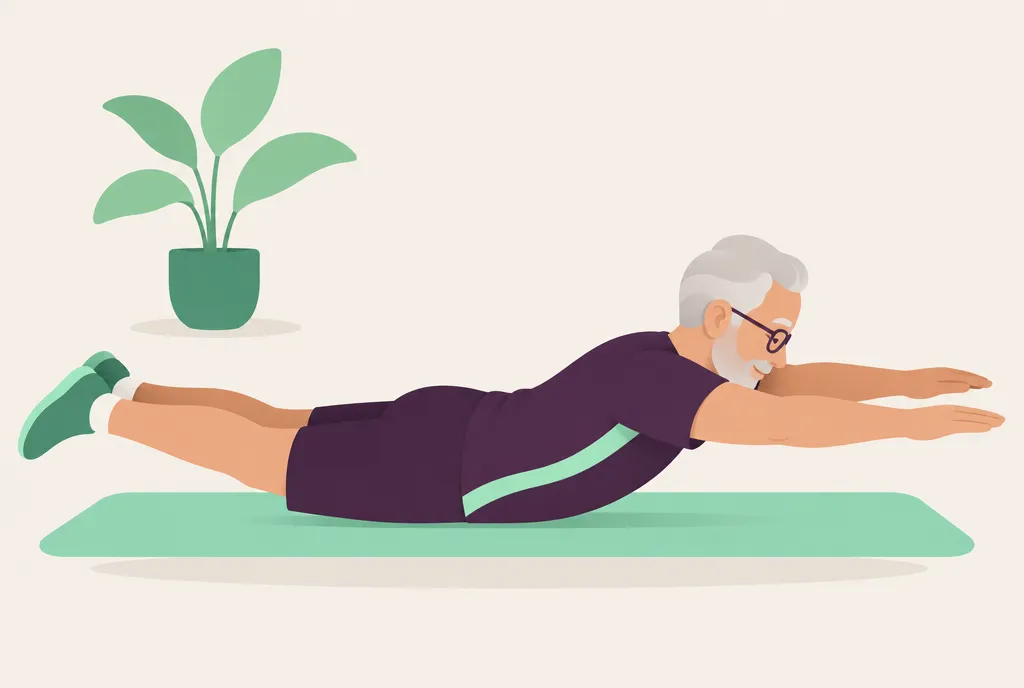
- Lie face down on a mat with your legs straight. Rest your forehead on a folded towel so your neck stays long.
- Stretch your arms overhead and out to the sides in a Y shape, palms facing each other and thumbs pointing up.
- Draw your shoulder blades gently down and back, away from your ears.
- Lift both arms a few centimetres off the floor, leading with your thumbs, and keep your forehead on the towel.
- Pause for one second at the top, then lower your arms slowly to the floor.
Breathing: Breathe out as you lift your arms. Breathe in as you lower them.
Common mistakes
Shrugging the shoulders up to the ears
Think of sliding your shoulder blades down into your back pockets before each lift.
Lifting the head and chest instead of the arms
Keep your forehead on the towel. Only the arms move.
Arms too wide or too narrow
Hold a clear Y, about halfway between straight overhead and straight out to the sides.
Rushing the reps
Lift for one count, pause for one, lower for two.
Make it easier or harder
Lift one arm at a time, or bend your elbows slightly to make the arms shorter and lighter.
Hold the top for three seconds, or hold a very light weight such as a water bottle. The dumbbell reverse fly loads the same upper back muscles.
Dumbbell reverse flyWhere it fits in a session
When a session feels easy two times in a row, add 1 or 2 reps to each set. See the 4-week home plan.
Why it helps on a GLP-1
When you lose weight, some of what you lose can be muscle, and strength training is the main way to keep it. The upper back is easy to forget, because most daily tasks happen in front of you. The prone Y raise trains the muscles that pull your shoulders back, which balances the push-ups in the same session, with no equipment at all.
It is part of our Upper body strength routine. See all the moves on the exercises page, and read more in strength training on a GLP-1 and keeping muscle on a GLP-1.
Questions
What does a prone Y raise work?
The muscles of your upper back that pull your shoulder blades down and together, plus the back of your shoulders. They help you sit and stand tall.
How many reps should I do?
In our Upper body strength routine (no equipment) it is 3 sets of 10, with about 45 seconds of rest between sets. When a session feels easy two times in a row, add 1 or 2 reps to each set.
My arms barely leave the floor. Is that normal?
Yes. These muscles are small and often weak at first, so a lift of a few centimetres is fine. It usually gets higher with practice.
I feel pain in my shoulder. What should I do?
Stop the exercise and ask your doctor or a physiotherapist before trying it again.
Stop if you feel pain. This is general fitness guidance, not medical advice. If you have a heart, joint or other health condition, check with your doctor before starting.
Sources
- Physical Activity Guidelines for Americans, 2nd edition, U.S. Department of Health and Human Services, 2018.
- Prone Scapular (Shoulder) Stabilization Series: I, Y, T, W, O Formation, American Council on Exercise, Exercise Library.
In the same routine
 Video
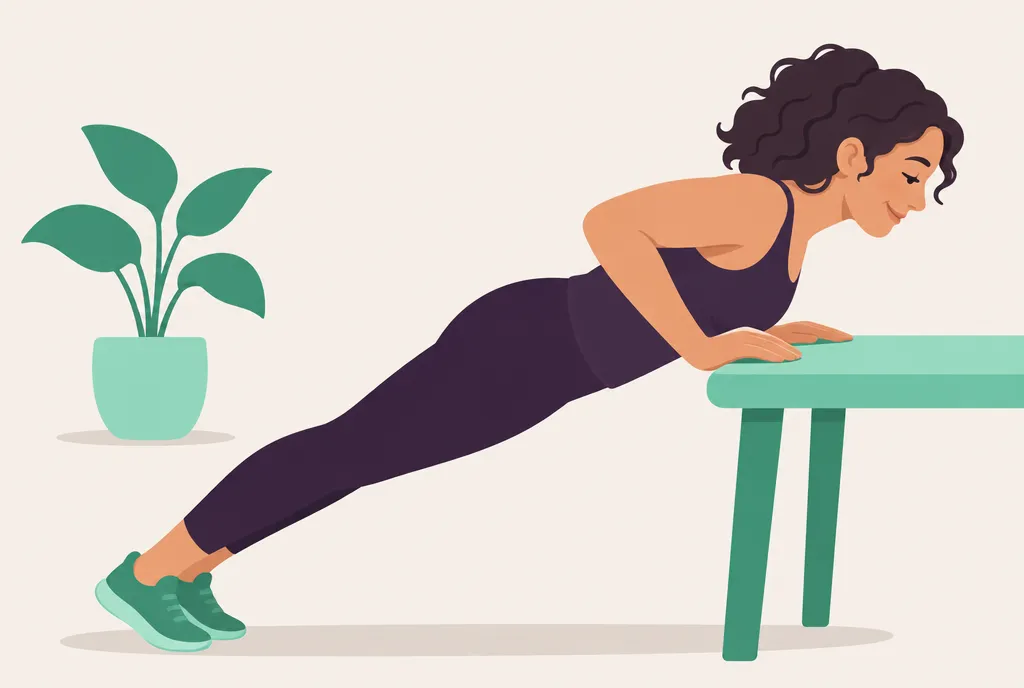
Incline push-up
Hands on a sturdy table or sofa edge. Lower your chest slowly.
 Video
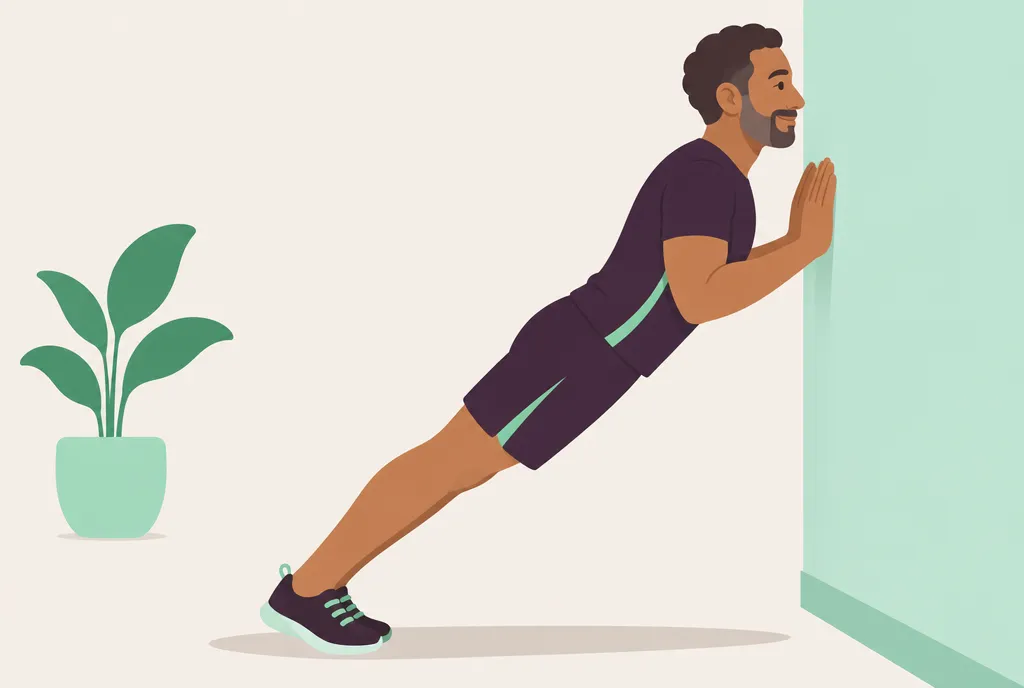
Close-grip wall push-up
Hands close together, elbows brushing your sides.
 Video
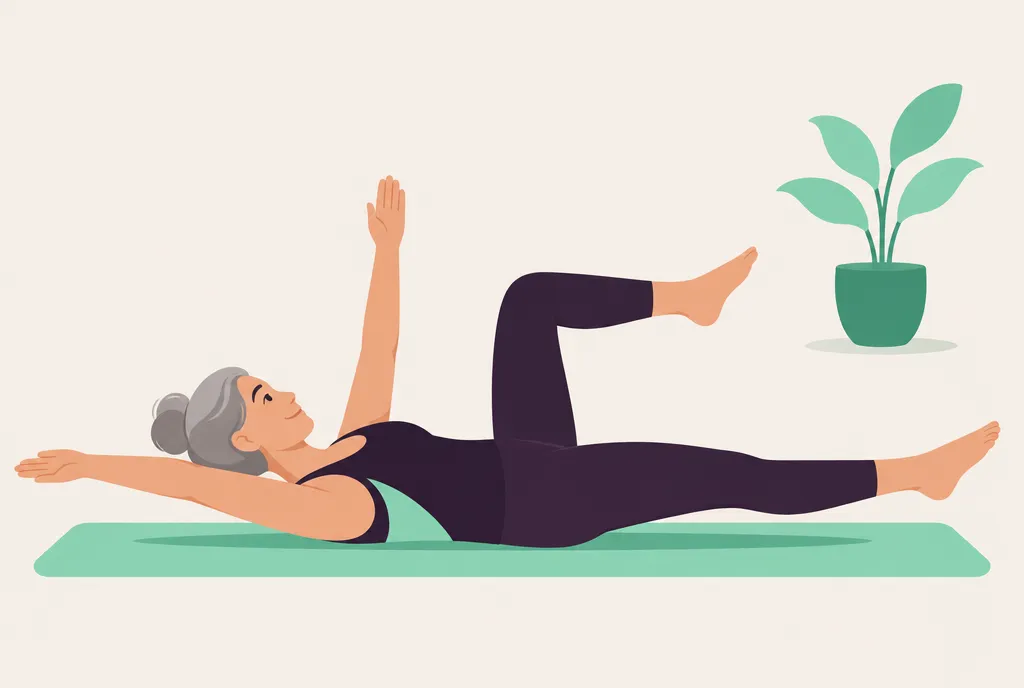
Dead bug
Lower back pressed down. Opposite arm and leg, slow.
 Video
Back extension (superman)
Lift chest and arms a little, look at the floor, pause.