How to do it
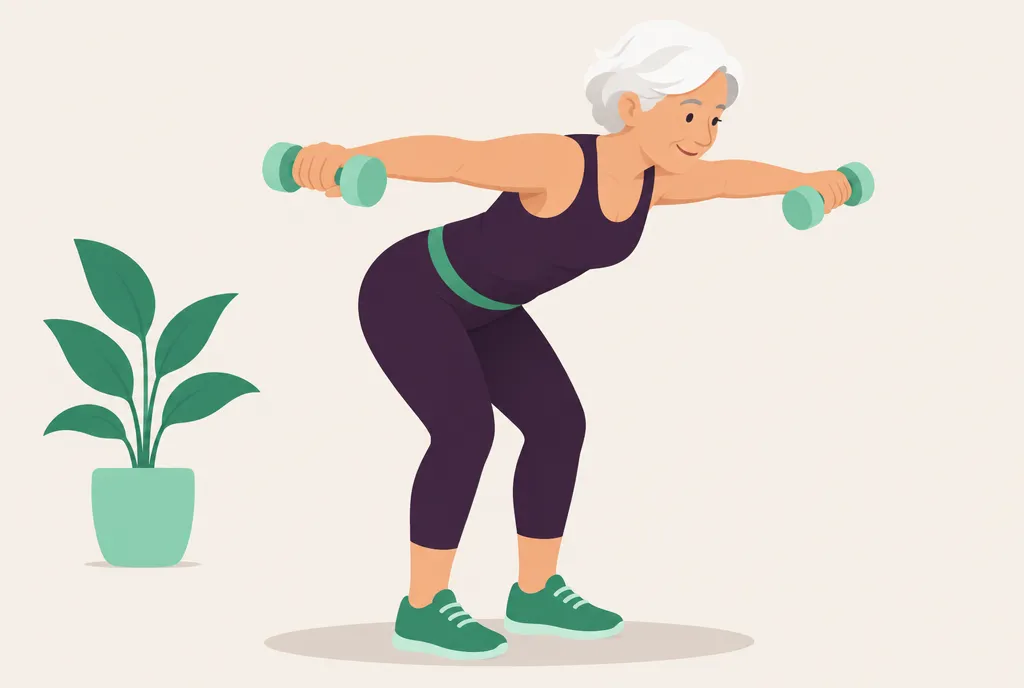
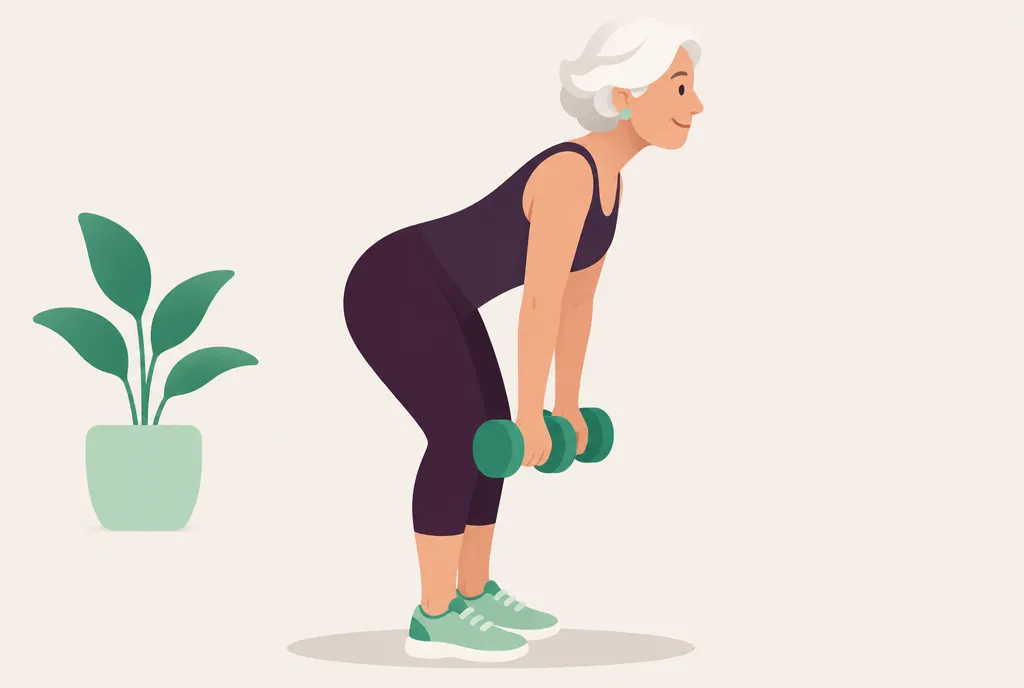
- Stand with your feet hip-width apart and a light dumbbell in each hand, palms facing each other.
- Soften your knees and hinge forward from your hips, pushing your hips back, until your chest leans well forward. Keep your back flat and let your arms hang below your shoulders.
- With a slight bend in your elbows, lift both arms out to the sides until they are about level with your shoulders.
- Squeeze your shoulder blades together at the top for one count.
- Lower the dumbbells slowly back below your shoulders, keeping the forward lean.
Breathing: Breathe out as you lift your arms out to the sides. Breathe in as you lower them.
Common mistakes
Rounding the back while leaning forward
Push your hips back and keep your chest long. If your back rounds, lean forward a little less or sit on the edge of a chair and lean over your knees.
Swinging the dumbbells up with the body
Keep your body still and lift with your arms. Use lighter dumbbells if you need momentum.
Shrugging the shoulders toward the ears
Keep your neck long and think of pulling your shoulder blades together and down.
Lifting the arms too high or behind the body
Stop at shoulder level. Higher than that does not help and can strain the shoulders.
Make it easier or harder
Lie face down and do the prone Y raise with no weight, or sit on the edge of a chair, lean over your knees and do the reverse fly with very light dumbbells or none.
Prone Y raiseHold the top for two counts or move up a dumbbell size. The bent-over dumbbell row works the same upper back with heavier weights.
Bent-over dumbbell rowWhere it fits in a session
When a session feels easy two times in a row, add 1 or 2 reps to each set. See the 4-week home plan.
Why it helps on a GLP-1
When you lose weight, some of what you lose is lean mass, which includes muscle. Strength training two or three times a week is the main way to keep it. The reverse fly works the small muscles of the upper back that pull your shoulders back, a good balance to hours spent leaning over a phone or desk.
It is part of our Legs & posture and Upper body strength routines with dumbbells. Browse the other moves, and read more in strength training on a GLP-1 and keeping muscle on a GLP-1.
Questions
What does a dumbbell reverse fly work?
Mainly your upper back between the shoulder blades and the backs of your shoulders, the muscles that help you stand and sit tall.
How many reps should I do?
In both our Legs & posture and Upper body strength routines with dumbbells it is 2 sets of 12, with about 45 seconds of rest between sets. Add 1 or 2 reps when a session feels easy two times in a row.
How heavy should the dumbbells be?
Lighter than you think. Most people use their lightest pair, and some start with no weight.
Is it safe for my lower back?
Keep your back flat and your knees soft, or do it seated if leaning forward is uncomfortable. If your back or shoulders hurt, stop and ask your doctor or a physiotherapist.
Stop if you feel pain. This is general fitness guidance, not medical advice. If you have a heart, joint or other health condition, check with your doctor before starting.
Sources
- Incline Reverse Fly, American Council on Exercise (ACE), Exercise Library.
- Physical Activity Guidelines for Americans, 2nd edition, U.S. Department of Health and Human Services, 2018.
In the same routine
 Video
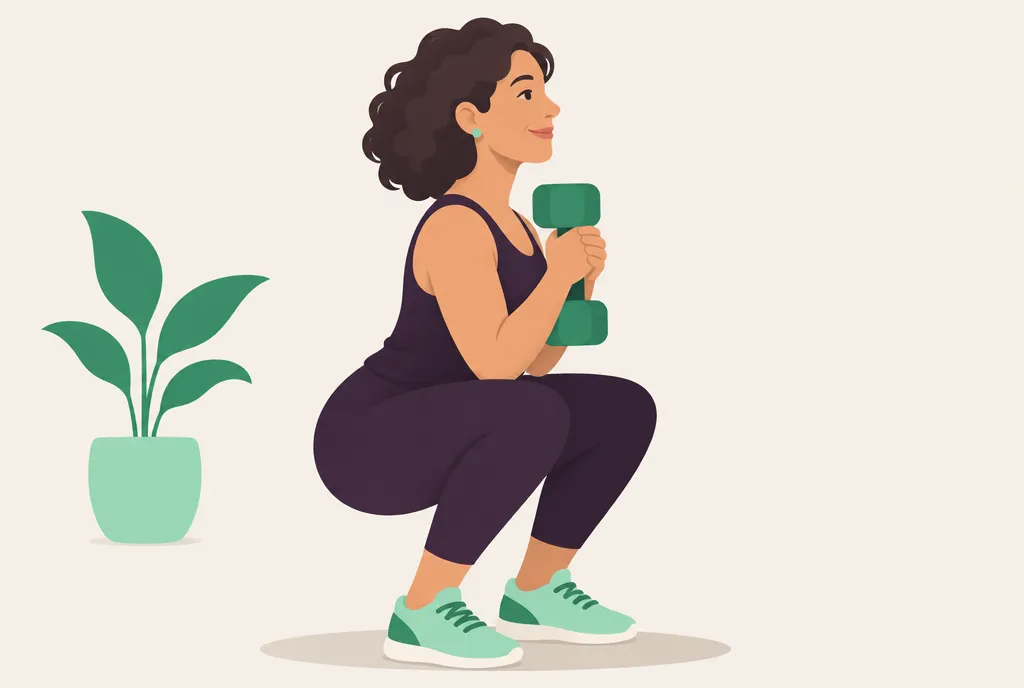
Goblet squat
Hold one dumbbell at your chest. Sit between your hips.
 Video
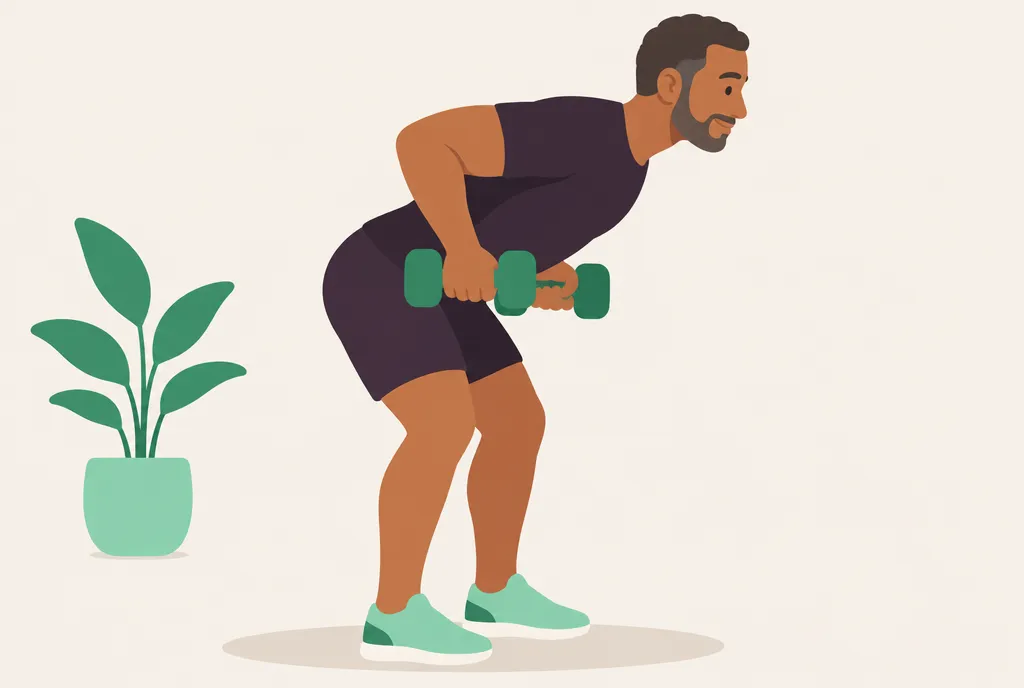
Bent-over dumbbell row
Flat back, pull elbows to your hips.
 Video
Dumbbell Romanian deadlift
Soft knees, push hips back, dumbbells close to your legs.
 Video
Dumbbell overhead press
Ribs down, press straight up, lower slowly.