How to do it
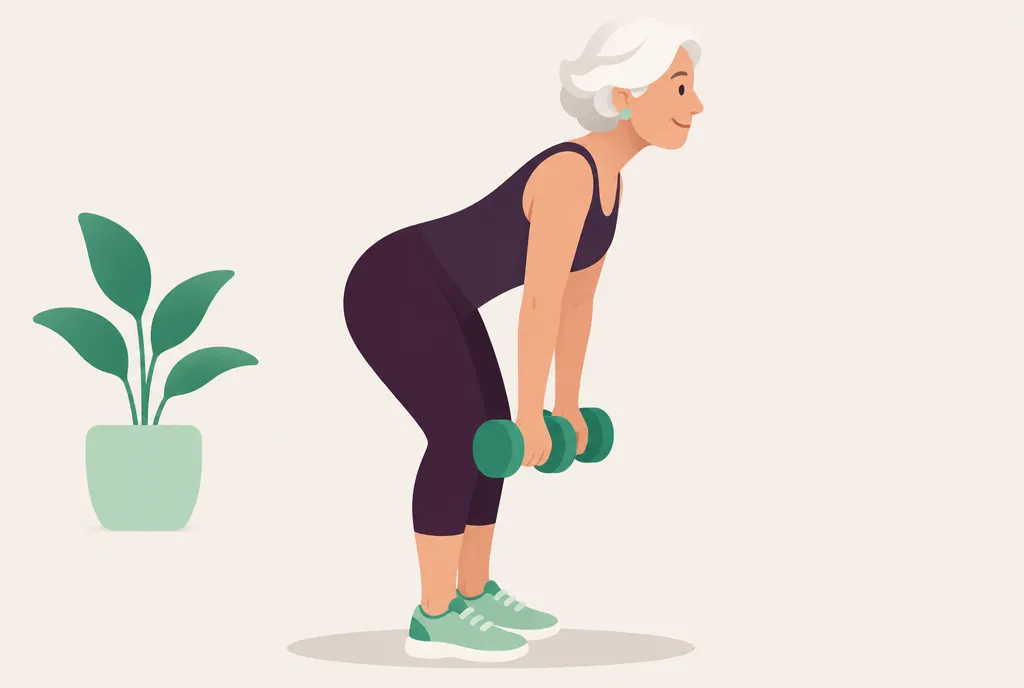
- Stand with your feet hip-width apart and a dumbbell in each hand, palms facing each other.
- Bend your knees slightly and hinge at the hips, pushing them back, until your upper body leans forward at about 45 degrees. Keep your back flat.
- Let the dumbbells hang straight down below your shoulders.
- Pull the dumbbells up towards your hips, leading with your elbows, and squeeze your shoulder blades together at the top.
- Lower the dumbbells slowly until your arms are straight again, keeping your back flat throughout.
Breathing: Breathe out as you pull the dumbbells up. Breathe in as you lower them.
Common mistakes
Rounding the back
Keep your chest proud and your back flat. If you cannot, lean forward less.
Pulling the dumbbells to your chest
Aim your elbows towards your hips, so your back does the work rather than your arms.
Jerking the weight up with your body
Keep your upper body still. Use a lighter dumbbell if you need to swing.
Shrugging the shoulders to the ears
Keep your shoulders down and think of pulling your shoulder blades back and down.
Make it easier or harder
Row one dumbbell at a time with your other hand on a chair seat or table for support. This takes the load off your lower back.
Use heavier dumbbells, or pause for two seconds at the top of each rep. The dumbbell reverse fly works the same upper back from a different angle.
Dumbbell reverse flyWhere it fits in a session
When a session feels easy two times in a row, add 1 or 2 reps to each set. See the 4-week home plan.
Why it helps on a GLP-1
When you lose weight, some of what you lose can be muscle, and strength training is the main way to keep it. The row is the main pulling move in our dumbbell sessions. It trains your back, which you use to lift shopping bags, open heavy doors and sit up tall, and it balances out the pressing moves in the same session.
It is part of our Full body foundations and Upper body strength routines. Start with the 4-week home plan, and read more in strength training on a GLP-1 and keeping muscle on a GLP-1.
Questions
What does a bent-over dumbbell row work?
The large muscles of your upper and middle back, with help from your biceps and the back of your shoulders.
How many reps should I do?
It is 3 sets of 10 in two of our dumbbell routines, Full body foundations and Upper body strength, with about 45 seconds of rest between sets. When a session feels easy two times in a row, add 1 or 2 reps to each set.
How heavy should the dumbbells be?
Light enough that you can do all 10 reps without swinging and finish feeling you could do two more. Most people can row more than they can press overhead.
My lower back aches after rowing. What should I do?
Stop, and ask your doctor or a physiotherapist before you try it again. The supported one-arm version may be a better fit.
Stop if you feel pain. This is general fitness guidance, not medical advice. If you have a heart, joint or other health condition, check with your doctor before starting.
Sources
- Physical Activity Guidelines for Americans, 2nd edition, U.S. Department of Health and Human Services, 2018.
- Bent-Over Row, American Council on Exercise, Exercise Library.
In the same routine
 Video
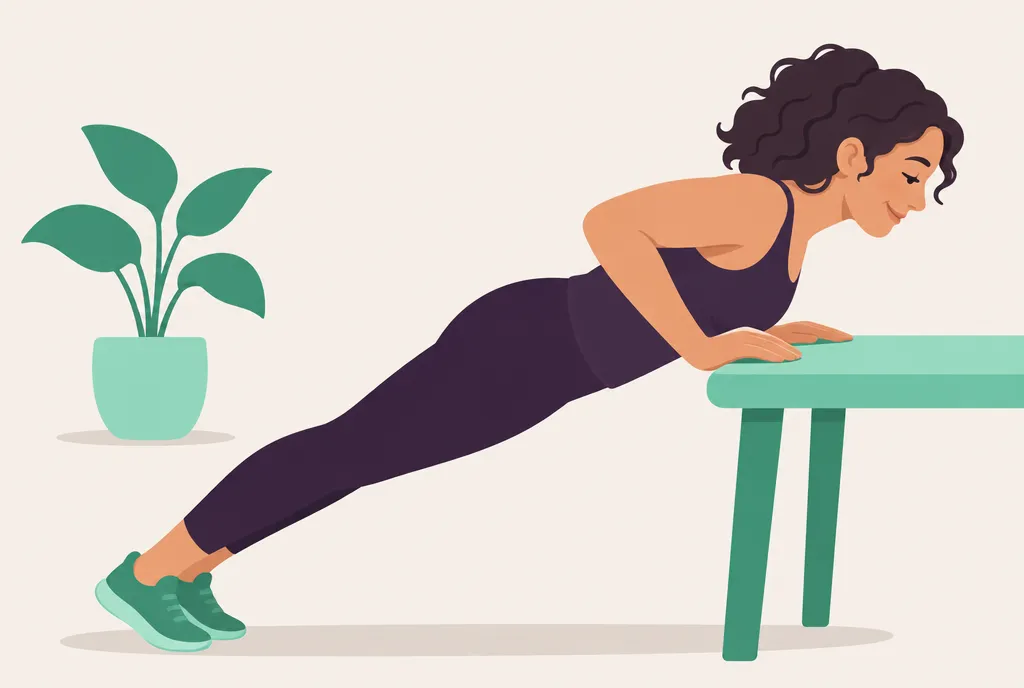
Incline push-up
Hands on a sturdy table or sofa edge. Lower your chest slowly.
 Video
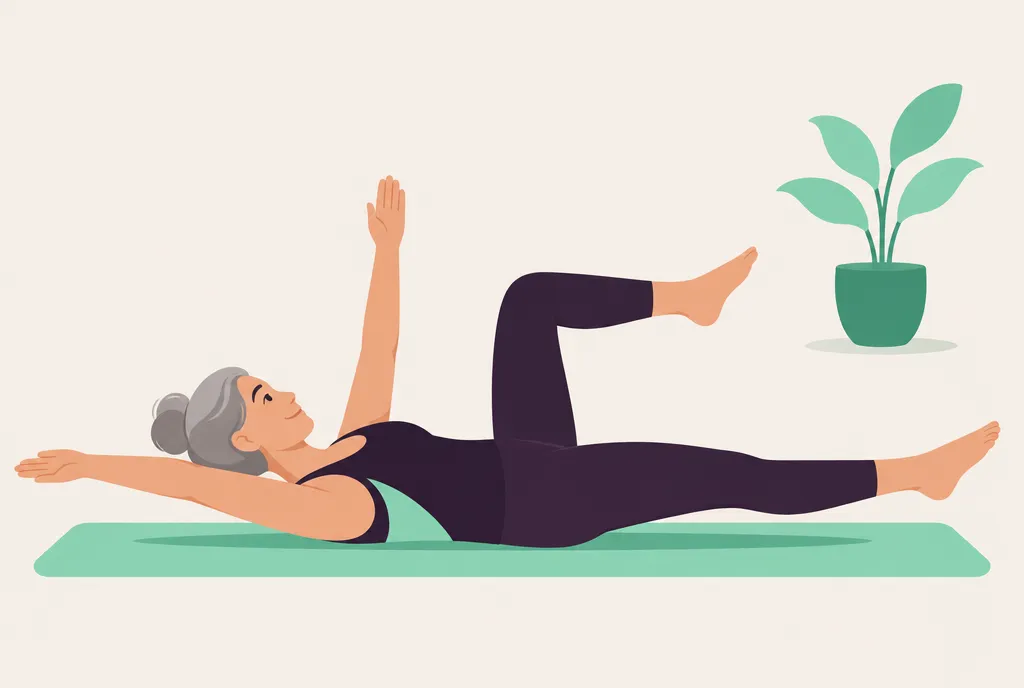
Dead bug
Lower back pressed down. Opposite arm and leg, slow.
 Video
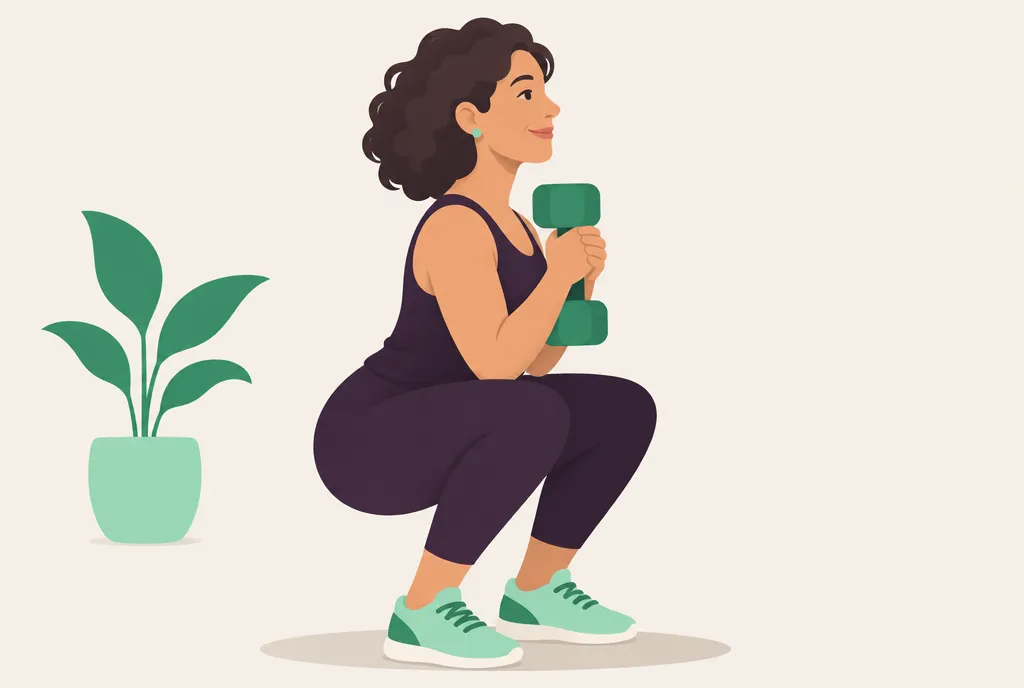
Goblet squat
Hold one dumbbell at your chest. Sit between your hips.
 Video
Dumbbell Romanian deadlift
Soft knees, push hips back, dumbbells close to your legs.